Increased depreciation allowances and subsidised loans continue to make new-build flats attractive to private investors. Experienced players are focusing on existing properties. These currently offer favourable entry prices, but also present greater challenges in terms of management. This was confirmed by the speakers at the online press conference ‘Residential Property as an Investment’, attended by Ulrich Creydt, tax adviser and partner at Ypsilon GmbH; Mareike Lechner, board member at immobilien-experten-ag.; Philip C. Hetzer, managing partner at DAHLER Invest; and Michael Elst, board member at Strategis AG. Despite higher financing costs and potential alternative investments, the participants agreed that residential property remains a sound investment and a store of value, even for future generations.
“For investors, the first step is to build up wealth; later, it’s about retirement provision; and then about passing it on to the next generation,” says Ulrich Creydt. “An investor’s journey typically begins with a first, smaller flat. Later in life, the issue of retirement provision becomes more important: will the pension I eventually receive be enough? Or do I need to make additional provisions myself? And how high will my expenses be after I retire? At this stage, property owners should also consider how they will transfer their property assets to the next generation. There is plenty of scope for tax planning here, which should be exploited.” According to Creydt’s observations, for those who invest in property at an early stage, the step up to larger properties and multi-family houses is not far off.
Philip C. Hetzer also sees newcomers to the multi-family house sector primarily coming from the start-up industry. “Successful start-up entrepreneurs, for example, invest part of their wealth in multi-family, residential and commercial properties at a young age. They view property as a long-term store of value that generates stable and predictable income.”
Creydt also recommends taking into account expected income trends and the life plans of family members when making a purchase decision. “Anyone buying a small flat in a major city can, for example, rent it out later to a child who is studying. Potential losses from letting and leasing are of interest from a tax perspective. Anyone who charges at least two-thirds of the local market rent under a so-called ‘family rent’ arrangement can claim the difference against financing and management costs for income tax purposes.”
Private investors benefit from double depreciation
The purchase of energy-efficient new-build flats is currently particularly tax-efficient due to the combination of declining-balance depreciation with special depreciation allowances under Section 7b of the Income Tax Act (EStG), as permitted by the KfW 40 QNG standard. The decisive factor here is the proportion of the purchase price attributable to the building, which Creydt assumes to be around 75 per cent in one example. For a purchase price of 305,000 euros for a 50-square-metre flat, he calculates potential depreciation allowances of around 24,500 euros in the first year.
The Kreditanstalt für Wiederaufbau (KfW) also provides low-interest loans for investments in new rental accommodation. As these are granted per flat, they are particularly cost-effective for smaller flats. For the standard KfW 40 QNG scheme, the loan currently amounts to 150,000 euros, which is granted on significantly more favourable terms – with a 10-year fixed-interest period – rather than at the market rate of 4.25 per cent. A sample calculation by Strategis AG cites an interest rate of 1.96 per cent, which corresponds to an annual saving of 3,435 euros.
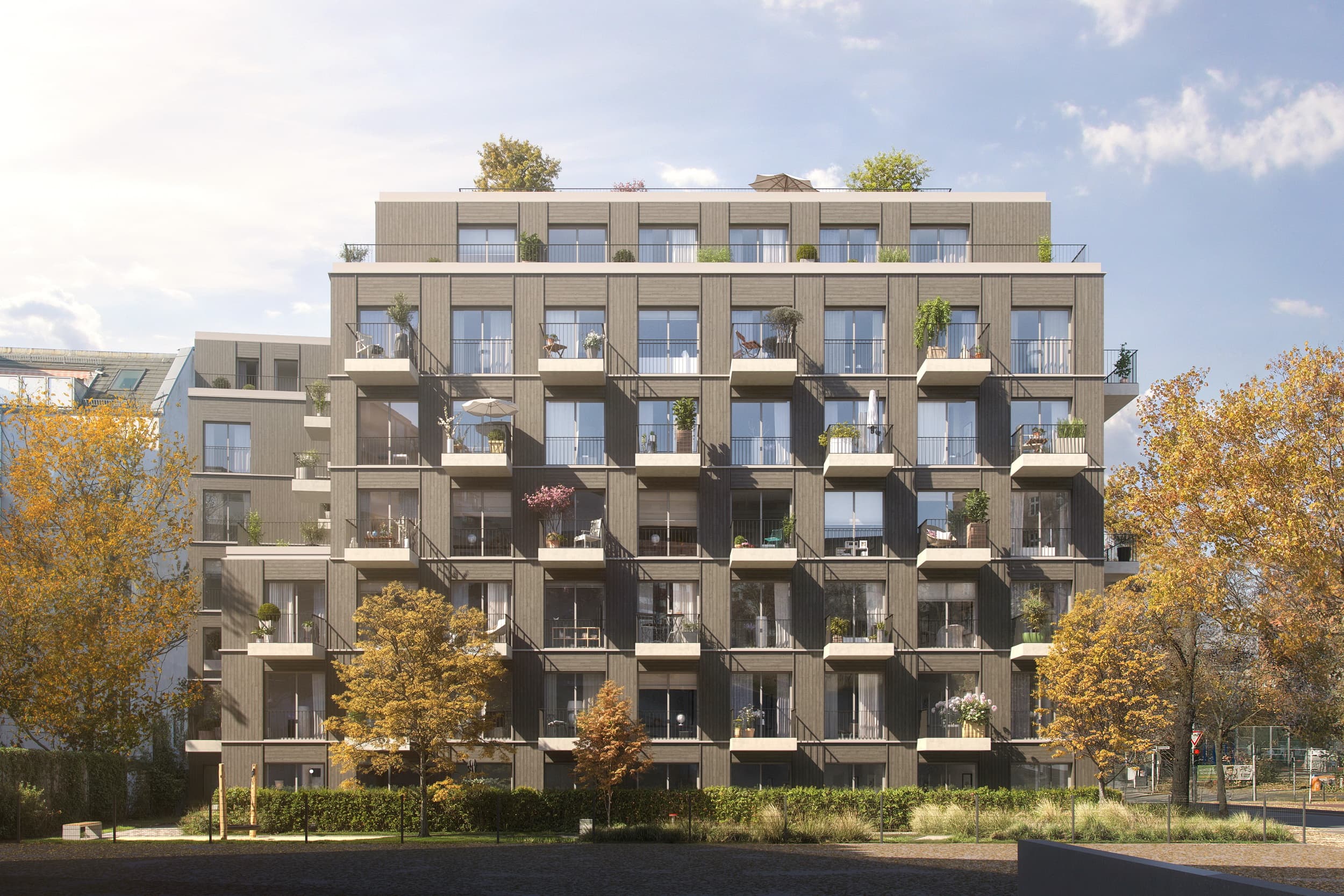
The calculation relates to a flat in Berlin, where the Thule 48 project is under construction in southern Pankow, right on the border with Prenzlauer Berg. The development comprises 78 predominantly smaller two-room flats. Michael Elst, CEO of Strategis AG, sees prospective buyers’ budget constraints as a key reason for increasingly compact floor plans. “In addition to modern technical standards, the advantages of a new-build include long-term predictability in terms of letting and maintenance costs, as well as the guarantee provided by the developer. We have clients who purchase such a flat every two to four years and achieve double-digit returns on equity thanks to the current combination of declining-balance depreciation and special write-offs after tax.”
Genuinely co-owned properties with gardens in high-growth outlying areas as an alternative
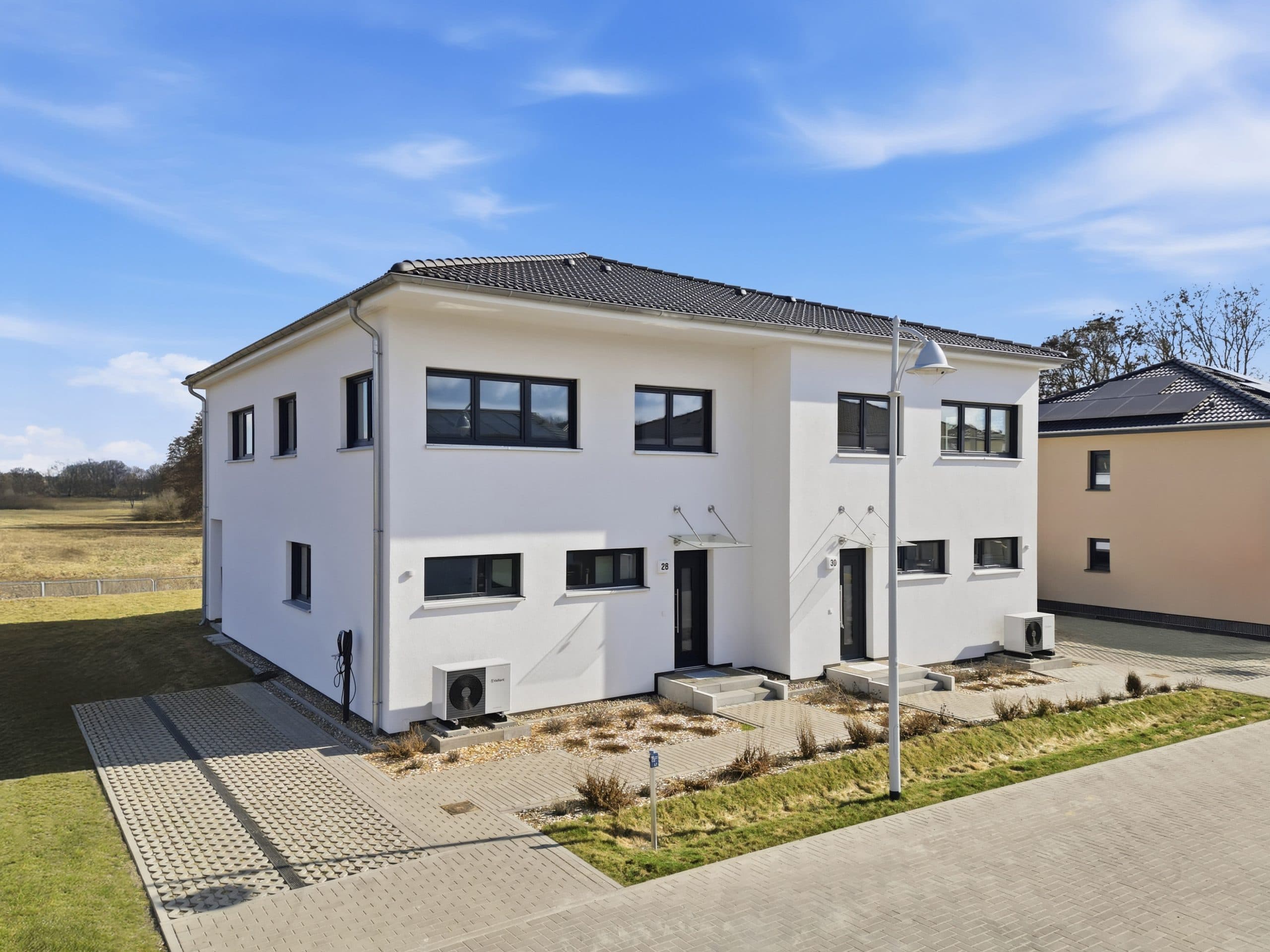
However, attractive investment opportunities are by no means limited to central locations in major cities. Those looking for newly built properties with genuine shared ownership will also find what they are seeking in fast-growing outlying regions. A prime example is the development by First Home Wohnbau GmbH in Beelitz, Brandenburg, south of Berlin. The subsidiary of immobilien-experten-ag. (immexa) is developing a 33,000-square-metre site in the ‘asparagus town’, on which, in addition to detached houses and terraced houses, 34 semi-detached houses are being built, 15 of which are now being offered as investment properties.
For these units, which offer 121 or 141 square metres of living space respectively, immexa board member Mareike Lechner highlights, in the event of letting, a declining balance depreciation rate of five per cent, the tax deductibility of loan interest, management and maintenance costs, as well as a tax-free sale after 10 years. Assuming a tax rate of 42 per cent, her sample calculation suggests that a good 38 per cent of the equity invested could be recouped through tax savings in the first five years; at higher tax rates, the figure would be closer to around 41 per cent.
In the example calculation, the equity contribution amounts to 120,960 or 142,960 euros respectively, i.e. an assumed 20 per cent of the total investment costs, which, including a fitted kitchen, garden and ancillary costs, amount to 604,800 or 714,000 euros respectively. The monthly net rent (excluding service charges) is assumed to be 1,800 and 2,115 euros respectively. Due to the negative income from letting and leasing, this corresponds to a tax-free return of around 3.6 per cent. Letting and management would be handled by the municipal housing association of the town of Beelitz.
“In terms of tenants, the property is primarily aimed at young families from Potsdam, Berlin and the surrounding area. Beelitz offers ideal conditions for parents who can work from home and have school-age children. As for buyers, we envisage value-oriented investors who may purchase several properties, as well as households who may eventually move to Beelitz themselves or, alternatively, wish to let the properties to family members or acquaintances,” says Mareike Lechner.
When investing in multi-family properties: existing properties are often ‘underrented’
At present, multi-family properties are being purchased almost exclusively by high-net-worth private investors and family offices. “Existing properties offer comparatively favourable entry prices, albeit within a challenging financing environment,” says Philip C. Hetzer, Managing Partner at DAHLER Invest. “Ultimately, rising interest rates and the banks’ reluctance to grant loans are leading to a stabilisation of purchase prices on a scale we haven’t seen for some time.”
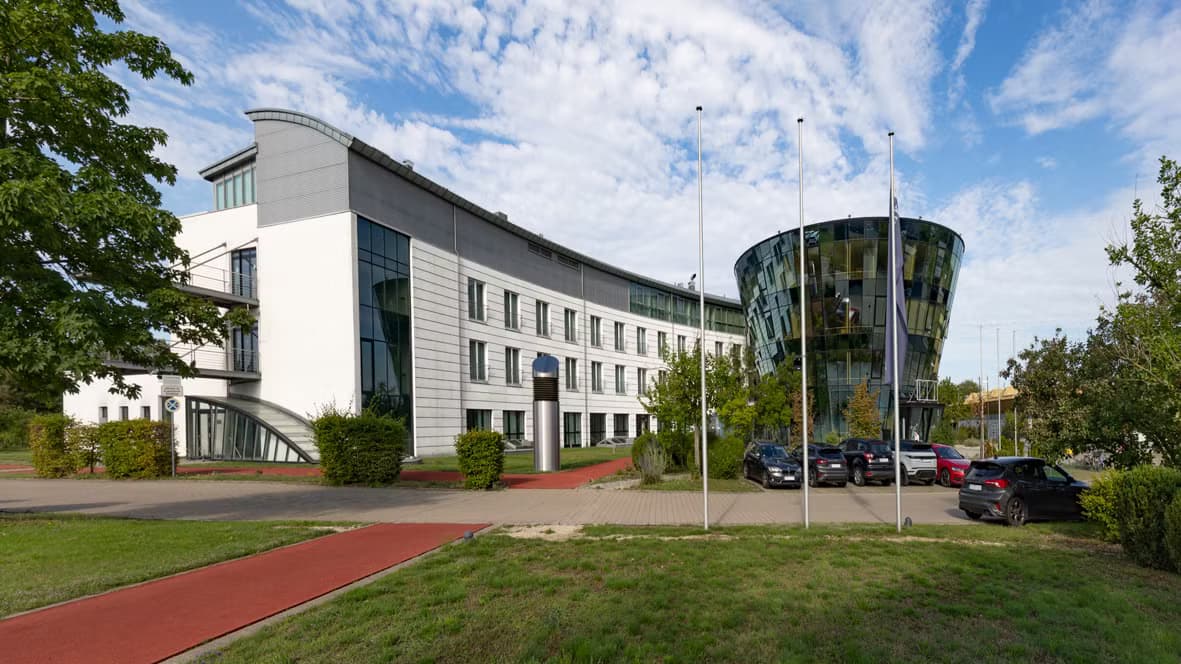
As an example, Hetzer cites a mixed-use residential and commercial building in Berlin-Wedding comprising 19 flats and five commercial units. Built in 1995, the property – which is in excellent condition – was sold by an entrepreneur from southern Germany to an Austrian family office for 18.94 times the annual net rent. “It is interesting to note that the property offers significant potential for both value appreciation and rental growth. According to the rent index, the rent for the property could be 7.93 euros. In fact, the average rent collected under the tenancy agreements – which are on average 15 years old – is just 6.91 euros per square metre. Similarly, the commercial units are also below the rent levels of comparable neighbouring commercial premises. This is not unusual. We come across properties like this almost every day. They belong to traditional private owners who have not, in essence, made the most of the properties but are now withdrawing from Berlin, partly due to age or for reasons related to the political climate. In this context, we are seeing purchase prices of 2,000 euros per square metre for properties that are, in essence, in good condition.”
Despite the political climate, Hetzer always advises his clients to keep an eye on the Berlin market. “Anyone who sees a house as a store of value will see one or two state governments come and go without anything changing substantially for them.” There are also good entry-level opportunities, particularly in the Ruhr region. “It’s a highly exciting market with numerous smaller properties, meaning you can start out there with a property portfolio worth 400,000 or 500,000 euros and diversify.” Hetzer sees sufficient equity as one of the key challenges when entering the multi-family housing business – “banks nowadays often require 50 per cent equity” – as well as finding a good property management company, a task in which he is happy to assist with recommendations.