
For institutional investors, the weights within real assets are shifting. Real estate remains a central portfolio element, with infrastructure increasingly supplementing it with a stability component. The reasons for this are increasingly visible and together lead to infrastructure being institutionally usable in a form that did not exist in the past.
Modern infrastructure segments – from grid infrastructure and renewable energies to storage or digital backbone solutions – are often based on contractually secured, regulated or indexed revenue models. These payments are long-term, easily calculable and largely independent of classic real estate market factors such as occupancy rate or cap rate volatility. It is precisely these characteristics that investors are interested in in the current transition phase in real estate segments.
Infrastructure has always been a stable supplier of long-term predictable cash flows. What is new is not the asset class – what is new is that market breadth, regulatory tailwinds and institutional product architecture now coincide in a way that enables a true, broadly diversified allocation to open-ended AIFs.
Taken together, four factors explain why many institutional investors are now thinking more broadly about their real asset allocation: real estate retains its structural role; Infrastructure provides a second strong pillar with stable, predictable and well-structurally secured revenue structures.
1. The range has become broader and more mature.
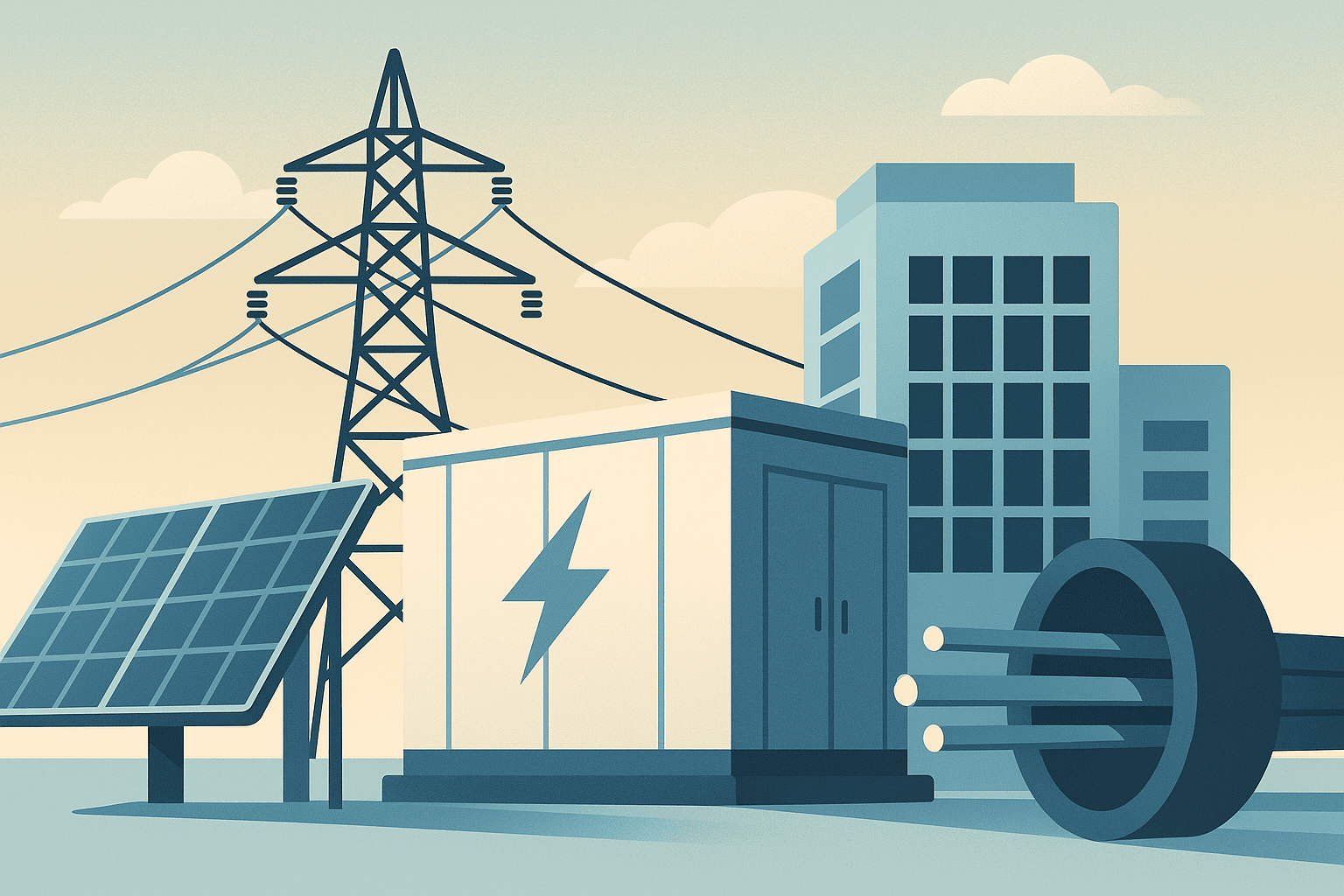
Today, the market encompasses much more than wind and solar: battery storage, charging infrastructure, data centers, fiber optics, regional flexibility solutions and thermal technologies. Many of these segments now have scalable, traceable cash flow models – and are therefore (open-end) fund-eligible.
2. The regulatory framework now works in a network.
Solvency II with the preferential treatment of qualified infrastructure, the AnlV with its own infrastructure quota, AIFMD II with a clearly defined liquidity and governance framework , and the CRR, which provides for lower capital requirements for qualified infrastructure loans, together create a consistent, regulatory-backed foundation.
Institutional investors thus benefit twice:
- on lower capital adequacy (e.g. insurers under Solvency II) or on new ratios (e.g. pension schemes) on the investor side,
- and more attractive financing conditions, because banks can back infrastructure projects with equity capital more cheaply due to the CRR regulation.
3. The real estate cycle creates a window of relative attractiveness.
Real estate is indispensable in the long term, but is currently going through a period of adjustment: higher interest rates, cap rate expansions and valuation uncertainties are weighing on transactions and making yield requirements more volatile. While real estate values depend heavily on which cap rate the market accepts in each case – and this cap rate in turn reacts sensitively to interest rates, financing conditions and market liquidity – this dynamic is noticeably calmer in many infrastructure segments.
The reason is clear:
Infrastructure cash flows are often contractually or regulatorily hedged. As a result, investors are less oriented towards short-term market sentiment and more towards regulated or indexed revenue models. The return requirement of many infrastructure segments (cap rate) is therefore not primarily driven by interest rate shocks, but by:
- state-regulated revenue caps (e.g. grid infrastructure),
- long-term lease and availability models,
- Contracts with a high credit rating and clear time frames.
The result:
While real estate cap rates run up or down quickly during interest rate phases, the yield requirements for infrastructure remain more stable, flatter and significantly less volatile. It is precisely this relative calm that is currently creating an advantage – not in absolute terms, but in comparison to the temporary cyclicality of individual real estate segments.
4. Open infrastructure AIFs have matured from niche to volume product.
There are reliable track records, ongoing investment pipelines, relevant fund volumes and institutionally robust liquidity and risk mix models. Not least because of the liquidity management tools to be implemented in April next year, a theoretically possible product is increasingly becoming an actual one.
📌 Result:
Real estate remains indispensable.
Infrastructure complements it with a stability component, the institutional usability of which is now so pronounced that a logical second real asset building block is created in the form of AIFs – especially open ones.