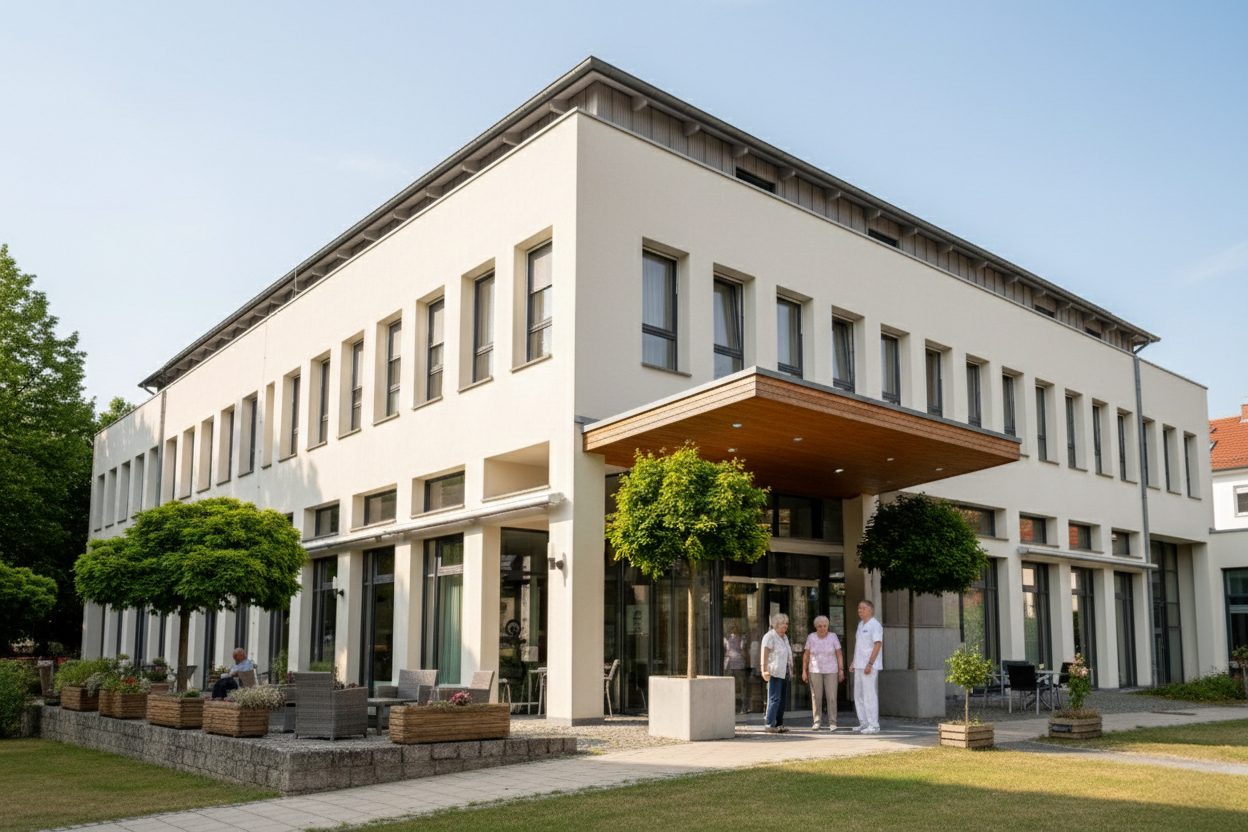
BNP Paribas Real Estate publishes market figures for Q4 2025
The healthcare investment market in Germany recorded a transaction volume of €1.4 billion for 2025. This is a solid result given the investment environment that continues to be characterized by macroeconomic uncertainties and geopolitical risks. Although the result is still far below the long-term average, a significant increase in sales of 18% compared to the previous year was registered. This is the result of the analysis by BNP Paribas Real Estate.
On the positive side, transaction frequency has increased for the second time in a row compared to the previous year. The deal structure will continue to be largely determined by individual deals. Portfolio deals contributed a smaller share (38%) to total sales than the long-term average (Ø 10 years: 55%). In contrast, individual deals contribute a higher contribution of around €850 million, close to the long-term average.
“The only and by far the largest deal of the year is the sale of Deutsche Wohnen AG’s nursing home portfolio to the City of Hamburg. The portfolio changed hands for a price in the mid three-digit million range,” explains Christoph Meszelinsky, Managing Director and Head of Residential Investment at BNP Paribas Real Estate GmbH.
In view of the pricing phase that has already been completed and the stable financing environment, the prime yield is expected to remain constant at 4.90% in the second half of the year.
Market as a whole still structured on a small-scale basis
Nursing homes can record an increase in earnings compared to the previous year and have a slightly increased market share of 65%. The aforementioned portfolio deal is responsible for a high contribution to earnings here. In absolute terms, however, the investment volume (€888 million) in the sub-asset class remains well below the ten-year average (Ø10 years: just under €1.7 billion). At €300 million, the volume of healthcare real estate was lower than in the previous year. By contrast, the assisted living sub-asset class was able to increase compared to the previous year and, at around € 186 million, recorded a result only slightly below the long-term average in absolute terms.
In terms of market shares by deal size class, there is a broad distribution of the investment volume: The segment of large-volume deals over €100 million is the largest contributor to the transaction volume with 28%, especially due to the portfolio deal mentioned above. The size segment between €50 million and €100 million was responsible for significantly higher volumes than in the previous year and, at €283 million, posted earnings in line with the long-term average. Overall, however, the market is still more fragmented than in previous years. For example, deals are on average €25 million (Ø10 years: €32 million), although this figure was significantly revised upwards by the portfolio deal.
Due to the current often difficult economic feasibility, high construction costs and operator risks, there are currently only a few new construction projects. The resulting supply-side bottleneck is also a reason why investors often do not find the right product for them (location, quality, risk profile).
“However, the fundamentals of the healthcare investment market are fundamentally very attractive. Against the backdrop of a weak macroeconomic environment, the market is not very dependent on the economic cycle. There are also good prospects in the short and medium term due to the increasing ageing of society, which will consequently further increase the demand for care facilities,” predicts Christoph Meszelinsky.
In view of a stable financing environment and the consolidation phase currently being completed, the market recovery is likely to gain breadth and momentum this year. Currently, some large transactions are still being marketed or in preparation, which are expected to be completed in the course of the year. Under these circumstances, a result in the range of the long-term average (around €2.5 billion) appears to be too ambitious, but an increase towards the €2 billion mark is quite realistic. If more premium products are traded again, an initial slight yield compression by the end of the year is likely from today’s perspective.