DIP partner Aengevelt Immobilien points out that the data recently published by the Federal Statistical Office as “Number of the Week” on the daily growth of settlement and transport area is misleading and leads to wrong political conclusions. As is well known, settlement and transport areas also include green spaces and ecologically valuable areas that are needed for urban climate resilience. Against this background alone, the goal set out in the press release of the Federal Statistical Office to gradually reduce net land consumption to zero by 2050 is counterproductive, and it also slows down the sustainable revival of new residential construction, which has been overdue for years. In this context, Aengevelt points out that only 1.6% of the land area of the Federal Republic of Germany is overbuilt with residential buildings. Even a doubling of building completions, which is not easily feasible, would hardly have any effect on this low rate.
The Federal Statistical Office has selected as “Figure of the Week” for the third week of 2026 that the settlement and transport area in the Federal Republic of Germany is growing “by 50 hectares every day”, i.e. a remarkable 500,000 m². The press release in this regard also mentions that the 50 hectares are more than the area of Vatican City and that the daily land consumption had already been lower in previous years.
Even more decisive, however, is the announcement that in the German sustainability strategy, the federal government aims to limit the daily increase in the four-year average to less than 30 hectares by 2030 and to achieve a land circular economy by 2050, i.e. that no further land at all will be used for settlement and transport purposes.
Settlement and traffic areas – green spaces and ecologically valuable areas are among them.
This gives the impression that the designation of settlement and traffic areas is an environmental problem. In fact, the Federal Statistical Office admits in the further course of the press release that settlement and transport area is a statistical sum category that also includes unsealed areas, such as home gardens, front gardens, parks, playgrounds, cemeteries and campsites. 14 of the 50 hectares of the daily increase in area alone are used for sports, leisure and recreation areas as well as cemetery areas. In this context, Immobilienhaus Aengevelt points out that garden areas, parks and cemeteries in particular, in addition to their infrastructural function, contribute to making cities climate-resilient, reducing or avoiding urban heat islands and creating rainwater retention and infiltration areas for heavy rainfall events.
Information on land sealing is misleading.
But also the areas for residential construction, industrial and commercial areas as well as public facilities are by no means completely sealed areas. For example, according to the Building Use Ordinance, the reference value for the number of floor areas in general residential areas is 0.4, i.e. only up to 40% of the total area is built over. And even that, according to Aengevelt, is not to be equated with a sealing of 40% if green roofs or rainwater infiltration takes place. According to Aengevelt’s observations, residential areas are already being built with a sealing degree of zero, for example when rainwater is collected in cisterns or retention basins.
New residential construction is of little consequence when it comes to land sealing.
Aengevelt points out that only 1.6% of the area of the Federal Republic of Germany is overbuilt with residential buildings. The total land area is 357,683 km2. The share of settlement and transport area amounts to 50,988 km2, which corresponds to 14.2 %. The residential building area covers 14,324 km2 or 4.0% of the total area. With an average floor area of 0.4, 5,730 km2 are built over with residential buildings, which corresponds to 1.6% of the total area. If one takes into account that a large part of housing construction is now carried out on former settlement, transport or commercial areas, it would take 20 years to increase this small share to 1.7% with the current new construction work. Even a doubling of building completions would therefore hardly be measurable as a result.
Result.
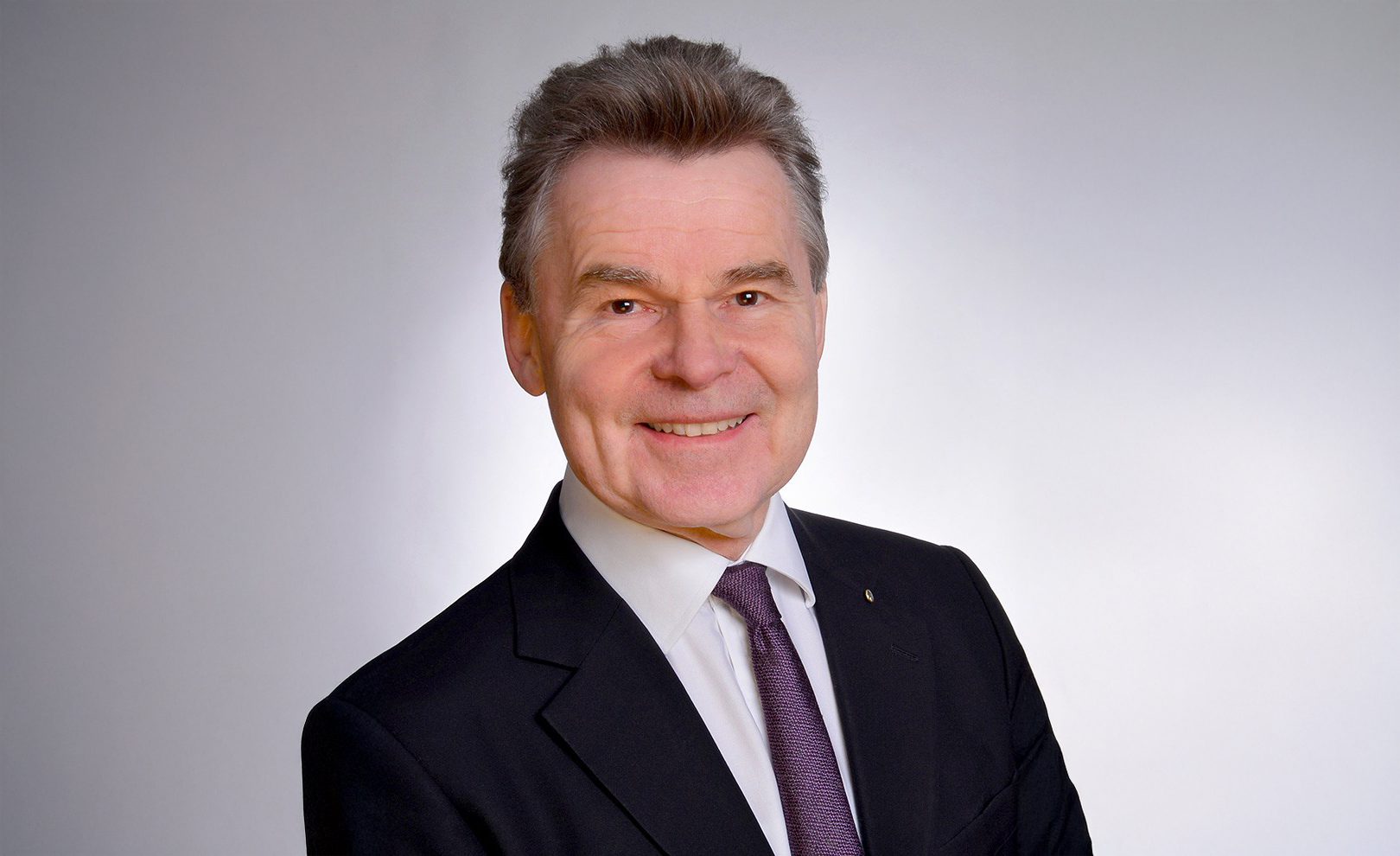
Dr. Wulff Aengvelt, Managing Partner of Aengevelt Immobilien: “If the Federal Statistical Office publishes a figure of the week, it is to be feared that this number will be adopted quite uncritically by politicians in order to prevent the designation of new building areas or to drag them out and reduce them further and further. because it says nothing about sealing and even includes ecologically valuable green spaces. . Therefore, the political goal of a circular economy is ecologically nonsensical. For the climate resilience of our cities, we even need significantly more settlement and transport space than before.”