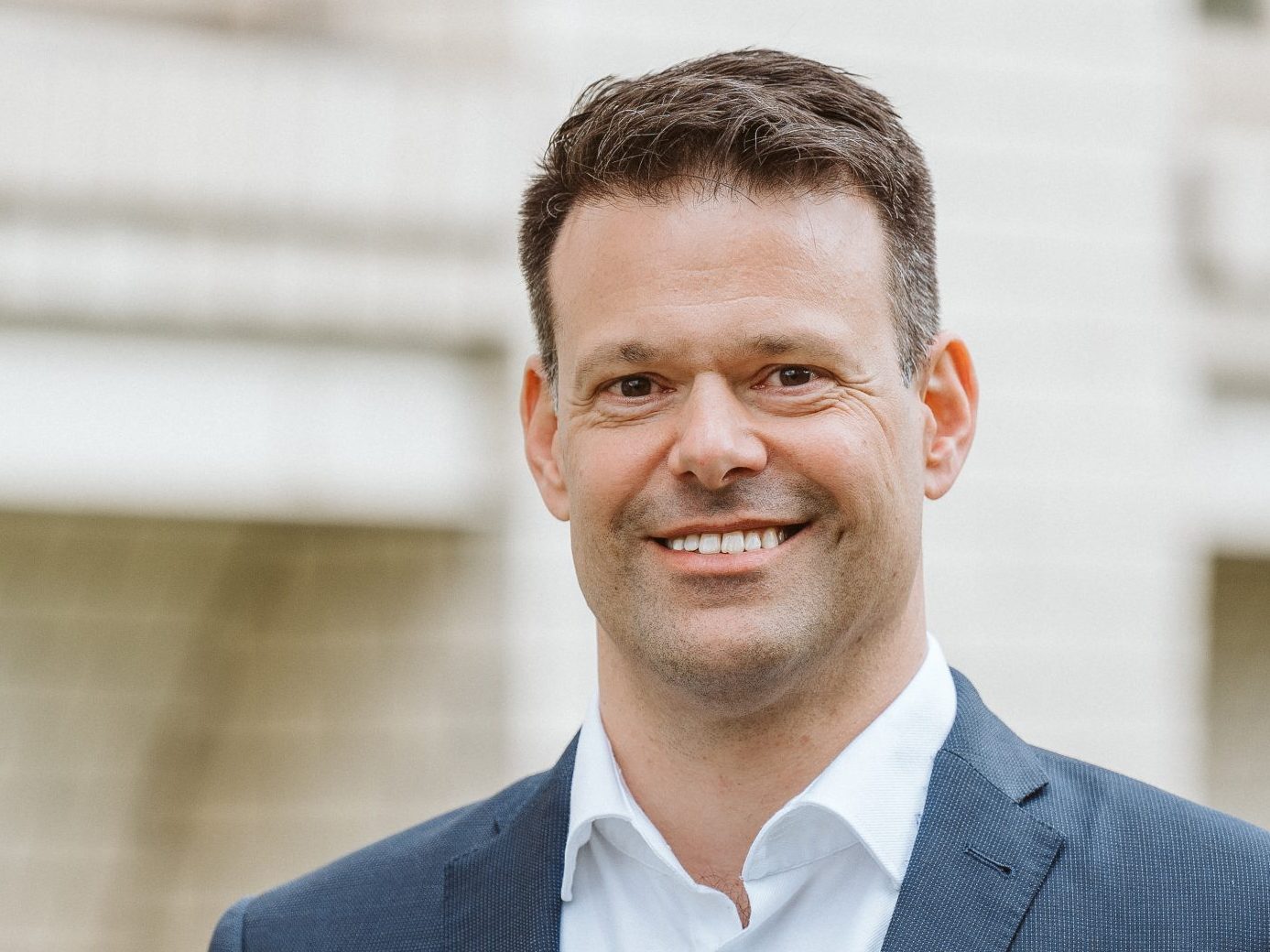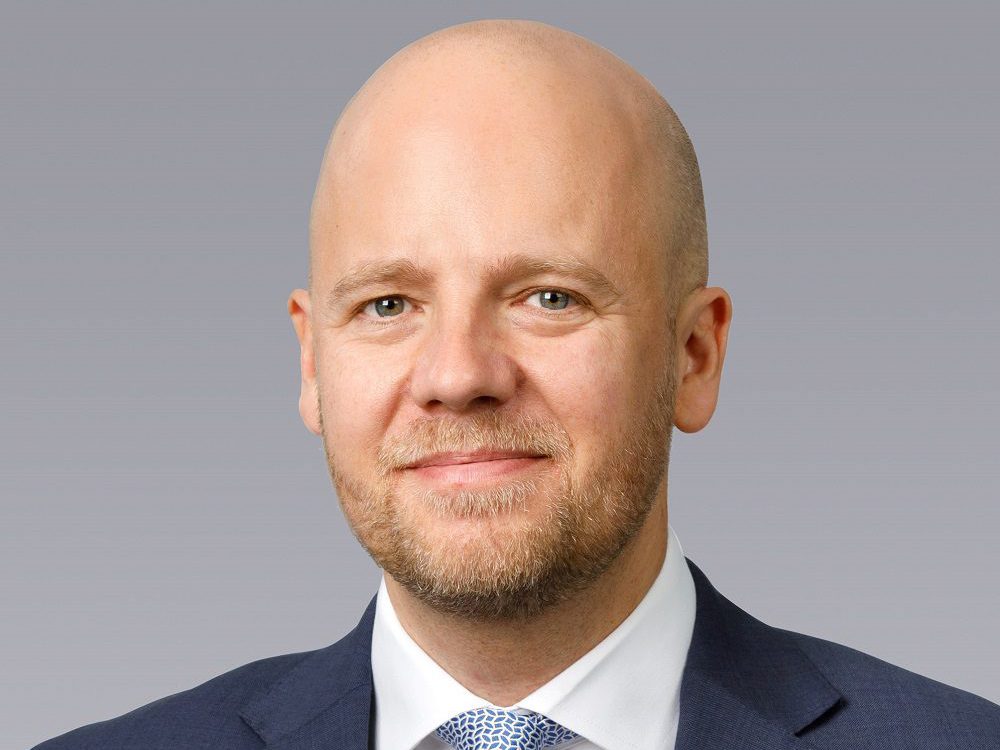
In an increasingly demanding market environment, professional rental management is decisive for the economic success of real estate. Sufficient and reliable cash flow in the form of rents is a prerequisite for financing. Commercial real estate projects usually do not come about at all without a high pre-letting rate, and even in the case of rental apartment projects, the forward deal without pre-letting is no longer in demand. Asset and property managers as well as external brokers are often involved in leasing at the same time. If their roles are unclear, this often leads to delayed letting processes, inconsistent market approach and vacancies. Four real estate experts discussed which structures are required to successfully rent out properties as part of the online panel “Rental Conflict Area” from the series “Asset and Property Management in Practice”. At the invitation of Rueckerconsult, Jürgen Hau, Managing Director of INDUSTRIA Immobilien, Sascha Nöske, CEO of STRATEGIS, Martin Schubert, Head of Letting Management Berlin at HIH Real Estate, and Stephan Wege, Head of Office Letting NRW at Colliers, exchanged experiences, typical points of friction and solutions along the entire letting process.
Rules of the game instead of wrangling over competences
The panelists identified unclear communication and decision-making structures as the central cause of many conflicts. Too many contact persons, parallel coordination and a lack of bundling of external communication often lead to misunderstandings and delays. Successful leasing projects, on the other hand, are characterised by clearly defined roles, fixed contact persons and coordinated decision-making processes – without falling into rigid standard processes. From the point of view of Martin Schubert, Head of Letting Management Berlin at HIH Real Estate, it is important to set clear rules right from the start: “Each side involved needs a fixed contact person so that the flow of information does not come to nothing. It is fatal if there are several contact persons on one of the sides who at the end of the day do not know exactly what it is about and have to decide on the basis of their half-knowledge.” While asset managers define the strategic guardrails, property managers and brokers are operational rental specialists. Fund and investment managers or the owners themselves are often also involved. If there is a lack of clear responsibilities and common objectives, there is a risk of conflicts – for example, between rapid full occupancy and long-term sustainable leases. It is particularly important to agree on responsibilities and goals with all parties involved at the beginning of a rental project. This includes, among other things, the determination of rent corridors, terms, investment frameworks and the handling of incentives such as rent-free periods or expansion subsidies.
Long-term successful leasing takes time
Jürgen Hau, Managing Director of INDUSTRIA Immobilien, which manages around 24,000 residential units nationwide, points out that the desire for quick letting in new buildings is often not feasible and does not always make sense. “First of all, you don’t usually conclude a rental agreement with the first interested party immediately after a viewing,” says Hau. “Especially in cities that are not a top location, the rental expense is much higher.” This is also a question of tenant creditworthiness. “The ideal case is a homogeneous property in the letting process in order to avoid trouble among the tenants. That takes time.” According to Sascha Nöske, CEO of STRATEGIS, the Berlin rental market, which is characterized by a shortage of housing, is also not a sure-fire success. “We are commissioned with the initial letting of large new construction projects. Here we often have to rent out between 100 and 400 units at a time. It is important to be quick, because by the time the construction is completed, there should be as few vacancies as possible as a requirement of the client. This higher-priced rental segment has great similarities with the sale of condominiums.” It is also important to avoid asymmetrical letting in new residential buildings. “This is a total loss, so to speak. It arises when the rents within a larger residential project are not priced in a differentiated enough way according to the actual qualities of the individual units. Initially, the attractive apartments are rented out quickly – but at a standard price that is too low. The result is a property that is only partially let, where the second half of the units can only be placed at discounts. The planned profit margin will never come,” explains Sascha Nöske.
Apartment rental with scaling potential, commercial leasing requires intensive consulting
It became clear that although residential and commercial leasing differ in their structures, the goals are comparable: the highest possible rental income, as little vacancy as possible. While the small-scale residential segment can be scaled better in letting, commercial leasing is more strongly influenced by individual user requirements, space concepts and long-term strategic considerations. While housing in conurbations has generally been a landlord’s market for years, the commercial sector is increasingly changing from a landlord’s market to a tenant’s market – with significantly longer marketing times. “Our work has become much more consulting-intensive,” reports Stephan Wege from the brokerage firm Colliers. In the past, it was mainly about pure marketing. In the meantime, we see ourselves more as a sparring partner for the owner, where it is also a matter of developing strategies together, weighing up risks and showing scenarios. Landlord representation, where we represent the owner or asset manager strategically and operationally throughout the entire leasing process, is increasingly in demand.” Leasing manager Martin Schubert from HIH Real Estate states: “The toughest competitor to new letting is the existing letting of commercial properties. The large rent increase is not achieved with the existing letting, but there are neither brokerage fees nor incentives. In addition, the risk of vacancy and conversion times are lower. The question of whether the focus is on new letting or extension should be clarified in advance with all parties involved.”
Sustainability aspects remain important in rental
ESG issues also remain relevant in rental management. “ESG is at the top of the agenda for the large corporates and will not disappear,” Stephan Wege is certain. “The topic of green lease plays a major role for large corporations. For smaller companies, this is rather subordinate. The focus is on ancillary costs or, for example, e-charging stations.” When INDUSTRIA buys and places projects, ESG is always a big topic. “The arc of suspense is then the purchase of energy, because this way you can make the second rent as attractive as possible,” explains INDUSTRIA Managing Director Jürgen Hau. “We bundle larger portfolios, order energy on a larger scale and can thus also purchase corresponding green electricity components. This is an on-top issue for the tenants.” In the residential sector, stable and affordable ancillary costs in particular are gaining in importance, it became clear in the discussion. Digital rental processes, structured data rooms and transparent documentation are increasingly becoming the standard – not least to ensure speed and quality in a highly competitive market.