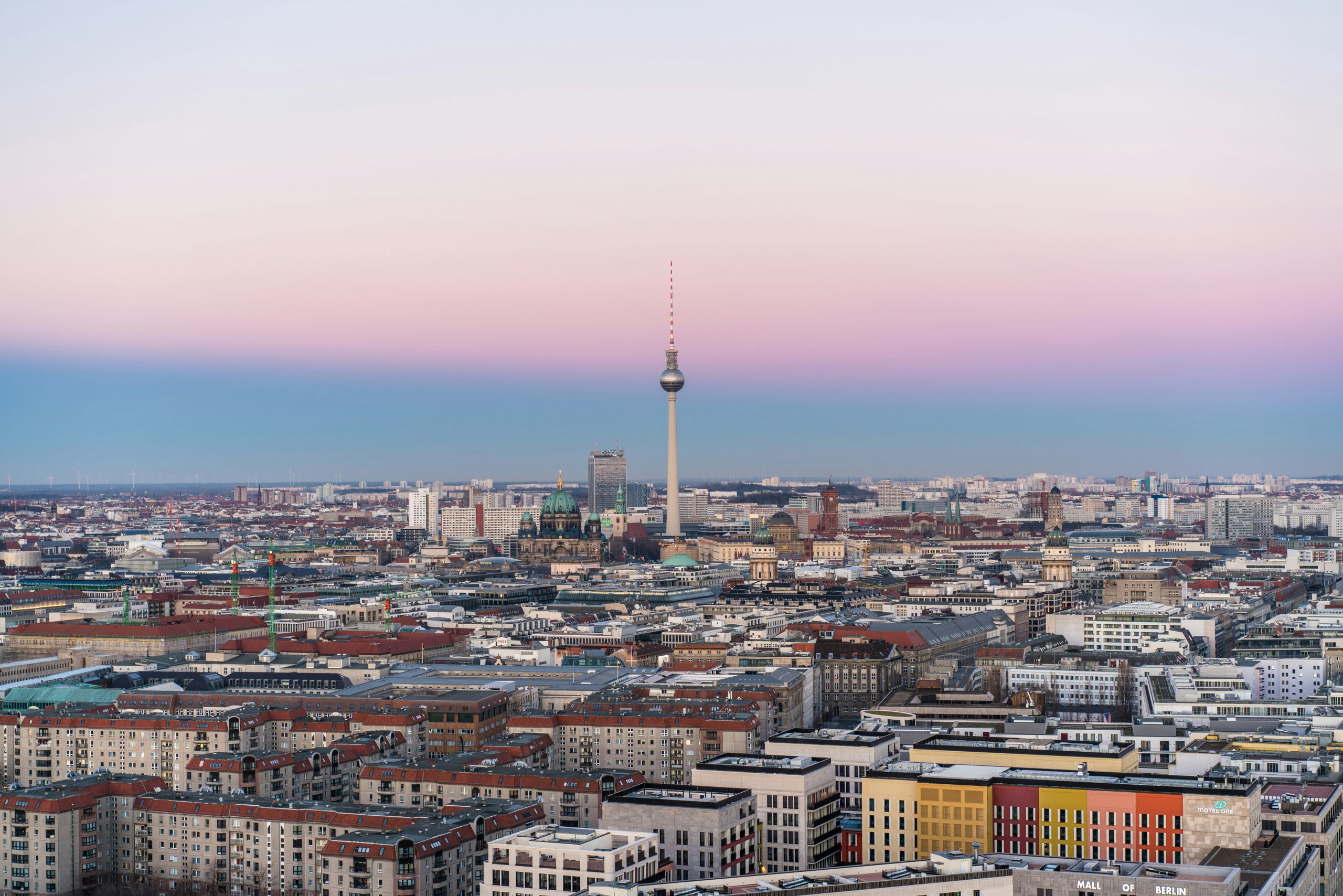
San Francisco and New York occupy the top two spots in Savills’ biennial Tech Cities Index, with San Francisco buoyed by rapid progress in artificial intelligence, while London has moved from fourth to third place since 2023. With Berlin and Munich, two German cities are also among the global tech cities.
As part of the Impacts Thought Leadership Programme, Savills analysed the business and technology environment, dynamism and attractiveness, talent pool, and strength and depth of different technology sub-sectors in 100 cities worldwide to identify which cities are driving technological innovation and attracting technology talent. The Tech Cities Index, which has been collected since 2015, shows that the top-ranked locations are also focal points for venture capital, diverse technology specializations, and world-leading universities.
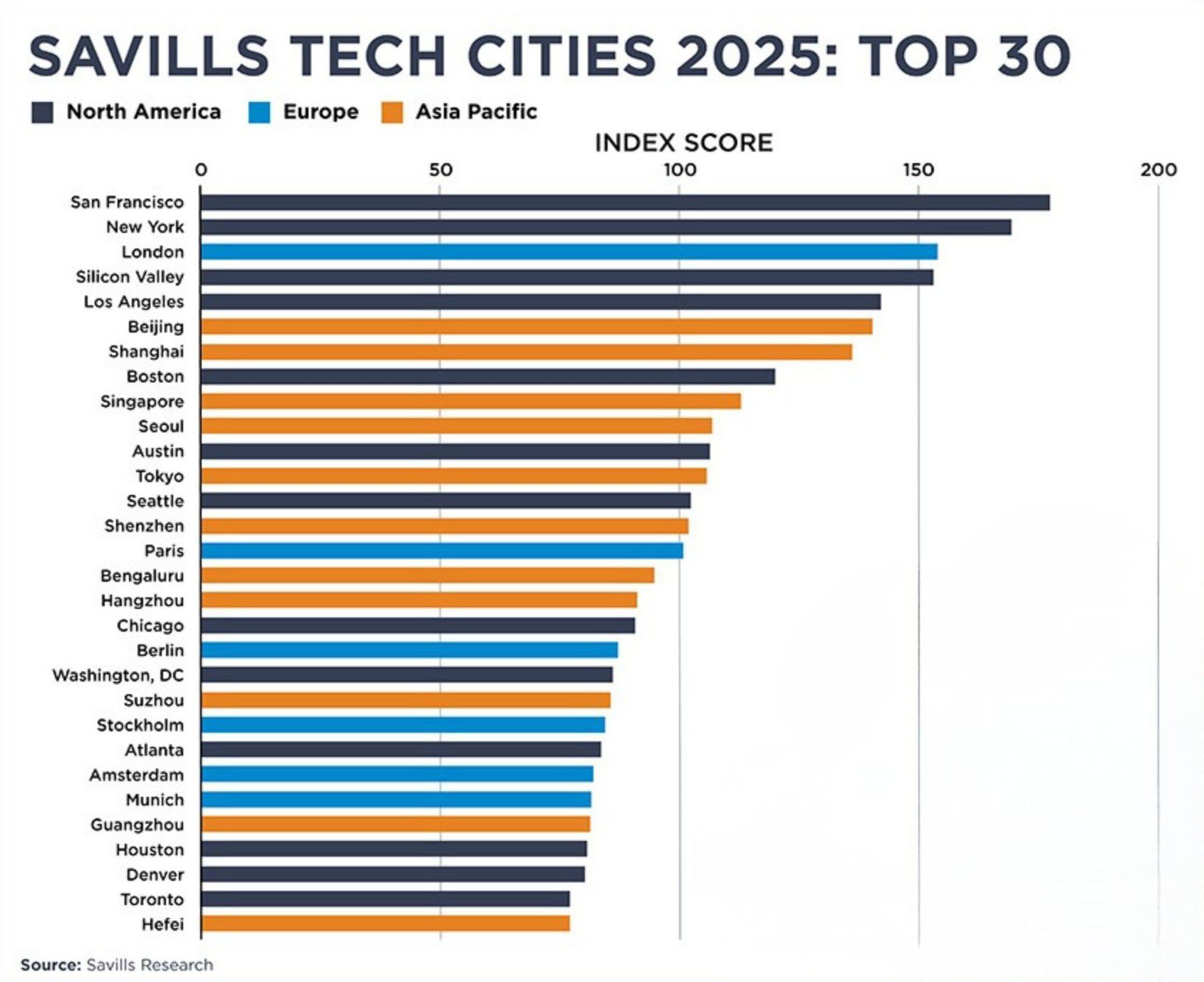
Savills states that North American cities make up half of the top ten tech cities and 40 percent of the top 30 cities, underpinning the continued dominance of the US in the global technology sector. San Francisco tops the index due to its role as a center of AI development and regained confidence in the city’s technology ecosystem. According to the real estate consulting firm, demand for office space is above the five-year average. In addition, prime rents for prime office space have risen by 10.5% over the past two years, with 70% of the largest office leases in the technology sector. In second place is New York, whose structure is more broadly diversified across several technology areas, while benefiting from a large talent pool and complementary industries, as well as its role as a cultural and lifestyle hub.
In Europe , London tops the rankings and ranks third worldwide. According to Savills, it is the Tech City with the highest number of top universities that foster innovation and produce highly qualified graduates. London is particularly strong in the areas of fintech, cleantech, deeptech and artificial intelligence. London is followed in the index by the European cities of Paris (15th), Berlin (19th), Stockholm (22nd), Amsterdam (24th) and Munich (25th).
Munich and Berlin are important locations for the global tech scene, even in a tense economic environment: In November 2025, Google announced a 5.5 billion euro investment program in data centers as well as the expansion of its locations in Munich, Frankfurt and Berlin. In addition, a renowned AI company rented a significant space in Tucherpark in Munich in February 2026. Germany’s first AI factory with the “Industrial AI Cloud” is also being built in this quarter. Berlin has a large number of tech hubs, especially for the start-up scene. The Merantix campus is one of the prominent examples of this.
“The investments underscore the continued relevance of German cities in the international technology ecosystem. Berlin and Munich in particular benefit from their strong innovative strength, the broad talent pool and their international appeal. For technology-driven companies, the focus today is on high-quality, flexible and ESG-compliant office space in well-connected, urban locations – a profile that leading German metropolises are increasingly convincingly fulfilling,” says Jan-Niklas Rotberg, Head of Office Agency Savills Germany.
Amsterdam, which has moved up five places, has seen investments in DeepTech and FinTech double since 2023. Barcelona (39th) and Madrid (45th) each climbed more than ten places, driven by a strengthening Spanish economy and an increasing number of qualified specialists.
In the Middle East , Dubai has risen 20 places to 43rd place, supported by targeted AI strategies, strong population and economic growth, and lifestyle appeal.
In Asia-Pacific , Singapore has made it into the top 10, moving up three places to 9th place, due to its political and regulatory stability, world-class infrastructure, and strong business environment. Seoul is now in 10th place and has moved up four places. The city’s rising prosperity levels, net immigration, and increased government support for AI, semiconductors, quantum computing, and biotechnology have driven growth. Both Singapore and Seoul are characterized by low vacancy rates and a limited supply of office space, according to Savills, which has led to an increase in rents. Otherwise, six Chinese cities rank among the top 30 in Asia, led by Beijing (6th place) and Shanghai (5th place). China’s tech cities benefit from a large domestic market and increasingly mature local ecosystems.
Paul Tostevin, Head of Savills World Research, comments: “The technology industry is undergoing a profound transformation in light of developments in the field of artificial intelligence. However, despite the potentially huge advances, human capital remains the most important competitive factor of the tech industry, so the attractiveness of a city is of great importance for companies looking to recruit the best talent. The cities that rank high in our index offer vibrant city life as well as cultural and lifestyle offerings, with many – compared to the rest of the world – smaller cities performing above average. Ultimately, however, the world’s largest cities dominate the top ten spots with their diverse offerings, broad business base, and large talent pool. For Inve
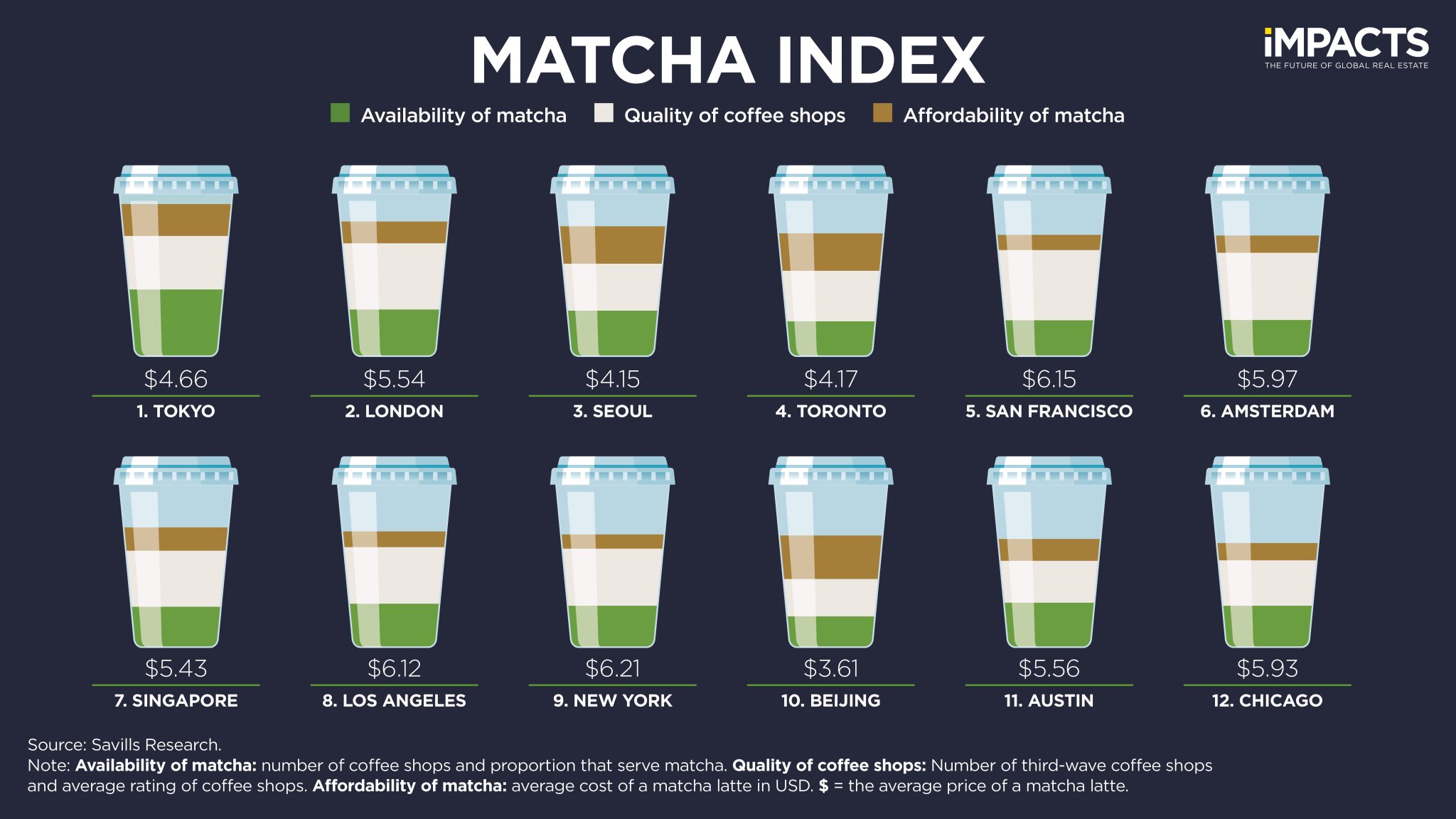
In addition to technological performance, the quality of everyday urban life is increasingly decisive for the attractiveness of global tech locations. A lively café culture plays a key role in this: places where people work, network and develop ideas over coffee or matcha. With the rise of remote and hybrid work, coffee shops have become hybrid spaces between home and office – meeting places that enable spontaneous encounters that no video call can replace. The Savills Matcha Index shows how strong this urban culture is and what contribution it makes to the attractiveness of a location. Based on the availability, quality and affordability of matcha drinks, it evaluates how well cities combine work, lifestyle and quality of stay.
The ranking is led by Tokyo, followed by London and Seoul – all cities that also rank high in the Tech Cities Index. The Matcha Index thus underlines that technology centres today must not only impress with their innovative strength, but increasingly also with their lifestyle and urban quality.
For business owners, owners and developers, a high-performance Tech City means an increasing demand for both office space for technology companies and housing that meets the needs of a highly skilled, mobile workforce.”