In February 2016, the cooperation “Raiffeisen Immobilien Österreich” was launched. On the occasion of its 10th anniversary, Raiffeisen Immobilien Österreich takes stock of an eventful real estate decade – and sees new challenges ahead for the market.
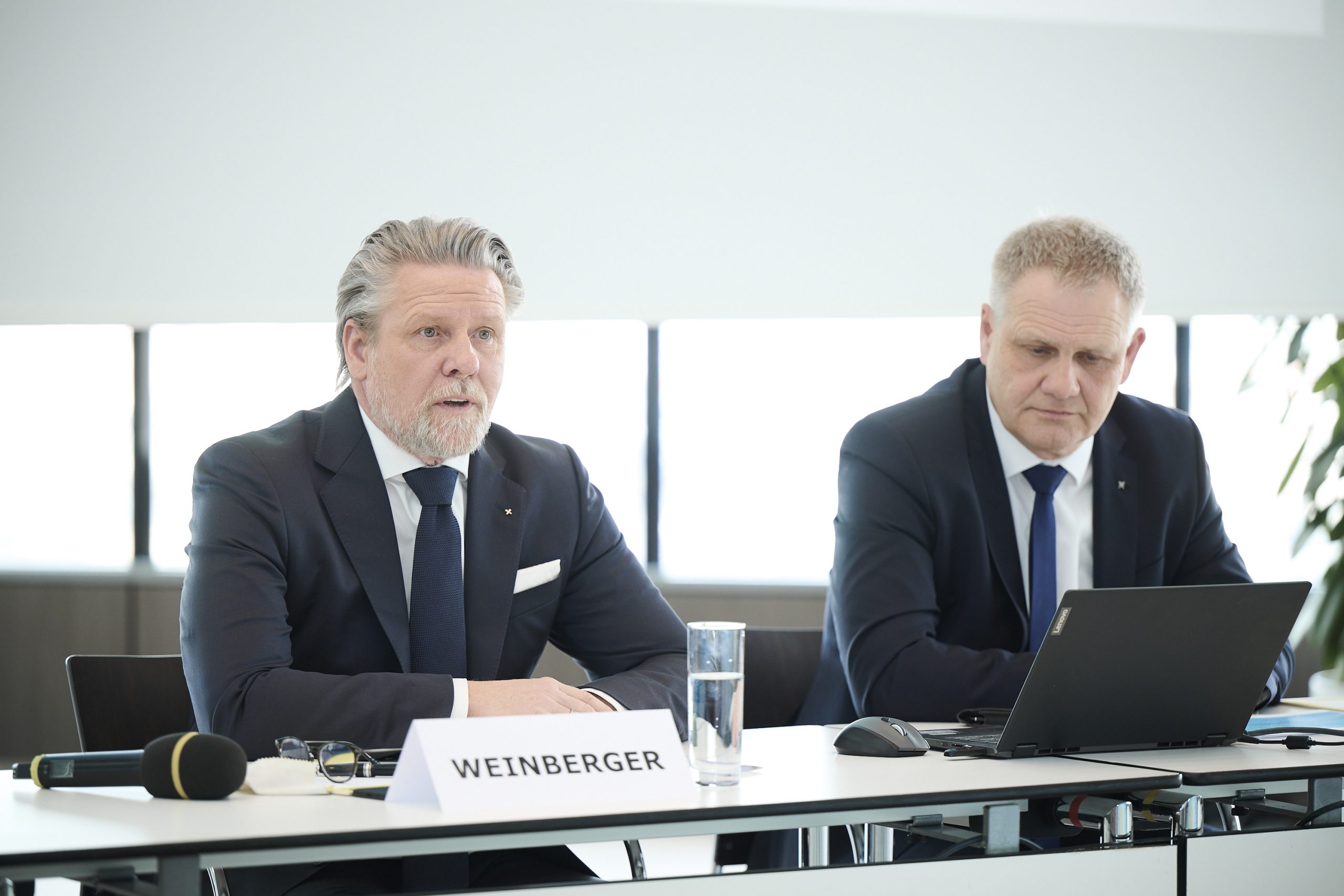
On the occasion of its tenth anniversary, Raiffeisen Immobilien Österreich (RIÖ), the real estate agent organisation of the Austrian Raiffeisen banks, reviewed the most important developments in the domestic market of the past ten years at a press conference on 17.03.2026. “Pandemic, boom years, interest rate crisis, inflation – the domestic residential real estate market has had to weather several storms over the past ten years. But Raiffeisen Immobilien Österreich has proven to be more than seaworthy. Together with our colleagues, we have not only coped well with the multiple crises. We were even able to grow significantly and implement many important projects – from the joint software to uniform quality standards throughout Austria to the national Raiffeisen Immobilien Academy for employees,” the spokespersons of Raiffeisen Immobilien Österreich, Ing. Mag. (FH) Peter Weinberger and Prok. Peter Mayr, a positive résumé. Since its foundation, the RIÖ Group has increased its fee turnover by 36% to € 37 million, making it the leading broker association in Austria. The value of real estate sold in Austria during this period grew by 11% from € 18 billion to € 20 billion.
Changes in demand behaviour – smaller units in demand
People’s attitudes towards housing and their needs have also changed over the past decade. The experiences of the Corona pandemic with lockdowns and social distancing made the importance of one’s own home even greater. Space for home office and open spaces such as a garden, terrace or at least a balcony have become new, fixed standards in the search for real estate. While the cloakroom was still the most sought-after side room in 2018, the home office was the undisputed leader in 2024: 66% said in a representative survey 1) that they would like to have a home office in their own home.
And although statistically speaking, the average living space has risen slightly since 2016 (from 99 to 102 m2 in 2024, Statistics Austria), the experts at Raiffeisen Immobilien also see an opposite trend: “Currently, smaller units are in demand again because they are more affordable, especially in urban areas,” explained Peter Weinberger.
Affordability intensifies and eases again
In the course of the price increases in the boom years 2019 to 2022, affordability intensified: According to an analysis by Raiffeisen Research, in 2016 you had to spend just over seven years of net household income to buy an average single-family home. Just six years later, in 2022, more than ten net household incomes were already necessary for this. However, rising household incomes, combined with the moderate price declines in 2023/24, led to an easing. For 2025, a value of 7.6 annual net household income is expected, which is only slightly higher than in 2016.
Residential construction in free fall
The industry is currently experiencing one of the strongest residential construction recessions in post-war history. Residential investment and completion figures fell dramatically. Since the peak of the crisis in 2022, residential investment has fallen by 20%, according to Raiffeisen Research, and there is no end in sight. This development is particularly dramatic in metropolitan areas such as Vienna or Salzburg. This is where the sharply shrinking supply of new construction meets a continuously growing demand. Weinberger: “Austria’s cities are heading for a housing shortage like the one we know from major European cities such as Berlin or Munich. More new housing construction would therefore be urgently needed.”
From 2027, commercial residential construction threatens to come to a standstill
But new commercial residential construction is facing further adversity. The systemic risk buffer that domestic banks are required to deposit for commercial real estate (CRE) loans will be increased from 1% to 2% from July 2026 and to 3.5% in the following year. The real economic consequences of this requirement on the part of the Financial Market Authority are serious: the financing costs for residential property developers will increase substantially, because the 2% and 3.5% respectively will be added “on-top” to the banks’ already existing equity deposits, which are already significantly slowing down the granting of loans for residential construction projects. This massively intensifies or even makes it impossible to finance residential construction projects – and this in a situation in which the market urgently demands more instead of less new construction. From 2027 onwards, there is therefore a threat of a de facto standstill in commercial residential construction. Peter Weinberger: “It is not only investors who suffer, but also and above all those looking for housing: Even less supply than before will lead to further increases in prices and rents, and fuel inflation again – exactly the opposite of what is actually supposed to be achieved.” Loans for private “house builders” are not affected by this.
The effects on the economy would be threatening: entire sectors depend on residential construction, from the construction industry and ancillary construction to real estate services and the furniture industry. 30% of the gross domestic product is accounted for by the real estate industry in the broadest sense. Housing is also of enormous importance from a socio-political point of view, as housing shortages are accompanied by a variety of social problems. “Intervening here at an inopportune time with inappropriate measures can have devastating consequences,” warns Peter Mayr.
Constructive solutions needed: Deregulation and promotion of investment
So what would have to be done to keep housing affordable? First and foremost, a boost in new construction activity. An important prerequisite for this is the reduction or withdrawal of regulatory restrictions – see above – and a shortening of the duration of the procedure: Currently, it takes an average of two years to obtain a building permit in Vienna. Weinberger: “Tax incentives could also make investments in residential construction more economical again, such as the shortening of the input tax adjustment period from 20 to 10 years, or the reintroduction of the deductibility of financing interest for owner-occupiers.”
More information as well as charts on market development, affordability, etc. can be found attached and downloaded here