BNP Paribas Real Estate publishes office market figures for the 1st quarter of 2026
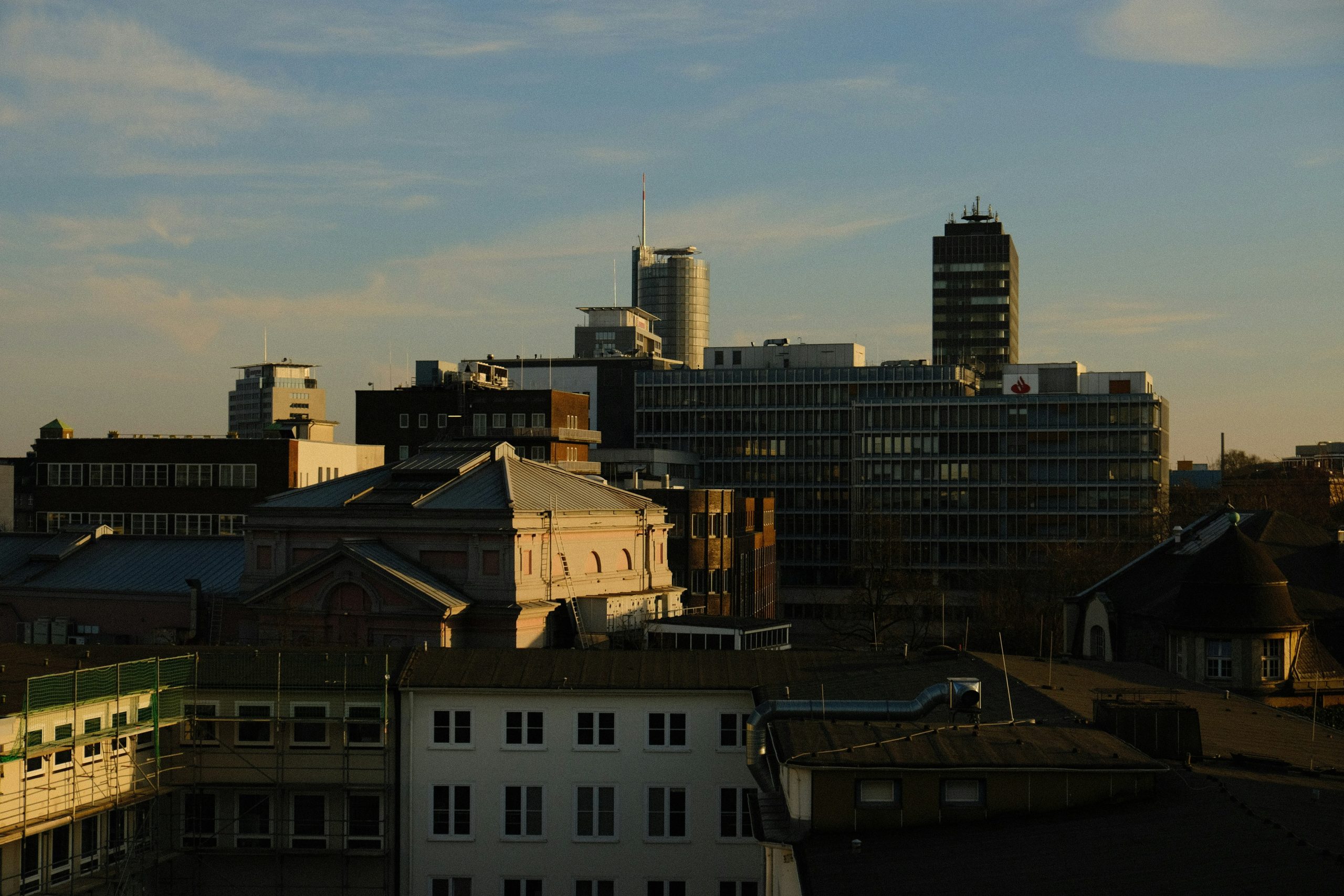
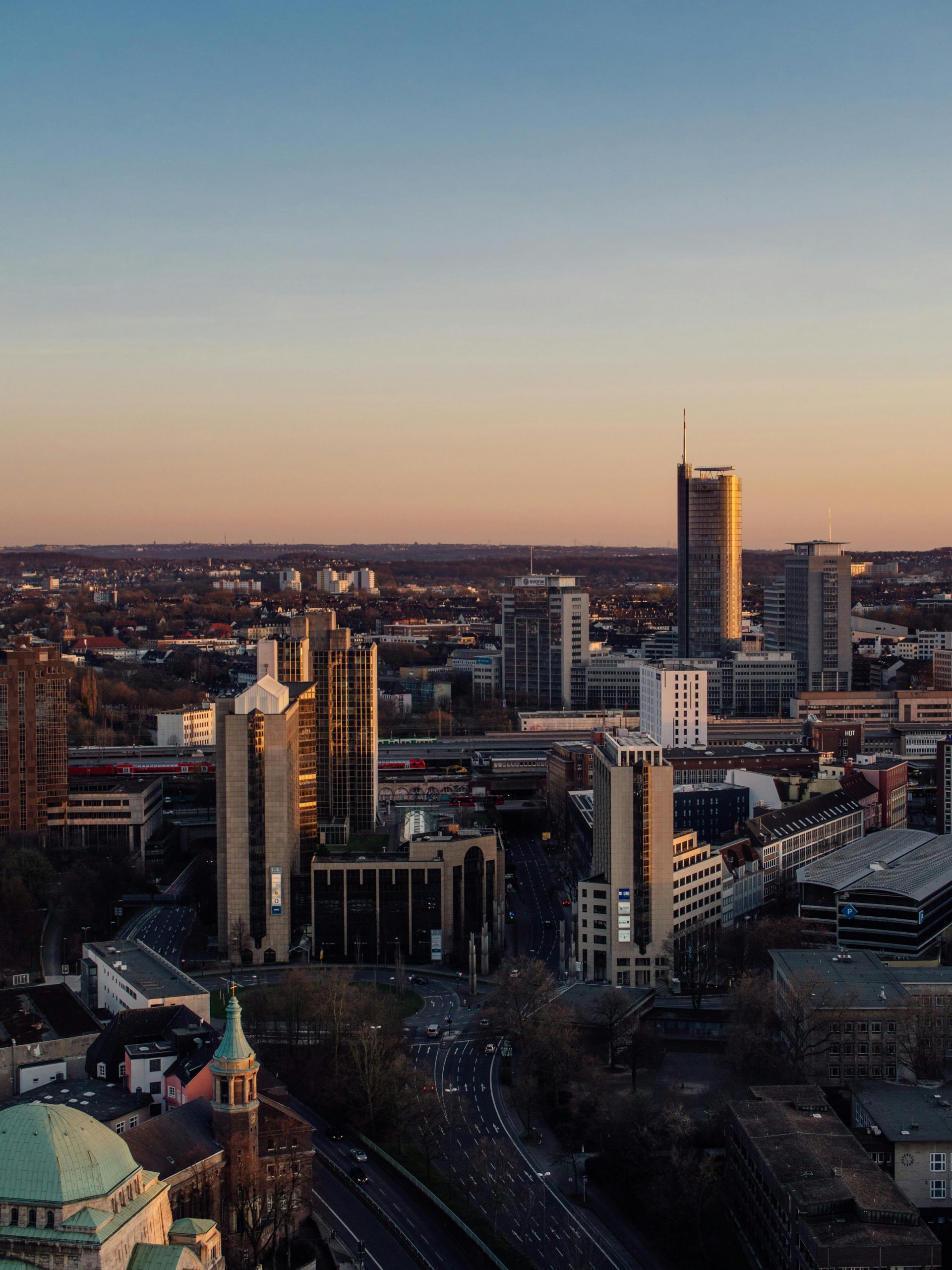
With take-up of only 10,000 m², the Essen office market recorded a weak start to the year, falling short of the previous year’s result by more than half. The long-term average of around 24,000 m² also remains unmatched. However, in smaller office markets, whose market dynamics often depend on a few large deals, individual weak quarters are not unusual and should rather be seen as a snapshot. Traditionally, higher volumes tend to be accounted for in the second half of the year. A cautious start to the year with significantly below-average take-up is therefore not uncommon for the Essen market. In 2024, for example, only a small amount of space was taken up in the first quarter, but a good overall result was still achieved at the end of the year. This is the result of the analysis by BNP Paribas Real Estate.
The largest contracts to date were signed by the construction company Johann Bunte with 1,700 m² in the “rest of the city” submarket, a provider of coworking space with around 1,200 m² in the secondary locations and a consulting firm (1,000 m²) in the southern quarter. In addition, smaller deals are currently dominating, which explains the overall low take-up.
“The prime rent has been stable at €20/m² since December 2025 and continues to be achieved for high-quality space in the best locations in the city centre. The average rent is currently €13.80/m²,” explains Amedeo Augenbroe, Essen branch manager of BNP Paribas Real Estate GmbH.
Industrial companies with the highest rents
As a rule, the distribution of industries after the first three months of a year is only a snapshot, but not a typical picture for the city. Nevertheless, the current take-up by sector is clearly led by the traditionally strong industrial companies in Essen, which are responsible for almost a third of the result. Above-average contributions of just under 18% and just over 13% respectively are also made by consulting firms (Ø 10 years: 5%) and the coworking industry (Ø 10 years: 2%). This is due in particular to the largest contracts to date at the beginning of the year.
The vacancy volume currently stands at around 287,000 m², which corresponds to a sideways movement compared to the previous quarter. From the user’s point of view, space with modern equipment quality is particularly in demand. These currently comprise only 59,000 m² or around 21% of the total volume. The vacancy rate in Essen is 8.9%. This means that the Ruhr metropolis has the fourth-highest vacancy rate in a comparison of the major office markets – after Berlin (9.1%), Düsseldorf (12.6%) and Frankfurt (11.7%).
The volume of space under construction amounted to around 34,000 m² at the end of March 2026, a decrease of 21% in a 12-month comparison. The category of space still available for the rental market has increased slightly, but remains at a low level of 12,000 m².
Prospects
Essen’s office leasing market has made a cautious start to 2026. It was not possible to build on the buoyant leasing momentum of the previous year in the first three months. As in other cities, the lack of larger lettings has a negative impact on the quarterly result. So far, no lease agreement for 2,000 m² has been concluded.
The current rather volatile market environment is also dampening leasing activity. The weakening economy as well as macro and geopolitical risks continue to be dominant topics at present. However, with an improving economic situation in particular, there could also be signs of a revival in take-up in Essen, so that a solid result for the year as a whole seems achievable. Whether a result in the range of the long-term average (90,000 m²) is possible remains to be seen for the time being. It can be assumed that the vacancy rate will continue to increase, but at a moderate pace. Older areas that are only marketable to a limited extent are particularly affected.
“The shortage of high-quality office space is likely to remain unchanged, as no noticeable relief from new construction projects is expected in the short term. Due to the limited supply of modern space, a further increase in prime rents is also to be expected,” says Amedeo Augenbroe.