Process and heating heat can be expensive for entrepreneurs and suppliers – especially in winter. But it is precisely then that it is needed. A new hybrid approach provides a remedy: the interaction of biomass and surplus electricity reduces energy costs and keeps them calculable 365 days a year. Energy expert Thomas Schmidmeier explains how this works in practice.
German companies and district heating suppliers are in a tight spot: the explosion in oil and gas prices is reducing the already ailing competitiveness. In addition, there is growing uncertainty: When will the Strait of Hormuz be open again? And how will fossil energy prices develop then? For all those who have not yet taken the step towards regional, CO2-neutral energy supply, the hybrid process offers a way out of this uncertainty. It was developed by Thomas Schmidmeier, Managing Director of Schmidmeier NaturEnergie in the Upper Palatinate. The core of his idea: to use the available, cheapest renewable energy sources at any time of the year – and thus save money by doing without oil and gas.
SUMMER ELECTRICITY IN ABUNDANCE – HYBRIDIZATION INCREASES SYSTEM FLEXIBILITY
In the last decade, the energy market has changed significantly. This offers opportunities that did not exist before. Today, wind turbines and photovoltaics generate considerable surpluses of electrical energy, especially in the summer months – so much so that they even have to be curtailed at times. This is where hybrid technology comes into play: It is highly beneficial to the system, as it uses these green power peaks at exactly the times when they occur – and thus actively contributes to stabilizing and making the energy system more flexible. This is an important prerequisite for a stable grid supply.
So electricity is available in large quantities in summer – but not in winter. This ever-widening gap means that electricity prices in winter could become a high risk in the future. In addition, many other sectors – for example electromobility or private heat pump operators – have NO CHOICE AND will use the grid even in the dark doldrums. This makes direct electrification unprofitable for industry or municipal heat supply.
FLEXIBLE AND AFFORDABLE AT ANY TIME OF THE YEAR
Hybrid technology, on the other hand, offers the flexibility to switch between biogenic and electrical heat supply at short notice – and thus the opportunity to use the cheapest energy source at any time: In summer, the systems reduce the biomass boilers to 30 percent of their capacity when there is a large supply of cheap electricity. Instead, they use the cheap green surplus electricity at that time.
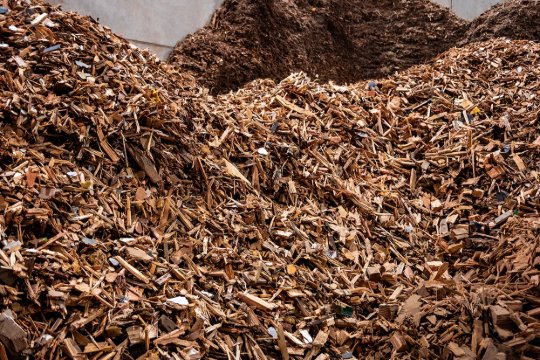
This conserves the wood reserves. The systems then use these reserves in the biomass plants during the dark season – when there is hardly any wind and photovoltaics supply little electricity. “Here we play to the strengths of highly economical, price-stable wood energy that is available at all times – and thus avoid the high price of electricity in winter,” explains Thomas Schmidmeier. “So hybrid technology uses the best of both worlds! And the operator can expect low, very precisely calculable energy costs 365 days a year – without arbitrary speculation costs.”
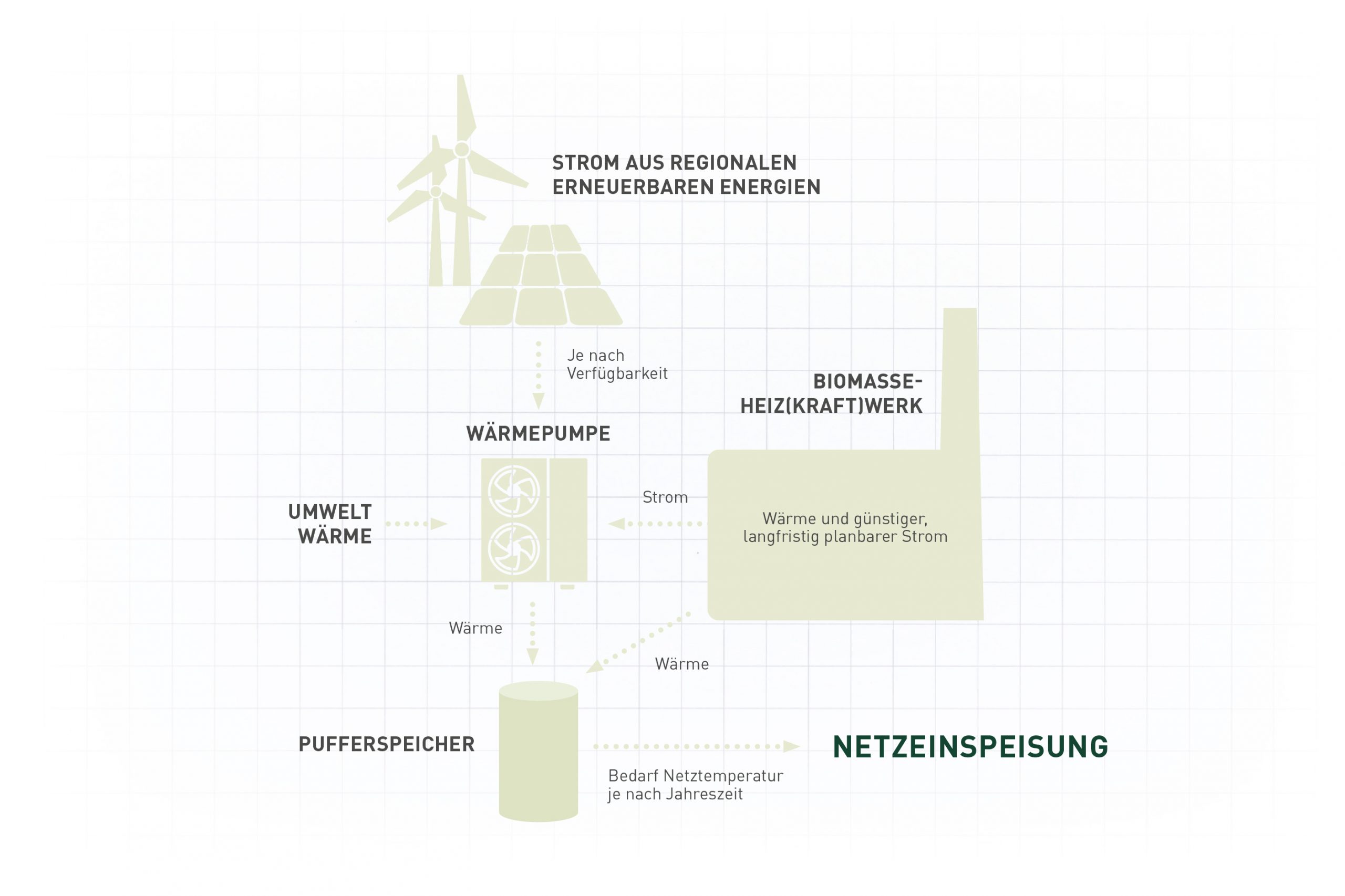
IN THE LOW-TEMPERATURE RANGE: THE NATURENERGIE HYBRID HEAT AND POWER PLANT COMBINES A LARGE HEAT PUMP AND BIOMASS
Hybrid solutions are available in a wide variety of temperature ranges. Up to 110 degrees Celsius, a combination of biomass system and large heat pump is used. The heat pumps supply the base load, while the biomass covers peak loads and seasonal demand. For large systems, the combination of a heat pump with a combined heat and power plant is also possible. Here, the biomass plant supplies unbeatably cheap electricity from used wood for the heat pump in winter. The waste heat generated in this process covers the peak load of a district heating network, for example, in the cold season. There is hardly a greener and more efficient way to provide energy.
Initial profitability calculations with municipal utilities have come to the conclusion that hybrid technology can halve the heat generation costs compared to pure heat pump systems.
Schmidmeier offers this technology together with a globally active large heat pump manufacturer.
SOME LIKE IT HOTTER – PATENTED HYBRID BOILER
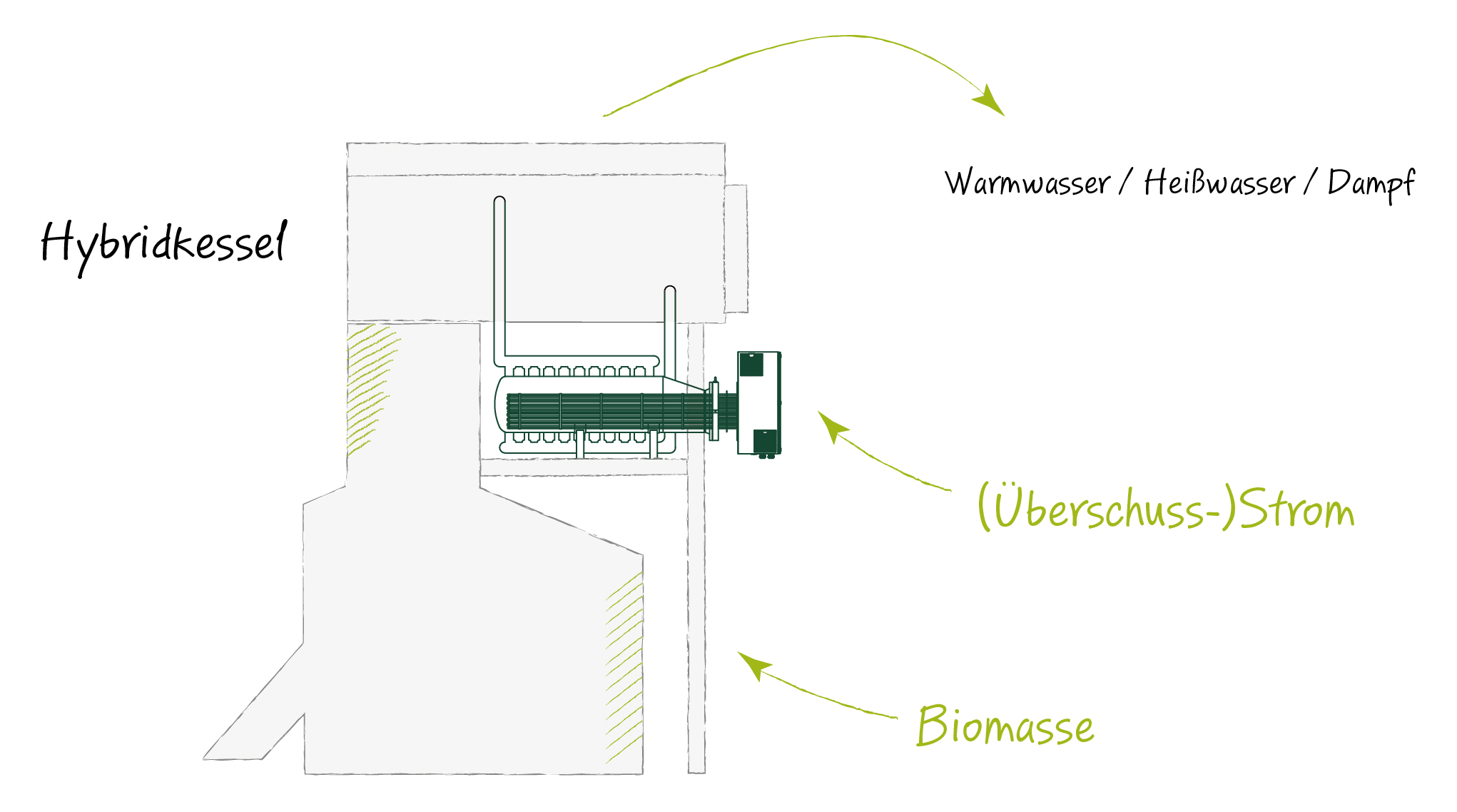
“However, in industrial applications with temperatures between 110 and 200 degrees – in exceptional cases up to 400 °C – the heat pump can no longer work. Here we rely on hybrid boilers. An electric heating system is integrated directly into the biomass boiler. This heating element can then be used to continuously couple green electricity in and out for heat generation – depending on the market price,” explains Thomas Schmidmeier.
Conclusion: Intelligent hybrid technology helps companies to always use the most favorable energy mix: In summer, cheap surplus electricity from wind and PV systems, in the dark doldrums of winter, price-stable, CO2-neutral and always available biomass – without any oil or gas.
More information at: https://www.schmidmeier.com/hybride-loesungen/