DIP partner Aengevelt Immobilien still sees a growing market for serviced apartments, even if the Sturm und Drang phase is coming to an end. For some years now, serviced apartments in various variants have been considered an alternative use, especially for hotel and office properties that require a change of use. After a take-off phase with very high growth rates, Aengevelt sees the first indicators of the transition to the maturation phase, in which the growth rates still remain positive, but no longer reach the magnitudes of the early years.
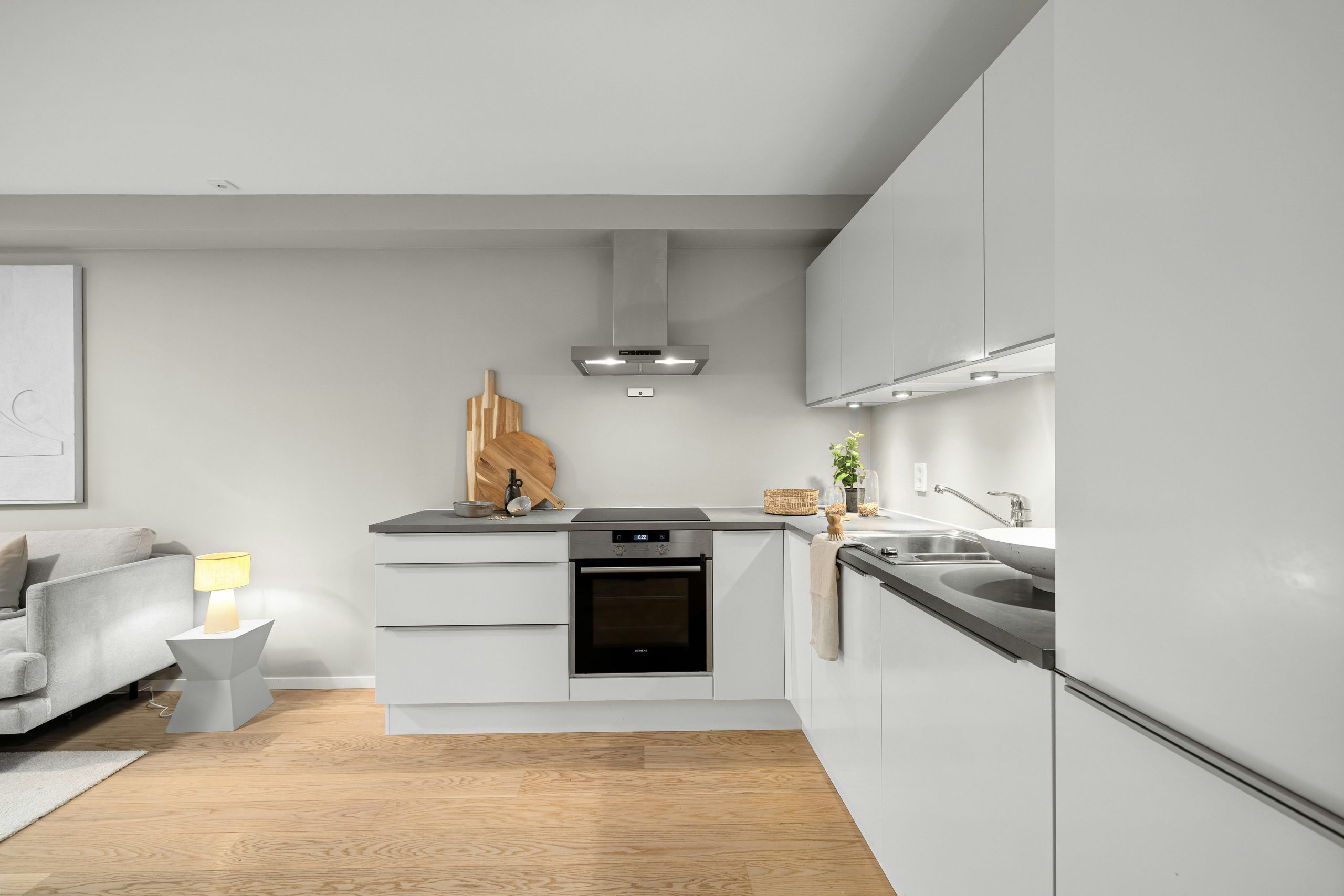
Serviced apartments occupy the niche between the hotel and the rental apartment. In terms of size, floor plan, equipment and privacy, they resemble furnished apartments that have at least a kitchenette, if not a full kitchen. Hotel-like services such as room cleaning, laundry and ironing service, room service, concierge services (also digital) and mobility services can usually be booked for a fee. The length of the stay is variable, from a single night to long-term stays of several weeks or even months with correspondingly degressive pricing, depending on the length of the stay.
Compared to the hotel room, the serviced apartment is usually more homely, it offers more space and the possibility of independent living, including the possibility of preparing food yourself and hosting guests. In addition, the stay is usually much cheaper than in a hotel of comparable class, up to 50% for long-stays, i.e. a stay of several weeks or even months. Multi-bedroom apartments also offer the option of sharing an apartment, thereby further reducing costs. Compared to the regular rented apartment, the serviced apartment scores with the possibility of short-term stays, complete furnishing and equipment, i.e. no furnishing costs, as well as uncomplicated booking and renting including complete cost transparency, because ancillary costs are excluded.
Serviced apartments are attractive for business travellers, especially if they need accommodation for several days, weeks or months as project participants, assignees, expatriates or as part of job rotation or internships. But serviced apartments can also be advantageous for tourists, especially if they are traveling as a family or in small groups and want to save costs through self-catering. The trend towards “workation” also shows that the boundary between business and leisure is becoming increasingly blurred.
Global sales of serviced apartments forecast to double by 2033.
Business Research Insights expects the global serviced apartment market to grow steadily from USD 32.7 billion in 2025 to USD 66.0 billion in 2033. The absolute annual growth is expected to remain relatively constant, while the projected annual growth rates will fall, from over 30% in 2026 to only around 6% in 2033 – a typical phenomenon in the product life cycle when the take-off or expansion phase transitions into the maturation phase.
The number of serviced apartments continues to rise at the first signs of saturation.
For Germany, Anett Gregorius reported on Apartment Service at the industry conference SO! APART from a nationwide portfolio of serviced apartments of 59,200 units in 1,090 buildings, which corresponds to an increase of 4,300 units or a growth rate of 7.8% compared to the previous year. By 2028, growth of a further 17,650 units is expected, i.e. by around 30% compared to the current level. However, some markets, especially Frankfurt am Main, are showing the first signs of saturation, so that the greatest growth in the future is expected in the B, C and D cities.
Signs of saturation are also evident in the occupancy rate, which fell by 6.5 percentage points to 76.5% compared to the previous year. The average daily rate (ADR) rose slightly to EUR 95.91 in line with inflation, while the more important indicator revenue per available room (RevPAR) fell to EUR 69.59 due to occupancy. By comparison, RevPAR is EUR 164 in the particularly strong London market.
Shifts in type of use and duration.
Shifts can also be observed among the guests. For the first time, the leisure segment, i.e. users who book apartments for private, non-business purposes, has taken the lead with a share of 51% compared to the business segment. 56% of the guests now come from Germany. This shifts the focus from long-stay international business travellers in A-cities to short-term stays of domestic tourists in smaller cities.
The industry’s sentiment barometer shows a balanced picture, in which slightly positive and slightly negative assessments are exactly balanced. With regard to their own location, however, 42.3% of the assessments are positive and 15.5% are even very positive, while only 8.3% are pessimistic.
Conclusion: An attractive, sustainable investment segment with the right framework conditions.
Dr. Wulff Aengevelt, Managing Partner of DIP partner Aengevelt Immobilien: “Serviced apartments remain an interesting option, especially for necessary conversions of mainly commercial buildings such as office or hotel properties. Although the growth curve is gradually flattening out after the stormy early years, it remains on an upward trajectory. As with all asset classes, the keys to success lie in the macro and micro location and the corresponding offers of public transport connections, local amenities, gastronomy and leisure facilities in the immediate vicinity, in a demand-oriented concept and the optimisation of the cost structure. With an overall harmonious framework and a proven need at least in the medium term, serviced apartments with realistic rental rates are an attractive, sustainable investment segment, especially in tense housing markets.”
Serviced apartments are attractive for business travellers, especially if they need accommodation for several days, weeks or months as project participants, assignees, expatriates or as part of job rotation or internships. But serviced apartments can also be advantageous for tourists, especially if they are traveling as a family or in small groups and want to save costs through self-catering. The trend towards “workation” also shows that the boundary between business and leisure is becoming increasingly blurred.
Global sales of serviced apartments forecast to double by 2033.
Business Research Insights expects the global serviced apartment market to grow steadily from USD 32.7 billion in 2025 to USD 66.0 billion in 2033. The absolute annual growth is expected to remain relatively constant, while the projected annual growth rates will fall, from over 30% in 2026 to only around 6% in 2033 – a typical phenomenon in the product life cycle when the take-off or expansion phase transitions into the maturation phase.
The number of serviced apartments continues to rise at the first signs of saturation.
For Germany, Anett Gregorius reported on Apartment Service at the industry conference SO! APART from a nationwide portfolio of serviced apartments of 59,200 units in 1,090 buildings, which corresponds to an increase of 4,300 units or a growth rate of 7.8% compared to the previous year. By 2028, growth of a further 17,650 units is expected, i.e. by around 30% compared to the current level. However, some markets, especially Frankfurt am Main, are showing the first signs of saturation, so that the greatest growth in the future is expected in the B, C and D cities.
Signs of saturation are also evident in the occupancy rate, which fell by 6.5 percentage points to 76.5% compared to the previous year. The average daily rate (ADR) rose slightly to EUR 95.91 in line with inflation, while the more important indicator revenue per available room (RevPAR) fell to EUR 69.59 due to occupancy. By comparison, RevPAR is EUR 164 in the particularly strong London market.
Shifts in type of use and duration.
Shifts can also be observed among the guests. For the first time, the leisure segment, i.e. users who book apartments for private, non-business purposes, has taken the lead with a share of 51% compared to the business segment. 56% of the guests now come from Germany. This shifts the focus from long-stay international business travellers in A-cities to short-term stays of domestic tourists in smaller cities. The industry’s sentiment barometer shows a balanced picture, in which slightly positive and slightly negative assessments are exactly balanced. With regard to their own location, however, 42.3% of the assessments are positive and 15.5% are even very positive, while only 8.3% are pessimistic.
Conclusion: An attractive, sustainable investment segment with the right framework conditions.
Dr. Wulff Aengevelt, Managing Partner of DIP partner Aengevelt Immobilien: “Serviced apartments remain an interesting option, especially for necessary conversions of mainly commercial buildings such as office or hotel properties. Although the growth curve is gradually flattening out after the stormy early years, it remains on an upward trajectory. As with all asset classes, the keys to success lie in the macro and micro location and the corresponding offers of public transport connections, local amenities, gastronomy and leisure facilities in the immediate vicinity, in a demand-oriented concept and the optimisation of the cost structure. With the overall right framework conditions and a proven need at least in the medium term, serviced apartments with realistic rental rates are an attractive, sustainable investment segment, especially in tight housing markets.”