The German healthcare market is facing a profound change. Clinics are closing, gaps in care are emerging and at the same time the need for medical care is increasing. Carsten Demmler (Managing Director of HIH Invest), Alexander Lackner (CEO neworld), Patrick Brinker (Head of Real Estate Investment Management at Hauck Aufhäuser Lampe) and Felix Rotaru (Director Healthcare at Hauck Aufhäuser Lampe) discussed this at the online press conference “From hospital death to supply gap: How is the healthcare market sorting itself?”.
Already today, 97 percent of all treatment cases in the German healthcare system take place in the outpatient sector, which is a total of around 580 million patient contacts per year. “We see a clear structural trend here, which is politically promoted,” says Felix Rotaru. “Outpatient healthcare real estate is therefore a market that will continue to grow due to the political will for outpatient care.” Carsten Demmler emphasizes: “When clinics close, there is no empty space, the demand remains. Outpatient healthcare properties compensate for these gaps in care and at the same time offer stable, sustainable conditions for investors and users.”
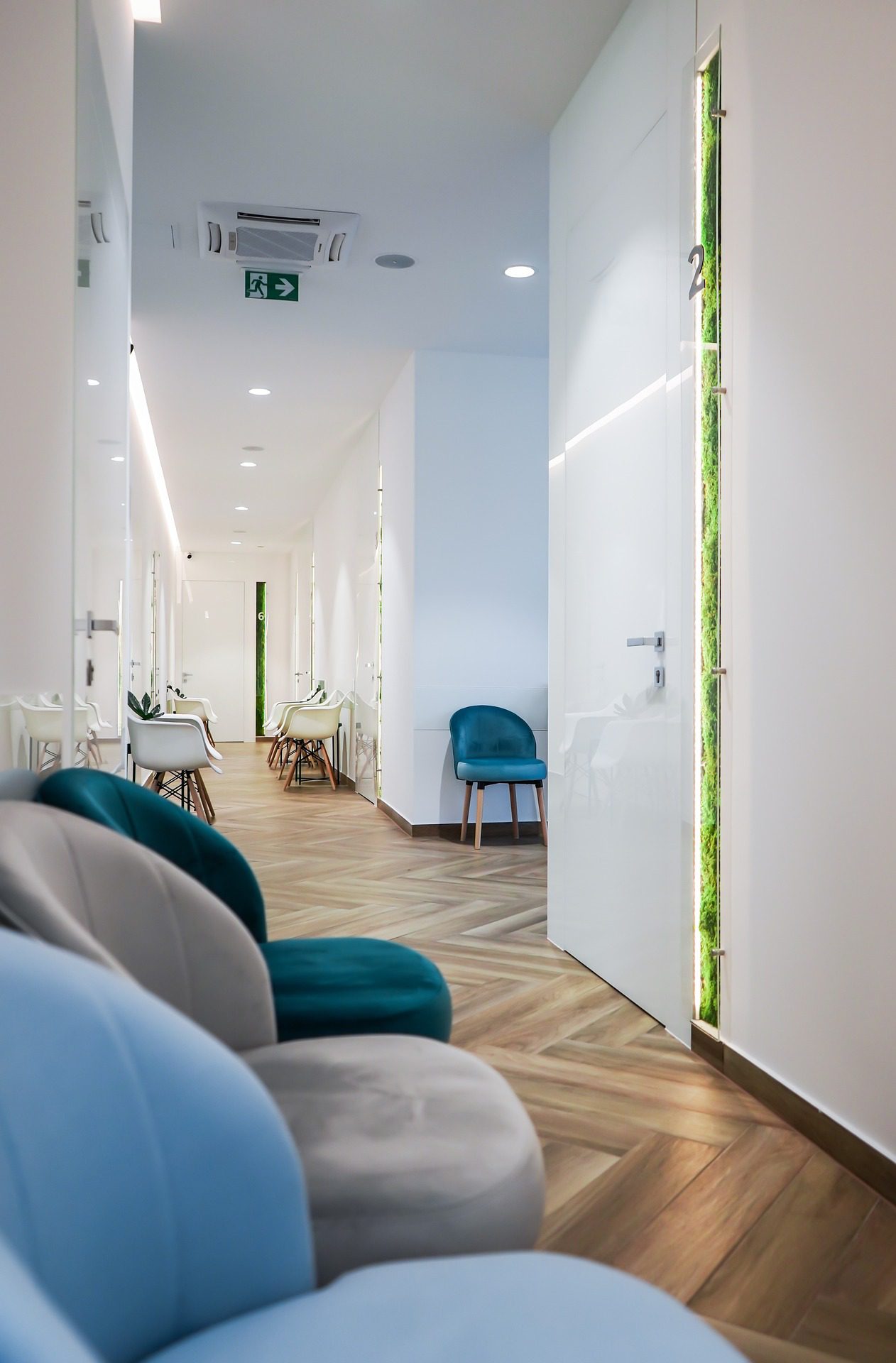
Outpatient structures include a variety of property types: from medical centers and surgical centers to outpatient and intersectoral health centers. “Due to changed space requirements and the increase in medical forms of cooperation, outpatient care today needs a completely different real estate infrastructure than it did 30 years ago,” Rotaru emphasizes.
The market data underlines the segment’s dynamism: around 3,500 outpatient healthcare properties have been identified, with a potential market volume of more than 30 billion euros. In an extended analysis, Hauck Aufhäuser Lampe even expects up to 4,500 properties in the future. The majority of them cover areas between 1,500 and 5,000 square metres. “The healthcare properties are being built in line with demand,” says Patrick Brinker. “We see that two-thirds of the properties on offer are typical medical centers or outpatient health centers.”
“The demand for plannable, patient-oriented outpatient services is increasing faster than the inpatient system can map,” says Alexander Lackner. “Outpatient health centers and surgical locations not only close this gap medically, it is a meeting place for doctors and specialists. Patients benefit from setting new standards in efficiency, service quality, technology and user-friendliness.”
The area of outpatient surgery centers is currently growing particularly strongly. The annual expansion of the AOP catalogue and the introduction of hybrid DRG significantly accelerates the shift of operations from hospitals to the outpatient sector. “Next year, up to one million surgical cases could be shifted from the inpatient to the outpatient sector,” says Rotaru. Alexander Lackner adds: “Care in clinics has become too tight. Modern outpatient surgical centers offer predictability for patients and doctors. Appointments are not postponed due to emergencies or unforeseen events. This enables cost-efficient work, especially since outpatient clinics specialize in their area and do not operate numerous departments like hospitals.” neworld co-founded an OP-on-demand operator to close this gap in services. “There is enormous market potential – and a clear supply gap that we can close,” says Lackner.
According to the panelists, the segment offers an attractive and stable risk-return profile for institutional investors. “We have an attractive profile with stable, highly indexed leases,” explains Patrick Brinker. “And we deliberately do not invest in properties that are exclusively dependent on a single operator.” Instead, investors prefer a diversified tenant mix of doctors, therapy providers and other healthcare providers. Carsten Demmler adds: “We see a very clear need both in the medical field and in age-appropriate housing. The demographic trend is clear.”
Especially in rural regions, health centers play a central role in ensuring care: “We are seeing a sharp increase in demand for integrated health locations that enable care close to home,” says Demmler.
The panelists see a frequently discussed risk – the problem of restaffing medical practices – less critically than often portrayed. “The individual practice, which covers 80 square meters and is operated by a single doctor, no longer exists,” explains Rotaru. Modern health centres offer much more attractive working conditions for young doctors. “We are seeing a very high demand from doctors who want to work in larger structures,” says Demmler. “The risk of vacancy is correspondingly low.”
Looking ahead, however, the panelists stressed the need for political support. “The outpatient sector is systemically relevant, but the real estate infrastructure is still lacking in many places,” says Demmler. Lackner also refers to the political responsibility: “Politicians must not close their eyes to reality. We need more flexibility, faster procedures and real support for new care models. Especially during Corona, we were made aware of how ailing the existing health system was in many places, so we must act quickly now.”
Demmler expects 2026: “We expect steady and long-term growth. We will continue to see more investment in this area, but no sudden spikes.” Lackner adds: “The big push will come more towards 2030 to 2035. But the course will be set today.”