Die IREBS Immobilienakademie ist die Weiterbildungsakademie der IREBS International Real Estate Business School an der Universität Regensburg. Sie bietet berufsbegleitende Weiterbildung für Führungs-, Nachwuchs- und Fachkräfte in der Immobilien-, Bau-, Finanz- sowie weiteren Branchen an. Zu den Studiengängen gehören das RICS-akkreditierte Kontaktstudium Immobilienökonomie sowie die Intensivstudiengänge Real Estate Asset Management und der Certified Real Estate Investment Analyst. Mehr unter: www.irebs.academy
IRE|BS Standpunkt No. 141 by Prof. Dr. Tobias Just, FRICS, University of Regensburg and IRE|BS Real Estate Academy, with an outlook on the challenges and prospects for retail real estate.
IRE|BS Viewpoint No. 142 by Attorney-at-Law, Dr. jur. Leopold Winkler with an in-depth look at the effects of the coalition agreement for real estate law and the real estate industry.
Artificial intelligence has found its way into our everyday work. The next step is already in preparation: AI agents who will automate processes for us. The real estate industry must deal with these developments.
Prof. Dr. Mathias Hellriegel in the IREBS position on upcoming changes, the significance for housing construction, upcoming challenges and positive impulses for the industry.
This year's report on commercial real estate financing, the German Debt Project, makes it clear that 2025 will not bring a sudden turn for the better, but a gradual revival, albeit unevenly strong according to market segments.
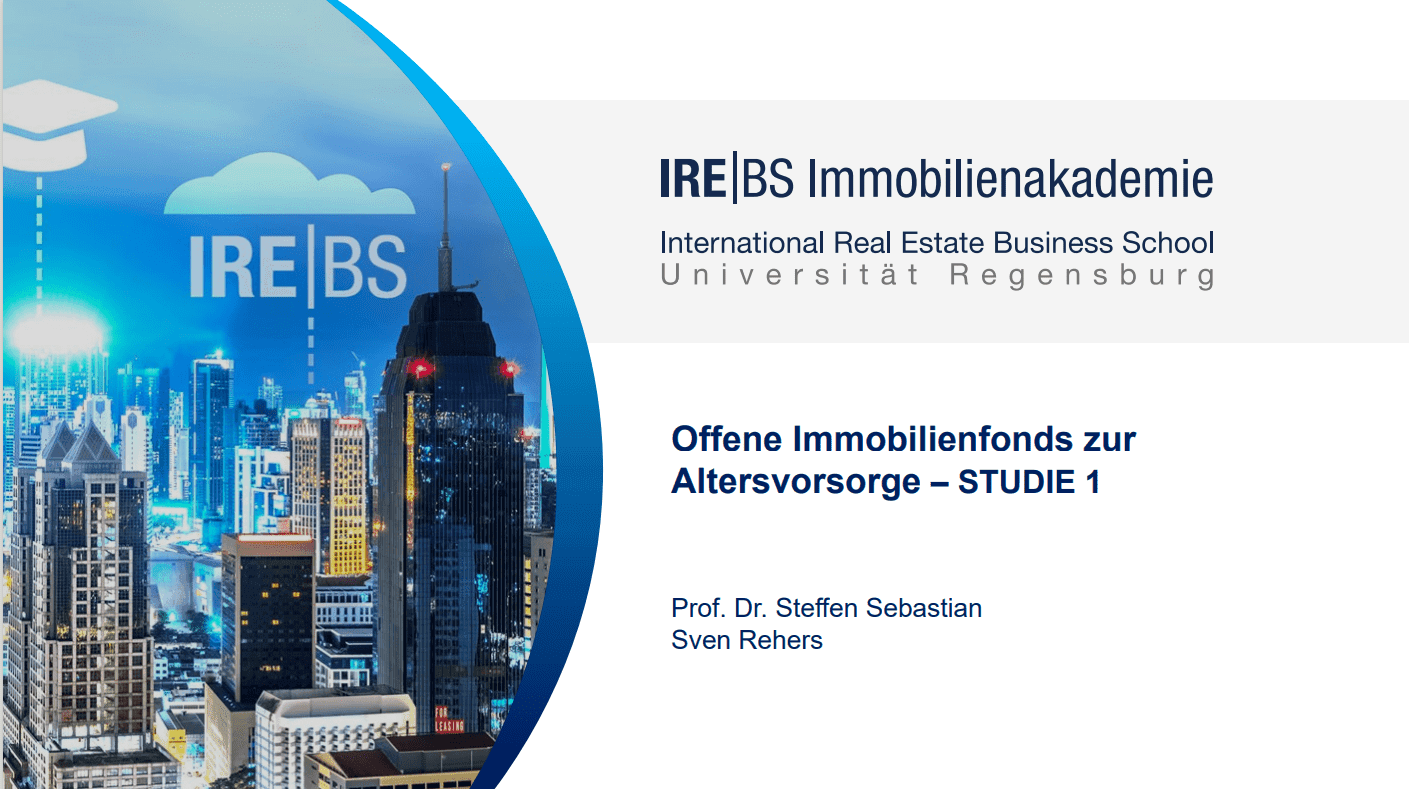
Open-ended real estate funds are currently being viewed critically by the press and consumer advocates. Above all, the ongoing net outflows of almost all funds are the subject of discussion.
The presentation shows the economic problems of the industry, but even more clearly the different structural aspects. And here there are noticeable differences. There are expected winners and laggards and two clear signs of hope.
In the USA, the central bank is lowering key interest rates to stimulate the economy. This fuels discussions about whether the Fed is still acting independently or has already been manipulated by Trump. Meanwhile, the ECB is sticking to its course of interest rate stability – and that's a good thing.
The holiday season has been the best time to get involved with retail for decades, as a large part of annual sales are now accounted for by the Christmas business.
Statement by Prof. Dr. Steffen Sebastian, Chair of Real Estate Finance, IREBS Institute for Real Estate Economics, University of Regensburg, on the ECB's interest rate decision.