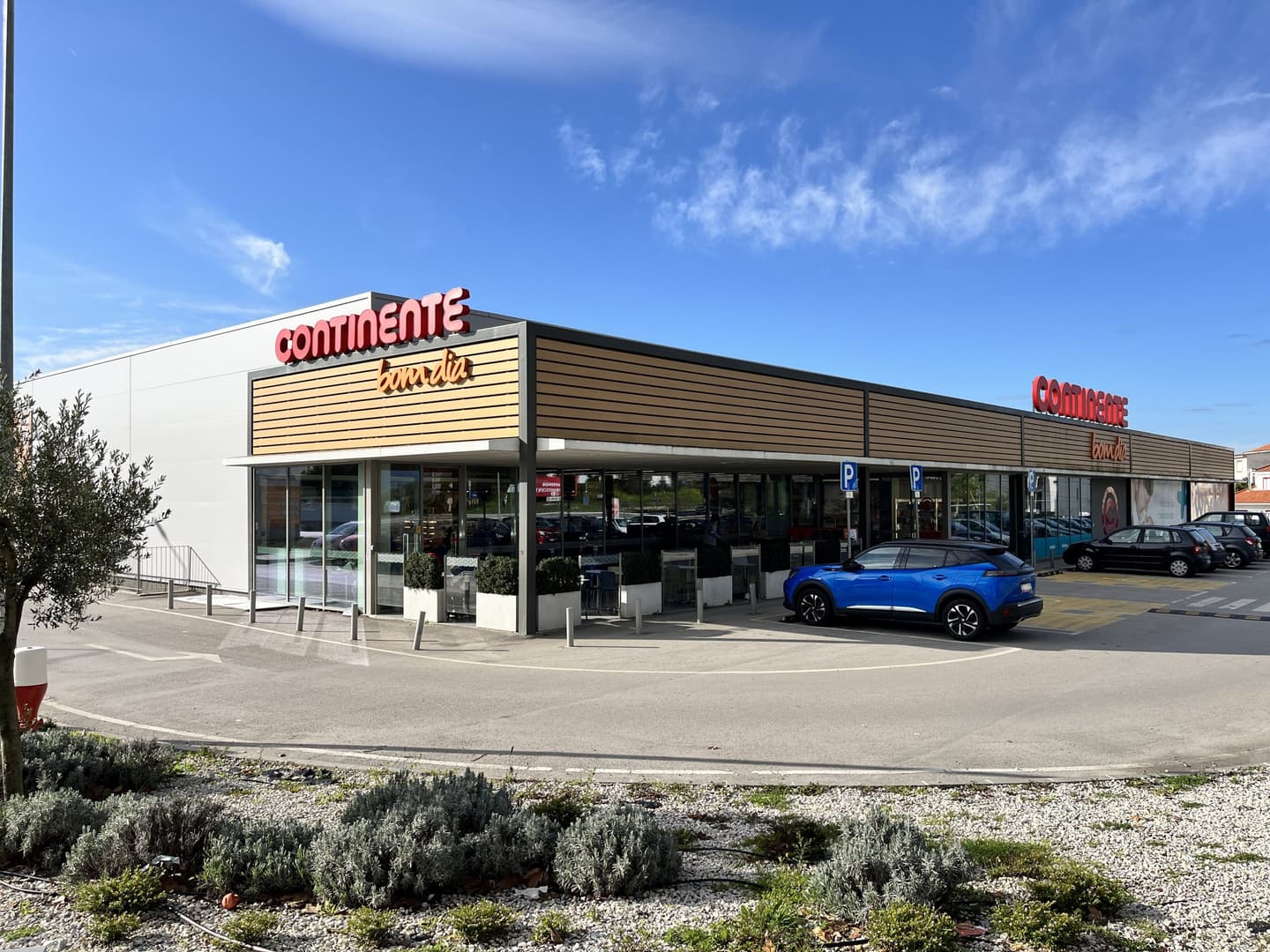
According to Colliers, retail properties were traded for 5.8 billion euros in Germany in 2025 as a whole. The fourth quarter, which accounted for around a third of the annual result at 1.9 billion euros, made a significant contribution to the 16 percent increase compared to 2024. The retail segment thus developed at an above-average rate compared to the market as a whole, in which the transaction volume of commercial real estate fell short of the previous year's level by 2 percent. The number of contracts increased by four percent year-on-year.
Among the established types of use, retail properties with a market share of 23 per cent (previous year: 20 per cent) were able to further reduce the gap to the first-placed office and logistics properties with 24 per cent each and are almost at the same level.
Market activity in the high-volume sector is gradually returning
Nicole Römer, Head of Retail Germany at Colliers: "After a strong focus on the crisis-resilient, small-volume and predominantly food-anchored retail segment, which peaked at the turn of the year 2024-2025, we registered a renewed interest in inner-city retail properties and shopping centers with development potential in the second half of the year. In addition to increased market activity, this development also led to more volume growth again."
From the insolvency estate of the Signa Group alone, numerous properties in prime locations of the seven major investment centres were sold in 2025 for a total of over 800 million euros after sometimes lengthy negotiations and considerable price discounts. These include the department stores at Neuhauser Straße 18 (Oberpollinger, Munich), at Kurfürstendamm 229-231 (Berlin) and Jungfernstieg 16 (Hamburg) as well as the Carsch-Haus in Düsseldorf. The sale of Oberpollinger for 380 million euros was also the largest transaction of the final quarter in Germany. The fourth quarter also saw the sale of the Designer Outlet Center Neumünster for around 350 million euros.
Römer continues: "Private investors and family offices with strong equity capital in particular took advantage of the early-cycle opportunities, as in the case of the four department stores mentioned above. At DOC Neumünster, opportunistic capital from the USA was active in the form of TPG Real Estate. In the current market phase, international investors are more interested in large tickets with corresponding return opportunities in Germany. In the third quarter, for example, the Gropiuspassagen shopping centre in Berlin was sold to the British asset manager Hayfin Capital Management."
At 48 per cent of the transaction volume, the share of foreign buyers was roughly at the previous year's level and thus once again exceeded its share of the total commercial investment market of 44 per cent. In addition to asset managers (23 percent market share), which accounted for by far the largest group of buyers in 2024 at 46 percent, private investors and family offices (18 percent) as well as corporates and owner-occupiers (15 percent) were among the most active investors in 2025. The importance of owner-occupiers is mainly due to the billion-dollar strategic takeover of the Porta Group including all furniture stores by XXXLutz. This takeover is also the largest transaction registered on the German investment market last year.
On the seller side, asset managers replaced Immobilien AGs in first place last year with a market share of 19 percent. These were still at the top of the list in 2024 with 28 percent, also driven by disposals from the Signa portfolio. Project developers were in second place in 2025 with 18 percent, followed by corporates and owner-occupiers with 15 percent.
Specialist retail segment continues to shape the market
Even though the market revival is increasingly coming from large-volume individual transactions, transaction activity continues to be dominated by the specialist retail segment. In 2025, as in the previous year, this accounted for almost two-thirds of all purchase cases and 48 percent of the transaction volume in the retail sector. Apart from the aforementioned Porta takeover, food-anchored specialist stores and retail parks still accounted for 59 per cent of the retail store-related transaction volume. In terms of the number of purchase cases, the proportion is around three quarters.
Inner-city commercial buildings, which also include department stores, took second place with a 30 percent volume share and 25 percent of transactions. Shopping centers achieved 22 percent and 10 percent, respectively.
Prime yields remain stable
Despite the above-mentioned deals, the number of transactions of commercial buildings in 1a city centre locations and shopping centres in high-frequency locations remains low. In the prime locations of the seven major investment centers, Colliers expects gross initial yields in the range between 4.25 percent in Munich and 5.00 percent in Berlin, Düsseldorf and Cologne.
In the retail park segment, the stabilisation of prime yields continues. Over the course of the year, they remained unchanged at 5.70 percent gross for retail parks and 5.40 percent gross for specialty stores. A food anchor remains a central selling point and guarantor of value. Römer explains: "Business plans are easy to fulfill, especially with food retailers. In the case of existing tenancies, there is a high probability of renewal. Rents are positively stable, and in top locations, cut-throat competition between retailers is leading to rent increases. Vacancies are therefore immediately re-let and financing conditions for local suppliers are less restrictive for all other retail properties. ESG strategies such as the use of green electricity or the installation of a PV system or charging station can be implemented quickly, which is also done in the interests of retailers and users."
Yields from shopping centres, on the other hand, are exposed to further pressure to adapt in order to guarantee an adequate investment in the face of the necessary revitalisation needs and limited financing conditions. In the past three months, gross yields for shopping centers in prime locations in the top 7 have risen slightly by around 20 basis points to 6.90 percent, while in B locations they are expected to be 8.00 percent.
Outlook: Moderate market recovery expected to continue
"This year will present many opportunities for active investors as more properties from portfolio adjustments will enter the market. These again include larger packages from the local supply sector, but also hybrid malls and shopping centres in need of revitalisation. The sales pipeline is therefore well filled. The selling pressure and the willingness on the sell-side to grant further discounts will increase the longer the challenging financing environment continues. It will become clear in the coming months how many investors on the buyer side will take advantage of this favorable time to enter, especially for core-plus and value-add products, and whether the purchase price negotiations, which are still tough in some cases, will ultimately lead to transactions. Our forecast assumes a moderate continuation of the recovery path of 6 to 7 billion euros in transaction volume by the end of 2026," Römer expects.