
In 2026, the German real estate industry faces a year of opportunities in an early-cycle environment. The economy is slowly recovering and the real estate market is also showing the first signs of stabilization. In this market phase, private and international investors shape the transaction process, while institutional investors act selectively. Prime rents continue to rise in several types of use, new construction activity is declining in almost all areas and the vacancy rate in the office sector has reached a new high in the top 7 cities. At the same time, high-growth types of use such as residential, industrial and logistics, hotels and special segments such as life sciences and data centers are gaining in importance. This is the result of the current report by Colliers “Real Estate Market Germany Outlook 2026”.
“The German real estate industry is in a phase of restructuring – characterised by geopolitical tensions, higher financing costs and challenging regulatory conditions. At the same time, the early-cycle market phase offers a wide range of opportunities for investors who act flexibly and focus on quality,” says Felix von Saucken, CEO at Colliers in Germany.
Investor behaviour: Private capital dominates – international interest increases
The mood among investors is cautiously optimistic. Private investors and family offices remain key players and take advantage of price discounts in the core and core-plus segments. Institutional investors are acting more cautiously, but international capital flows – especially from Anglo-Saxon countries, France, Asia and the Middle East – are picking up again. At the same time, alternative financing models such as private debt continue to increase.
“2026 will be a year in which investors will not only have to react to market movements, but also actively shape the transformation of the real estate market. Private investors and family offices are making targeted use of the early-cycle market phase to acquire high-quality real estate at attractive conditions. Institutional investors, on the other hand, continue to act selectively, which increases the range of value-add products and at the same time opens up new scope for professional asset management strategies,” says Francesca Boucard, Head of Market Intelligence & Foresight Germany at Colliers.
Boucard adds: “Although the economic and real estate cycles are not synchronous, they are closely interwoven. While the overall economic development is characterized by a slow recovery, the real estate market is also showing the first signs of stabilization. A key difference lies in the speed of reaction: the economy reacts more quickly to external shocks and political measures, while the real estate market follows with a delay due to longer planning and investment cycles. At the same time, a transformation phase can be seen in both, in which resilience, efficiency and future viability become central guidelines and shape market dynamics.”
The macroeconomic classification is based on a forecast moderate economic growth of around 1.1 percent for 2026, falling inflation and a stable employment situation.
Office: Vacancy rate to peak in 2026 – competition for ESG-compliant space intensifies
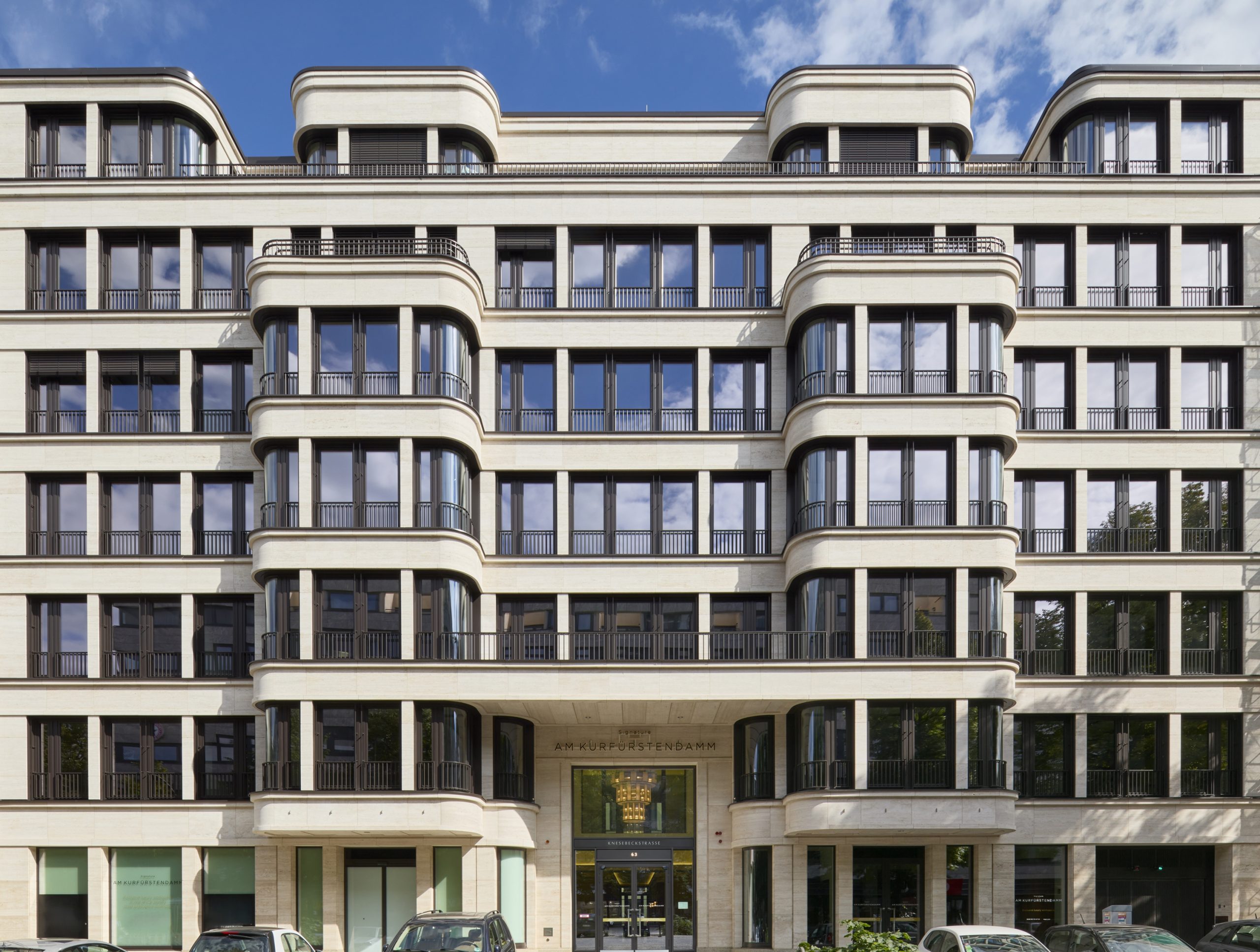
In the office segment, demand is stabilizing, especially from large-scale users. At the same time, new construction activity will decline noticeably from 2026. The office market shows a clear dichotomy: prime rents continue to rise in central inner-city locations, while high-quality, ESG-compliant space remains in high demand and is driving price development. In peripheral locations, on the other hand, average rents are predominantly moving sideways, which further widens the rent spread and restricts the scope for upgrading measures. The investment market is showing signs of a cautiously optimistic development. Gross initial yields in the top 7 are expected to be in a range of 4.25 to 5.00 percent in 2026. Investors are increasingly focusing on central locations and ESG-compliant, future-proof existing properties.
Francesca Boucard comments: “The investment market is finding new impetus in more realistic conditions and thus has the potential to mark the beginning of a new cycle. 2026 marks the end of the vacancy increase on the letting side – it is the last year with a high project development pipeline. Competition in the new-build segment will intensify even more before availability drops significantly from 2027.”
Housing: Demand continues to rise – rents grow by at least five percent
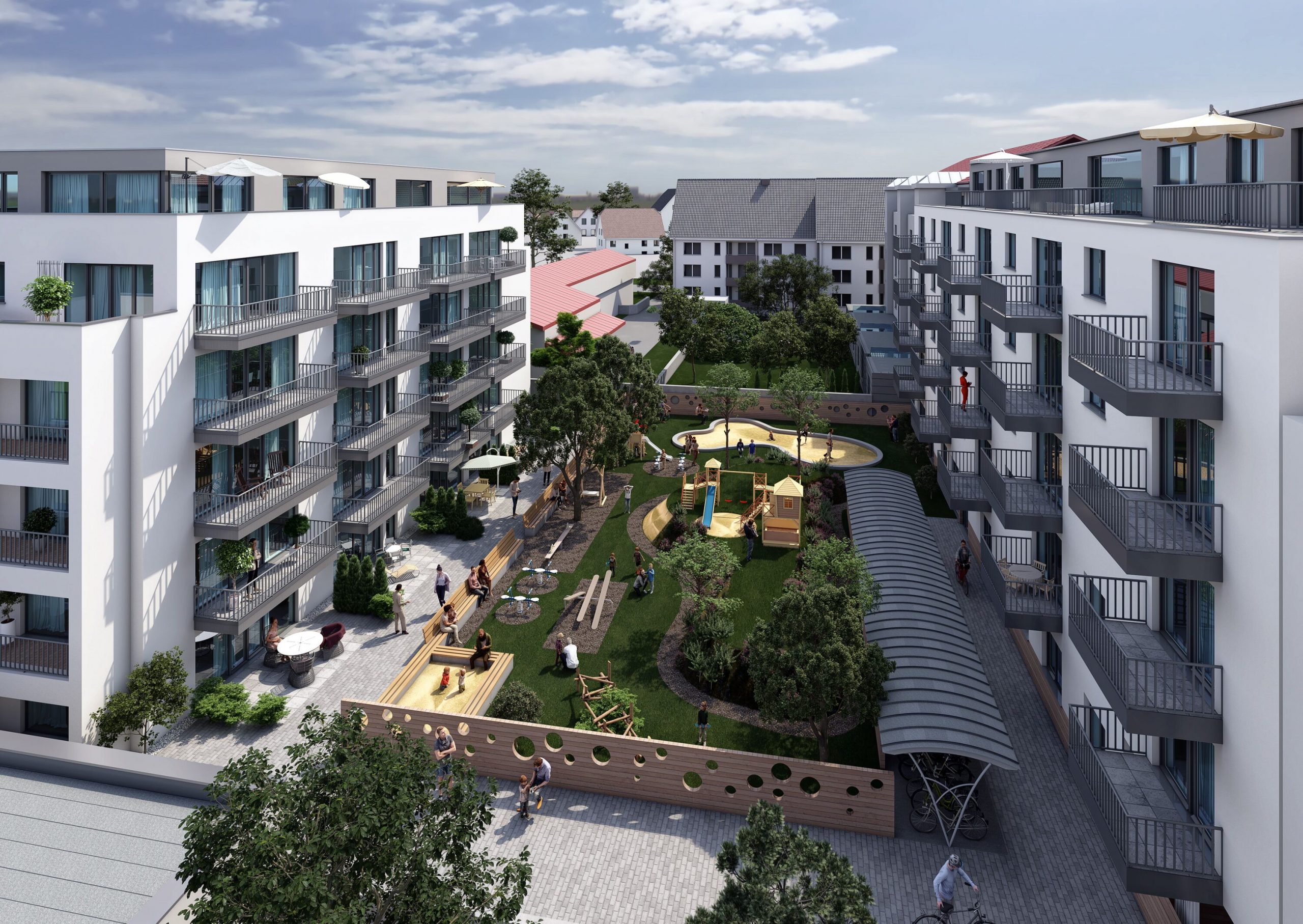
The housing market will remain characterised by a persistent supply deficit in 2026. Despite political measures such as the provision of 4 billion euros in federal funding for social housing and the announced “construction turbo”, construction activity continues to decline. The predicted 175,000 completions are well below demand. At the same time, the number of households in Germany is growing significantly, which further widens the structural housing gap. Accordingly, rents in the metropolises are expected to rise by at least five percent.
Felix von Saucken says: “In 2026, increasing demand for housing will meet a further decline in supply. New construction remains in the low, the construction turbo is not yet taking effect and rents continue to rise. Only the investment market is already showing a noticeable revival. With high demand and a growing focus on properties of a younger age, there are signs of a slight yield compression in the first sub-markets.”
Retail and logistics: consolidation meets new demand impulses
In 2026, the retail sector will continue to be characterised by consolidation and changes in consumer behaviour. The winners are specialist stores, food retailers and non-food discounters – especially those with innovative and sustainable concepts. Inner cities are increasingly relying on mixed-use concepts, services and digital formats. Investors are increasingly concentrating on food-anchored concepts and shopping centers that can be revitalized.
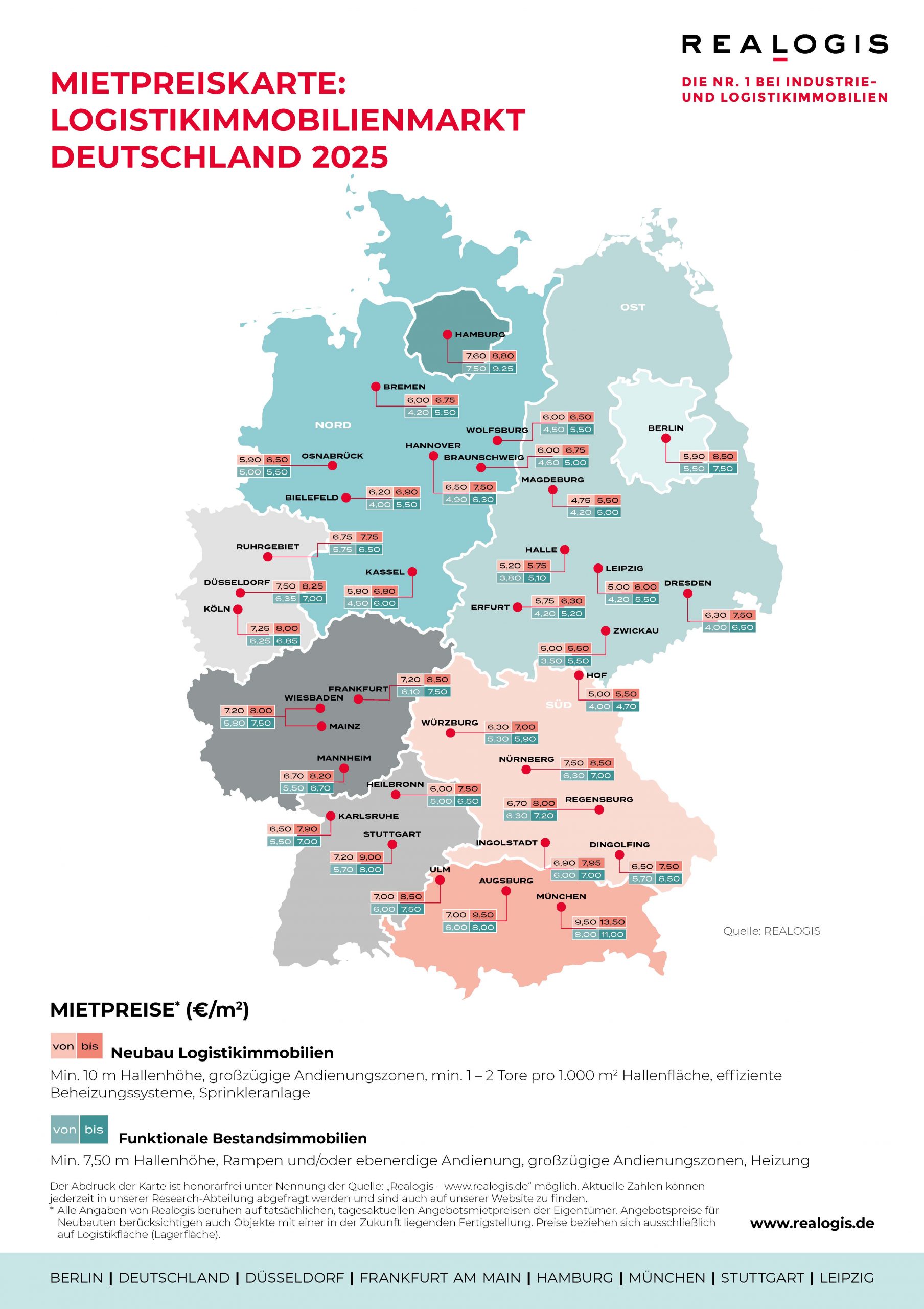
At the same time, the logistics market is facing a turning point. The e-commerce sector, with an expected space requirement of over 650,000 square metres, and defence are driving demand, while consolidation in industrial and contract logistics requires a differentiated space strategy. Strategic locations, complex, sometimes specialised logistics properties and flexible existing properties are becoming increasingly important.
Hotel and Special Segments: Growth through Conversions and Future Uses
The hotel market is benefiting from rising domestic and foreign demand and a growing focus on office-to-hotel conversions, as classic new buildings are rarely realized. International brands and serviced apartment providers continue to drive market activity, resulting in a projected transaction volume of EUR 1.9 billion to EUR 2.2 billion in Germany. These transactions create important benchmarks to stimulate the market again. At the same time, special segments are developing particularly dynamically: Life sciences are experiencing increasing demand for laboratory and research space, especially in cluster regions such as Munich, Berlin and Rhine-Neckar. Data centers are benefiting from the high computing power and infrastructure requirements of digital applications as well as political tailwinds and will be among the key growth drivers in 2026.
Outlook for 2026
“The real estate market is changing: 2026 will be a year in which markets will be reorganized and demand profiles will change. At the same time, opportunities are opening up for investors and market participants who act flexibly and focus on growth segments at an early stage. In this environment, resilience, efficiency and future viability are becoming decisive factors for sustainable success in the German real estate market,” concludes Felix von Saucken, CEO at Colliers in Germany.