The European property investment markets are showing marked differences in 2026. Whilst transaction volumes in Spain, Poland and Ireland rose sharply in the first nine months of 2026, the market recovery in Germany remains subdued. In Germany, in particular, diverging price expectations between buyers and sellers, as well as stringent financing requirements, are holding back investment activity. Across Europe, investors are increasingly focusing on properties offering stable returns and structural growth prospects. Data centres, residential and logistics properties are in particularly high demand. This is according to the latest “EMEA Capital Markets Snapshot Q3 2026” from Colliers, which examines developments in the property investment markets across 18 European countries.
Investment activity is picking up significantly in several European countries
In Spain, the transaction volume for the first nine months of 2026 totalled around 16.8 billion euros, representing a 28.2 per cent increase on the previous year’s figure. Residential property accounted for the largest share at 5.9 billion euros, followed by hotels at 3.3 billion euros and retail property at 2.6 billion euros. In Poland, the investment volume rose by 90 per cent to more than 4.8 billion euros over the same period. Growth was particularly strong in the retail and logistics property sectors. Ireland recorded growth of 34 per cent to 2.16 billion euros. In Sweden, the transaction volume increased by 25 per cent to the equivalent of around 13 billion euros.
In Germany, property worth 21.6 billion euros was traded in the first nine months. This represents a fall of nine per cent compared with the same period last year. The figures show that the recovery in the European property investment markets has not yet been widespread.
“Capital is available, but is increasingly being deployed in a targeted manner. Investors are focusing on markets and property segments with strong fundamentals, stable yields and long-term growth prospects. In this context, larger portfolios, investment platforms and partnerships are becoming increasingly important. It remains crucial that the price expectations of buyers and sellers align and that transactions are economically viable,” says Luke Dawson, Head of Global & EMEA Capital Markets at Colliers.
In Germany, pricing remains a key challenge
In the German investment market, interest is currently focused on selected strategies and properties. In the office sector, the focus is shifting towards smaller core investments, whilst in the industrial and logistics property sector, specialised properties are in particular demand.
“The third quarter in Germany continued to be characterised by subdued transaction activity. The problem is less a lack of capital than the ongoing difficulty in reaching agreement on prices between sellers and buyers. International investors are once again showing growing interest in the German property market, albeit with clearly defined risk-return requirements. We therefore anticipate a selective market recovery in the fourth quarter. Looking ahead to 2027, we expect transaction activity to increase, particularly as the pressure on owners and banks to act is mounting,” says Michael R. Baumann, Head of Capital Markets Germany at Colliers.
For the final quarter, Colliers sees investment opportunities in office properties with potential for capital appreciation and in operator-managed property concepts, particularly in the Alternative Living segment.
Data centres, residential and logistics properties are attracting capital
Data centres are among the most sought-after property segments across Europe. This is driven primarily by the rising demand for digital infrastructure and computing power for artificial intelligence applications. Data centre capacity in the EMEA region currently stands at around 12.5 gigawatts. Newly contracted colocation capacity for AI applications in Europe rose from 89 megawatts in the first half of 2025 to 420 megawatts in the corresponding period of 2026. However, limited electricity and grid connection capacities, as well as protracted planning processes, are hampering further expansion at established locations such as Frankfurt, London, Amsterdam and Dublin. As a result, alternative locations such as Madrid, Milan, Lisbon and the Nordic countries are gaining in importance.
In the residential property sector, the ongoing housing shortage in numerous European markets and the demand for rental flats are fuelling investor interest. Larger residential portfolios, residential properties specifically developed for letting, and platform investments are in particularly high demand. In the student accommodation segment (Purpose-Built Student Accommodation, PBSA), transaction activity is showing signs of recovery following a subdued start to the year.
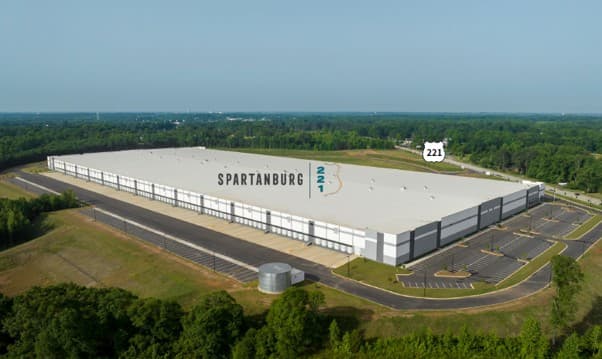
Industrial and logistics properties continue to benefit from robust rental growth and low levels of speculative new-build activity. Additional demand is being driven by the reorganisation of international supply chains, as well as investment in defence and modern manufacturing. However, the limited supply of suitable properties continues to hamper transactions.
Office, retail and hotel properties offer selective investment opportunities
In the European office property markets, demand for high-quality space, rising prime rents and the limited supply of new-build properties are fuelling investment appetite. The focus is particularly on properties in central locations, as well as Core-Plus and Value-Add strategies, through which investors aim to generate value appreciation via modernisation, re-letting or active asset management.
In the retail property sector, investor interest is focused primarily on food-oriented properties, supermarkets and retail parks. Shopping centres are also attracting selective interest where adjusted valuations and opportunities for repositioning offer attractive prospects for returns.
In the hotel sector, operational efficiency and the quality of management remain key criteria. Rising staff and operating costs are placing greater demands on the profitability of properties. Consequently, investors are increasingly scrutinising the sustainability of returns and potential improvements to day-to-day operations.
The market recovery remains selective for the time being
Higher financing costs, economic uncertainties and the fact that property prices have not yet fully adjusted to the changed interest rate environment are holding back transaction activity in Europe. Longer decision-making and completion processes could also delay the finalisation of individual transactions until the first quarter of 2027.
Colliers expects a gradual recovery in the European property investment markets in 2027. Stable fundamentals in the lettings markets and a substantial pipeline of potential transactions underpin this outlook. The key factor will be the extent to which market conditions stabilise and investors gain greater certainty in their planning.
The full EMEA Capital Markets Snapshot Q3 2026 is available to download here: https://www.colliers.com/en-de/research/emea-capital-markets-snapshot-q3-2026