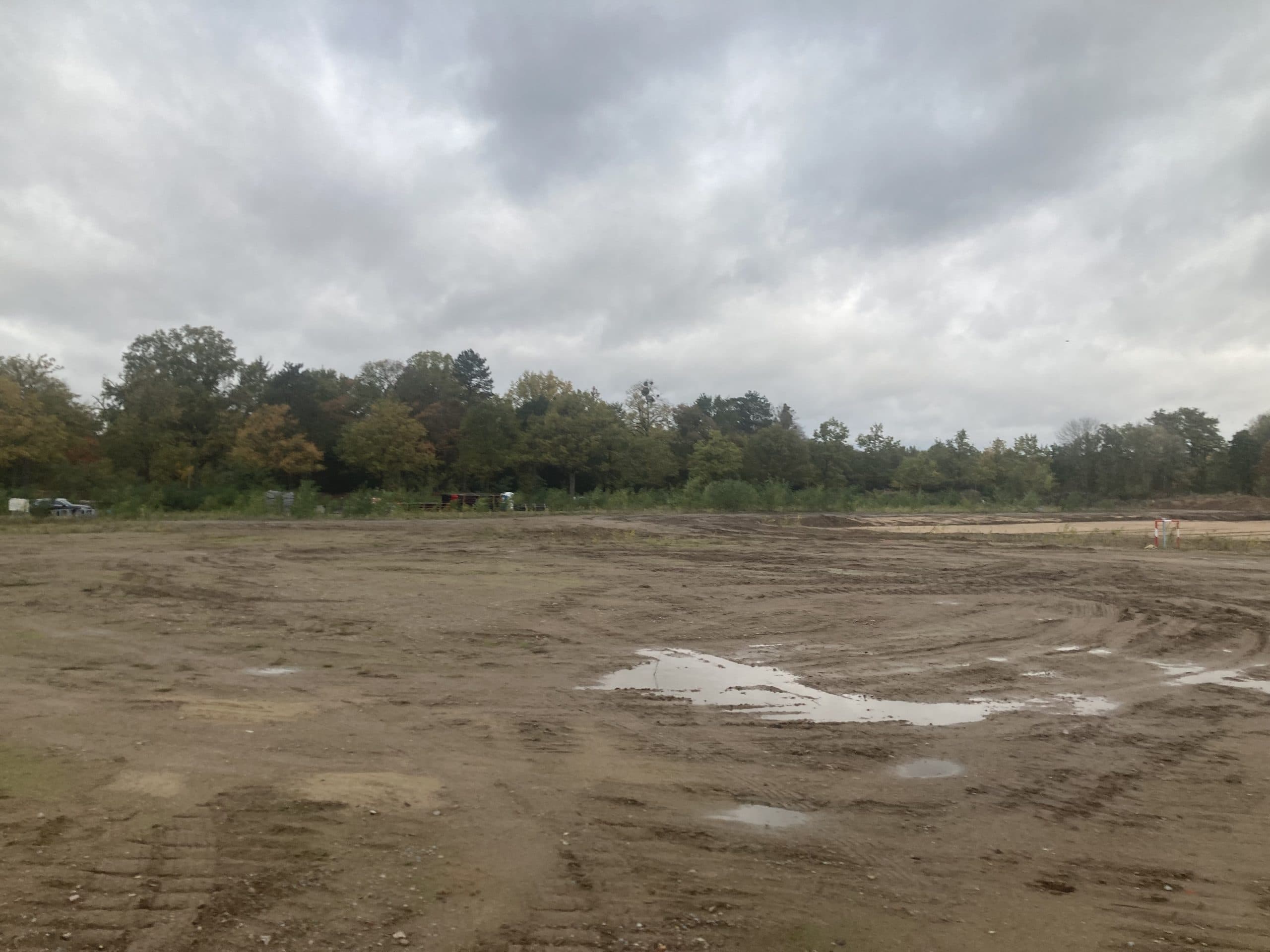
The Lindhorst Group will soon begin preparatory construction measures for the newly planned "Weichenviertel" residential quarter on Fuhsestraße in 30419 Hanover Herrenhausen-Stöcken. According to the legal zoning plan no. 1886, Fuhsestraße Ost, adopted in 2023, the planning for the nine construction sites of the first construction phase has been largely completed. The first necessary permits have been issued by the city of Hanover and preparations for the start of construction have been initiated.
"The first part of the area for the future Weichenviertel has already been extensively cleared in recent months. The project area is divided into two construction phases and we are now starting the preparatory measures in the northern section, which is to comprise nine construction sites and, after completion, will include space for around 850 units in subsidized, price-free and student housing as well as for care, serviced housing and commerce. A large daycare center is also planned," explains Daniel Prater, Managing Director Construction at the Lindhorst Group and responsible for the development of the Weichenviertel. He continues: "We will start the development work from January 2026, weather permitting. For this purpose, the planned roads will be laid out and important media, such as electricity and water/sewage, will be placed in the ground. Construction is then scheduled to start in spring 2026. We want to complete all construction sites in the first section successively from summer 2027 to the end of 2028. We will invest around 160 million euros in this first part and thus transform and upgrade the inner-city industrial wasteland into a special residential area for all generations."
As part of the development measures, Fuhsestraße is expected to be temporarily closed at the level of the construction site from mid-January 2026 to the end of March 2026, and detours will be set up and signposted.
Thomas Vielhaber, Hanover's city planning officer, is pleased: "After intensive preparation, work on this extraordinary residential quarter in Stöcken is now beginning. With a high urban density and yet special open space qualities and appealing architecture, the quarter can develop as a role model. The residential units that are to be built here will make an important contribution to easing the housing market, especially in the area of socially subsidized housing."
ABOUT THE WEICHENVIERTEL
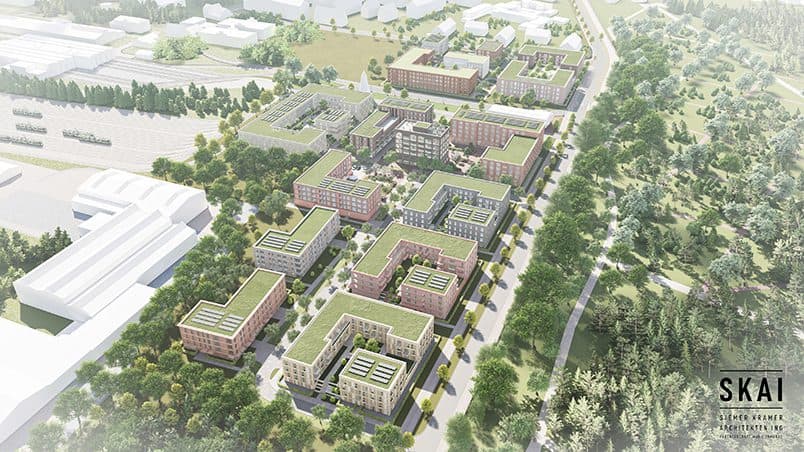
With the Weichenviertel, an innovative and sustainable residential quarter with a total of around 410 residential units for rent, around 430 units for student housing and around 280 units for senior care and living in a central location in Hanover is being planned on a former railway site. The approximately 77,200 square metre former industrial site is to be developed into a modern residential area with extensive services for tenants.
The Weichenviertel is planned in two construction phases along Fuhsestraße: a northern one with nine construction plots and a southern one with four construction plots, which are divided by the access road to the ÜSTRA depot. The specialized construction project developer Cureus from the Lindhorst Group is used in the construction of the housing offers for senior citizens. The other residential buildings are being built by other long-standing general contractor partners of the group, including Olaf Joop Projektbau.
The Weichenviertel will create a residential quarter for intergenerational living and living in Hanover that is characterised by sustainability and innovation. Through its holistic concept, it is to become an attractive and integral part of life in Hanover.
The planning of the Weichenviertel is being carried out in cooperation with the architectural firm plan- & bauwerk Winsen/Aller GmbH, Jan von Hörsten. The buildings are characterised by a clear design and colour scheme as well as their user-friendly design. The entire quarter is suitable and pleasant for everyone and for every phase of life through the planning of a wide variety of buildings and recreation zones.
About the first phase of construction – a home for all generations
The northern part of the Weichenviertel will consist of ten four- and five-storey buildings that will meet the diverse demand for rental apartments in Hanover in different sizes and styles. There will be a total of 271 apartments for singles, couples and families, 241 of which will be subsidized. Condominiums are not planned. Modern, barrier-free and high-quality one- to four-room apartments are planned. Some of the apartments will even be made wheelchair accessible.
In the eastern part of the Weichenviertel, 297 fully furnished residential units for students are also to be built. The buildings also have appropriate equipment for student life.
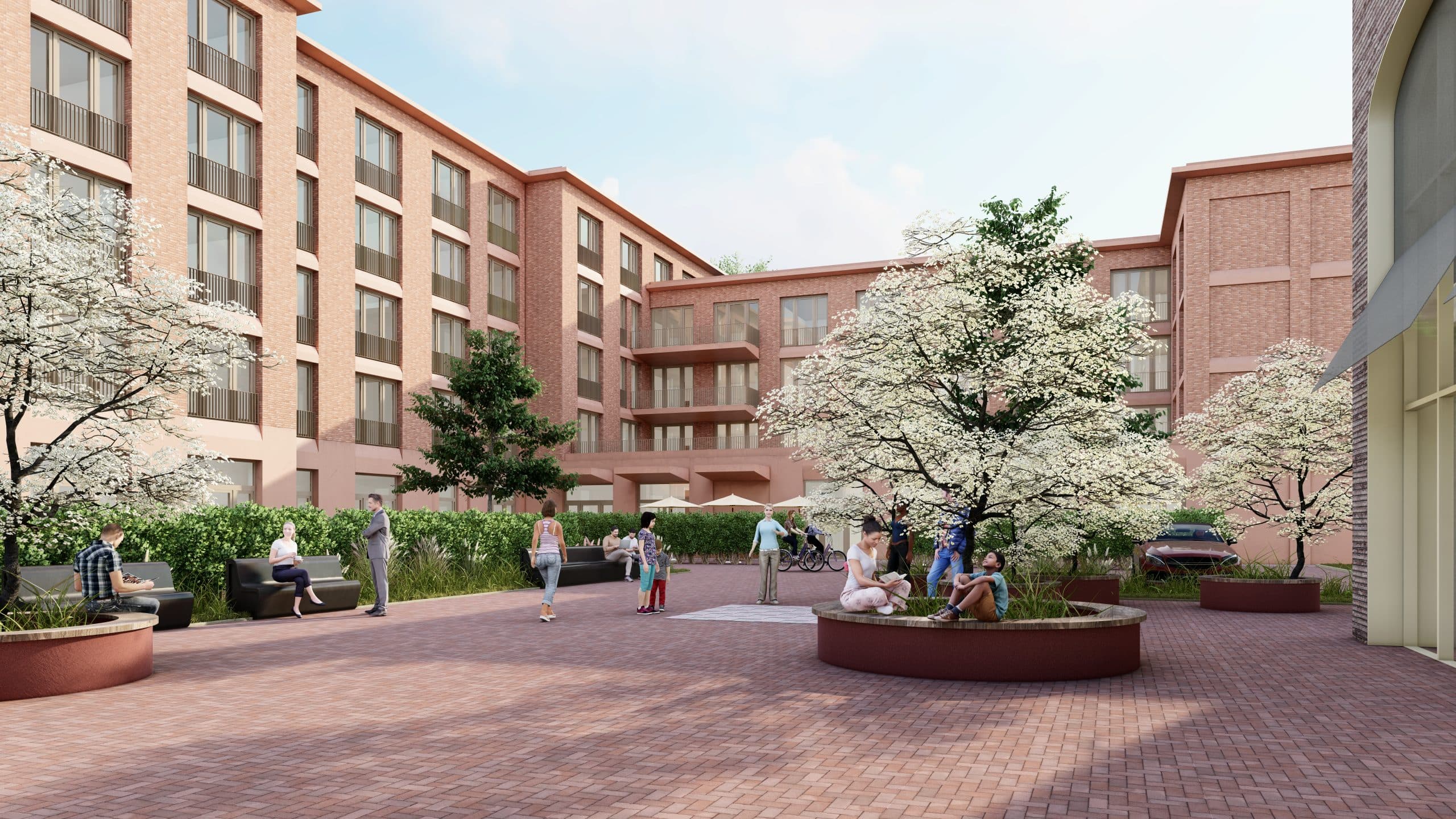
The heart of the Weichenviertel is the central, traffic-calmed district square. Directly adjacent, a senior citizens' residence with 145 care places in modern single rooms, 114 residential units with access to senior-friendly services and a day care center with 20 places are also planned. An offer for local supply is planned on the square, and the daycare center with 105 places in five groups, the neighborhood management and the office of an outpatient care service are also planned nearby. A mobility offer is currently still being examined.
Sustainable neighbourhood orientation and a wide range of services make the Weichenviertel unique
All buildings in the Weichenviertel are to be built in accordance with KfW's Efficiency House Standards 40 and 55 and are therefore particularly energy-efficient. Generously laid out green, leisure and recreation areas with children's playgrounds and a wide range of sports facilities (fitness, skating, basketball, street soccer, climbing opportunities) are intended to give back a piece of urban nature to the former industrial area.
All roof surfaces will be greened. Photovoltaic systems on the flat roofs and e-bike parking spaces as well as the planned car-sharing offer underline the environmentally friendly claim of the district. Traffic in the Weichenviertel is to be reduced to a minimum and directed in a user-friendly way, and more than 200 parking spaces, some with e-charging facilities and handicapped accessible, will be available on the site.
Active and digitally supported neighbourhood management is part of the philosophy of the Weichenviertel: fixed local contact persons are to organise the colourful life in the neighbourhood all year round and support the residents with supplementary services relating to living and living in the Weichenviertel.
Excellent location combines urban and natural life
Fuhsestraße connects two residential areas in Hanover Herrenhausen-Stöcken and runs along the well-known Stöcken city cemetery. On the opposite side of the street and thus in the immediate vicinity of this park-like area and considered a local recreation area, the Weichenviertel is planned. It thus closes a gap in the residential development of the district in an attractive location and is correspondingly well connected. The Weichenviertel will have a large number of its own infrastructural facilities such as a daycare centre, senior citizens' residence, local amenities as well as for recreation and leisure activities. In the neighbourhood there is also an outdoor swimming pool, several sports facilities and the green corridor along the river Leine. Primary and secondary schools are within a few minutes' walk. Hanover's city centre can be easily reached from the Weichenviertel by public transport, bicycle or car. Here you will find the main train station, the university and numerous cultural, leisure and shopping opportunities. The Herrenhausen Gardens are also not far away. The nearest tram station is Stadtfriedhof Stöcken, the nearest S-Bahn station is Hannover-Leinhausen. The connection to the A2 and A352 motorways is optimal via the nearby B6 (Westschnellweg). This also ensures a good connection to Hanover Airport.