A classification between climate data, market mechanics and operational reality.
The energy transition is usually told as an expansion project: more wind, more photovoltaics, more installed capacity. Political targets and investment reports are geared towards this. What is often overlooked is the question of the system that is supposed to absorb this energy. The higher the proportion of weather-dependent generation increases, the more important reliability becomes. This is precisely where the strength of hydropower becomes apparent: it is not a growth driver, not a headline technology, but a structurally stabilizing reserve. Analyses by the International Energy Agency (IEA) and ENTSO-E confirm that their role will continue to grow in the future.
When expansion reaches its limits
Hydropower fulfils a function in the energy system that cannot be expressed in megawatt figures. It supplies electricity continuously, is controllable and available at short notice. In doing so, it is taking on a role that is becoming increasingly important as electrification increases.
While wind and photovoltaics dominate generation, the question of grid stability and system management is intensifying. Production peaks and generation gaps are occurring more frequently, and forecast uncertainties are increasing. Hydropower does not act as a supplement here, but as a corrective. Their contribution is in balance. And it is precisely this compensation that will become a bottleneck the more successfully the expansion of other renewable energies progresses.
A market for specialists
The fact that hydropower is hardly represented in many portfolios has little to do with a lack of attractiveness. It is above all a question of market access. Hydropower cannot be standardized. Plants are location-dependent, technically individual and often grown over decades. Water rights, permits and ecological framework conditions differ from project to project. Anyone who wants to invest here cannot fall back on blueprints. In addition, there is limited availability. Many high-quality plants are owned by municipalities or private individuals and rarely change hands. Transactions are often carried out discreetly, not via structured bidding processes. Hydropower is therefore not a market for rapid allocation. It is a market for investors who are willing to make an operational and long-term commitment.
Europe's strength lies in small things
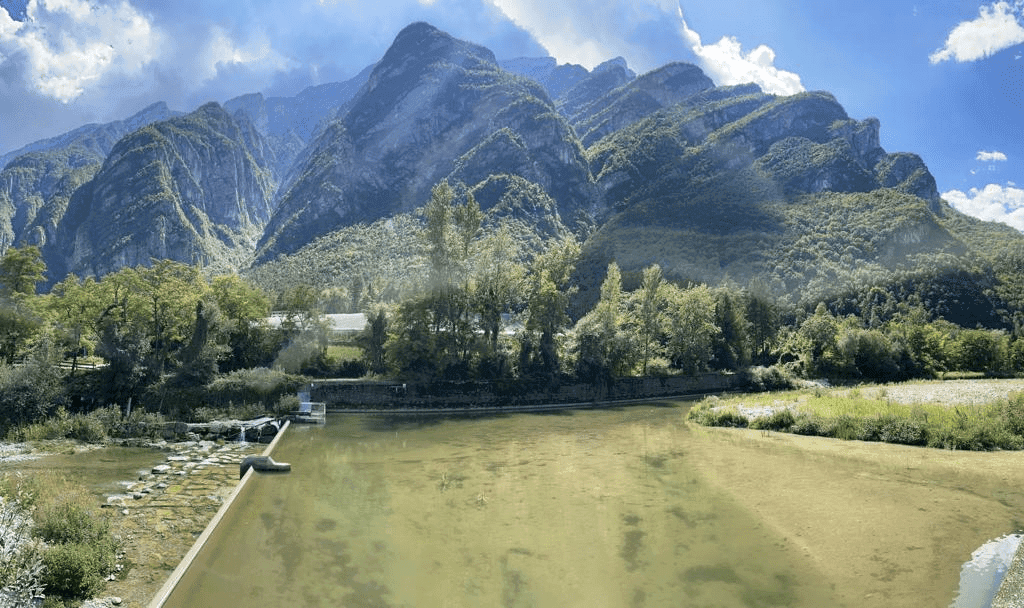
Run-of-river power plants offer clear advantages from an ESG and risk perspective: they interfere minimally with river systems, do not require large reservoirs and do not cause resettlement. Portfolios of many small and medium-sized investments reduce cluster risks and regulatory dependencies. This assessment is supported by studies by ESHA and the EU Joint Research Centre. Dam power plants remain globally relevant, but in Europe the strategic potential lies in the decentralised stock.
Value is created in the company
Hydropower is not a passive asset. A common misconception is to think of it as a self-running infrastructure project. In practice, the company decides on economic success. Studies by the IEA and the EU Joint Research Centre show that existing plants can achieve yield increases of five to fifteen percent through refurbishment and uprating. Modern turbine technology, optimized control, digital monitoring and professional sediment management are the levers. Many of these potentials remain untapped if hydropower is only managed. Value is created where business is understood as an active, continuous task.
Climate risks are regional, not blanket
Climate change is often interpreted as a general risk to hydropower. This view is too undifferentiated. Models from the IPCC and the Copernicus Climate Change Service do not show a general decrease in precipitation for the extended Alpine region, but above all a change in seasonal distribution. Therefore, it is not the abstract climate scenario that is decisive, but the concrete situation in the respective catchment area. Long-term data, regional analysis and adapted operational strategies are key to resilience. Hydropower remains robust if it is planned and operated on the basis of reliable information.
The lever lies in the existing stock
The investment potential of the coming years does not lie in new construction. It is in the existing building. Markets with established hydropower use, regulatory acceptance and fragmented ownership structures are attractive. This combination can be found in Italy, France, Austria, parts of Germany and selected Eastern European countries such as Poland. There are a large number of facilities there that are not operationally exhausted. Professionalisation, technical development and long-term management form the core of value creation. Hydropower is therefore less a development market than a management market.
Run-of-river power plants have a clear advantage from an ESG and risk perspective. They interfere minimally with river systems, do not require large reservoirs and do not cause large-scale interventions or resettlements.
Quiet technologies carry noisy systems
Hydropower will not provide expansion figures that make headlines. Nevertheless, its importance is growing – quietly, but structurally. In an energy system that is increasingly dependent on balance, stability and reliability, it is precisely this quality that becomes a strategic factor. For investors, this means valuing technologies not only according to growth, but also according to system impact. Hydropower is not a trend. It is a reserve. And reserves always become important when systems come under pressure.