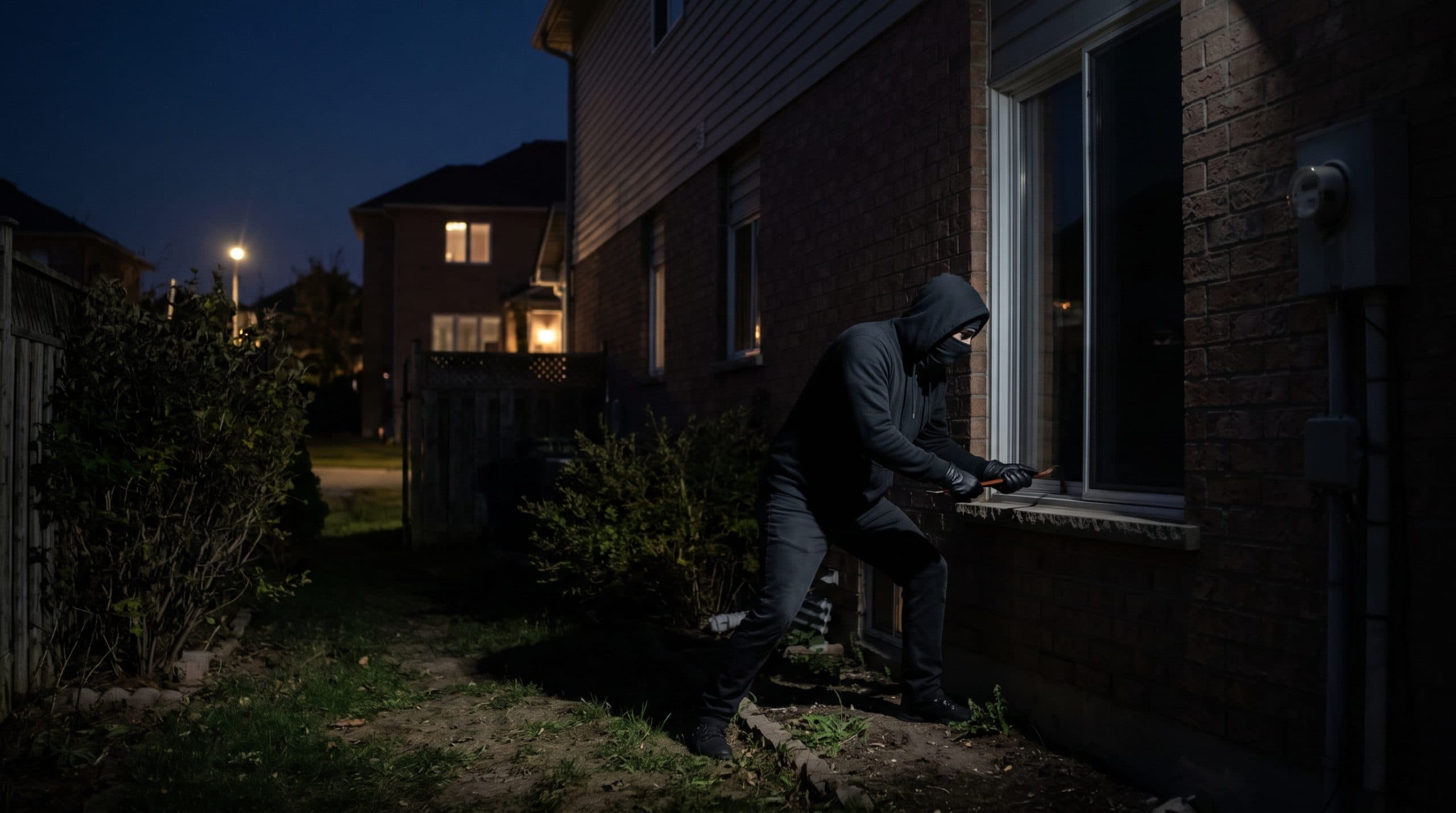
The number of residential burglaries in Germany has risen once again. According to police crime statistics published in April 2026, 82,920 residential burglaries, including attempted burglaries, were recorded nationwide in 2025 – 5.7 per cent more than in the previous year. The financial consequences are significant: according to the German Insurance Association (GDV), residential burglaries resulted in insured losses of around 380 million euros in 2025, approximately 10 per cent more than in the previous year. The average insured loss reached a new high of 3,850 euros. These figures underscore the importance of preventative security measures. In particular, mechanical security devices on windows and doors can help to make break-ins more difficult and prevent damage.
For this reason, the German Real Estate Association (IVD) recommends that owners and tenants regularly check windows, doors and entry points for security vulnerabilities. “Mechanical security measures form the basis of this, whilst modern alarm systems and CCTV cameras can provide additional protection,” says IVD lawyer Annett Engel-Lindner.
Burglary protection: Rights for owners and tenants
Under the Condominium Act, flat owners may require their co-owners to carry out reasonable structural measures to prevent burglary. In the case of measures requested on an individual basis, the costs are generally borne by the owner concerned. Tenants may also, under Section 554 of the German Civil Code (BGB), request permission from their landlord to carry out structural alterations to prevent burglary, provided that these are reasonable for the landlord. This is the case if they can be carried out professionally, do not significantly impair the building’s structure, and do not conflict with the landlord’s other interests. In principle, tenants must bear the costs themselves. “It is important to agree on planned measures at an early stage and to obtain the necessary approvals,” says Engel-Lindner.
CCTV: Court rulings set limits
CCTV cameras, video doorbells and digital peepholes are becoming increasingly popular. However, their use is subject to legal restrictions. For example, the Karlsruhe Regional Court (judgement of 17 May 2024) clarified that digital peepholes fitted to the entrance doors of flats generally require authorisation from the owners’ association.
However, even a resolution by the owners’ association to authorise digital door peepholes may be invalid, as the Hanover Local Court ruled on 17 December 2025 (Case No. 480 C 6084/25): as the devices could not be adequately monitored, the court considered there to be a risk of undue pressure to be monitored.
Six tips for greater safety at a glance
Secure windows and doors: Use burglar-resistant fittings with the highest possible resistance class (mushroom-head bolt locks, lockable window handles, burglar-resistant window fittings and glazing) and retrofit existing windows with additional locks. Lock doors and do not leave windows tilted open.Use lighting: Motion detectors and outdoor lights at entrances, patios and side entrances increase the risk of intruders being detected. Use smart technology: Alarm systems, window contacts and motion detectors complement mechanical security measures. When using cameras and connected devices, ensure data protection and IT security. Cameras should be positioned so that, as a rule, only your own private area is captured.Simulate occupancy: Timers, automatic roller shutters and neighbours can give the impression that the home is occupied during prolonged absences. Secure side entrances: Secure cellars, garages and light wells. Do not leave garden furniture or ladders lying around where they could be used to gain access. Involve neighbours and the police: Take suspicious observations seriously and make use of the police’s free advisory services.
IVD Conclusion
Effective burglary protection starts with sturdy windows and doors. Modern technology can provide additional security, but must be used in a way that complies with the law. The IVD recommends that, when carrying out modernisation work, burglary protection be taken into account at an early stage and that you make use of the free advice offered by the police.