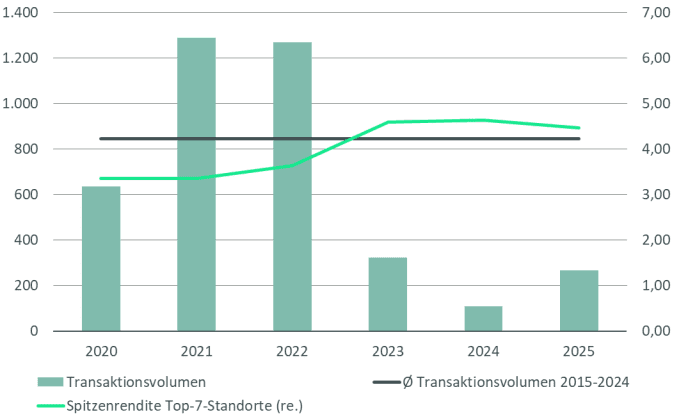
After the weak previous year, the German market for modern living is showing much more movement again. The transaction volume reached around 267 million euros in 2025. Prime yields recently stabilized at around 4.6 percent, while the supply rate in the largest university cities remained between eight and 18 percent of students at the end of the year. Against the backdrop of limited new construction activities and increasing regulatory discussions, the segment is once again moving more strongly into the focus of institutional investors. This is the result of a recent analysis by the global real estate service provider CBRE, which can be accessed under this link.
“In the modern living segment, structurally persistently high demand meets limited supply,” says Stefan Wilke, Head of Residential Investment at CBRE in Germany. “The university cities cannot fully meet the increasing demand from students and young professionals. International investors in particular are taking advantage of this deficit in a targeted manner and are once again increasingly operating in this niche market. The prime yield stabilized at 4.5 percent in the top 7 locations over the course of the year, 0.1 percentage points below the previous year’s figure.”
“Investors are of course aware of the ongoing regulatory discussions in Germany. However, the focus of policy initiatives is primarily on classic furnished tenancies and co-living concepts,” says Marcus Max, Associate Director Valuation Advisory at CBRE. “Student housing concepts are not explicitly addressed in the current debates.”
Although there are regional differences between the individual university locations, the alternative options in tight housing markets are limited in the future. The tight supply is leading to an additional increase in demand pressure.
“The project pipeline in the Modern Living segment remains selective and regionally concentrated. Especially in growing university cities such as Hamburg or Frankfurt, new projects are de facto not planned, although there is also a considerable demand for student housing here. The consequence of this structural shortage is further rental growth in this area,” says Jirka Stachen, Head of Research Consulting Continental Europe.