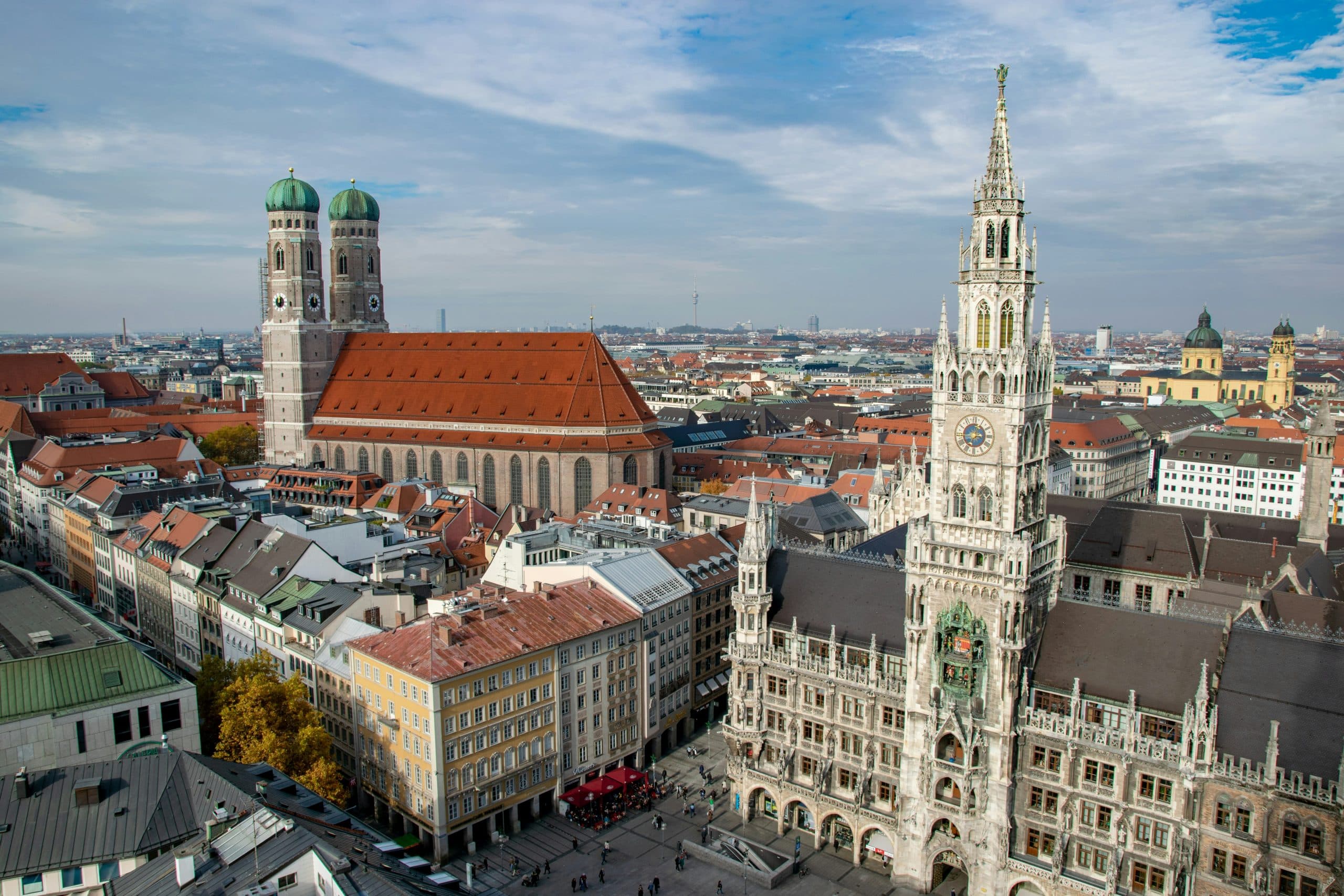
The high office vacancy rate in Munich offers significantly less potential for the creation of new housing than the pure vacancy figure initially suggests. This is shown for the first time by the new Colliers analysis "From workspace to residential space – quantification of the conversion potential of office properties in Munich". From around 1.54 million square metres of office vacancy in the city of Munich, the potential that can be capitalised in the short term is reduced to around 60,000 square metres after the application of planning law and property-related filters.
For the study, Colliers blended the recorded office space vacancy rate as of Q1 2026 with the land use plan, the development plans and the quality of the residential area, among other things. In addition, the characteristics of the office buildings such as year of construction and occupancy rate were taken into account.
"Away from the central locations, Munich has a high office vacancy rate and at the same time a considerable need for additional living space. However, our analysis shows how much the potential is initially reduced as soon as planning law, location, year of construction and occupancy rate are considered together," says Tobias Seiler, Senior Director Market Intelligence & Foresight at Colliers. "Office conversions should therefore be seen more as a targeted solution for a small part of the stock in the housing market."
Planning law significantly limits the conversion potential
A major bottleneck is planning law. According to the land use plan, only 11 per cent or around 162,600 square metres of the office vacancy rate examined is already in areas with residential use or in mixed areas. Around 82 per cent of these areas were completed before 2010 and are therefore no longer part of the most modern building stock.
Around three-quarters of office vacancies are located in areas where a development plan determines the permissible use or is currently being determined. This can make it more difficult to convert it into housing. Around 373,800 square metres are located outside such areas and thus generally have lower planning hurdles for a change of use.
The office vacancy rate in locations with a residential designation initially comprises around 162,600 square metres. If a year of construction before 2010 and a vacancy rate of at least 50 per cent in the respective building are also taken into account, this potential is reduced to around 60,000 square metres. This potential is supplemented by office vacancies in commercially dedicated locations, which add up to 544,900 square metres when taking into account the year of construction and occupancy status filters. For these, a residential conversion is much more difficult, but could be activated in parts with the help of the "construction turbo" (§ 246e BauGB).
Not every area suitable under planning law is technically convertible
Even after the pre-selection under planning law, the technical feasibility remains decisive. The Colliers analysis has shown that the depth of the building in particular and thus the sufficient lighting of new apartments can become an exclusion criterion. Other important factors are the floor height, supply and disposal, facades and windows as well as fire and noise protection requirements.
Each potential conversion property must be examined individually according to these criteria. Older office buildings in particular can be interesting for conversion due to their need for renovation and weaker rental prospects. However, their structural structure determines whether residential use can be economically realized.
Felix Kugler, Regional Manager Bavaria at Colliers, says: "Conversions are a niche solution, but an important one. They can relieve the housing market selectively and at the same time create a new perspective for structurally weaker office properties. However, the prerequisite is that the legal framework, building structure and profitability fit together. Small-scale forms of housing such as apartments and housing offers for students and trainees can be particularly suitable."
Conversion remains a supplement to new residential construction
The opposite trend on the Munich office and residential market continues: The vacancy rate on the Munich office market reached a new high of around 9.3 percent in the city area and 10.2 percent in the overall market in the first half of 2026. Around 250,000 square meters of office space have already been vacant for more than five years. At the same time, the number of completed apartments in Munich fell to around 4,300 units in 2025. The city's willingness to positively support conversions, in combination with successfully completed pilot projects, can lead to a new conversion dynamic among all actors involved.
The full report is available for download here:
http://www.colliers.com/de-de/research/konversionspotential-muenchen