Savills Ski Report 2026/27
Europe’s top Alpine regions continue to dominate the ranking of winter sports destinations with the most expensive residential property, but are facing increasing competition from the US. This is the finding of the Ski Report, published this year for the 21st time by the global property consultancy Savills. Eight of the ten ski resorts in the ranking are located in France, Austria or Switzerland. Nevertheless, the top European destinations did not quite make it to the very top: the US town of Aspen retains the top spot for the most expensive ski property markets – in both the premium and ultra-premium segments. Jackson Hole is a newcomer, becoming the second US destination to make it into the top 10 for the first time.
Aspen is the most expensive ski property market for the sixth year running
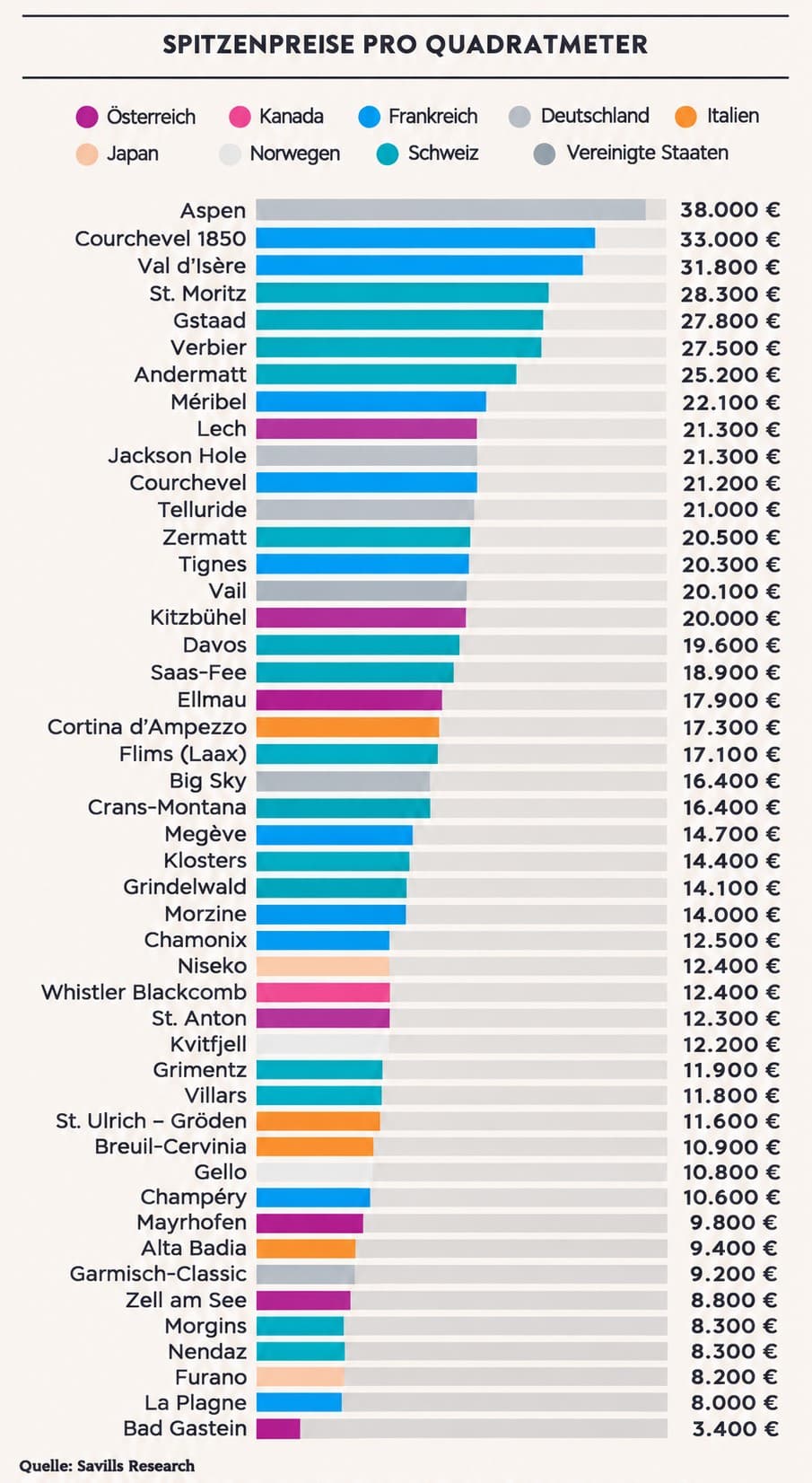
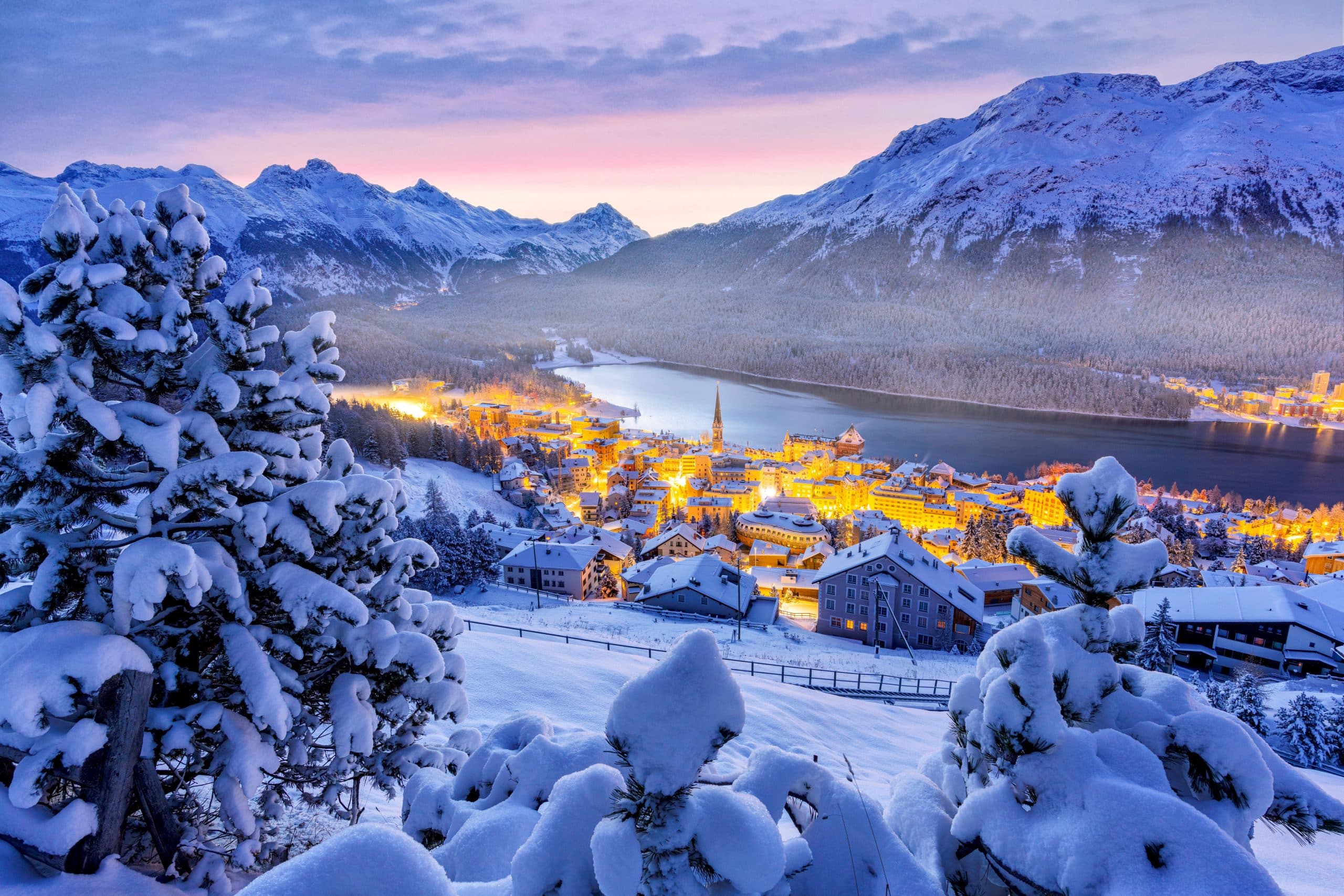
Aspen has retained its position at the top of the Savills ranking for the sixth year running. Average asking prices in the premium segment there now stand at 38,000 euros per square metre – an increase of eight per cent compared with 2025. Courchevel 1850 follows in second place with an annual price rise of 9.5 per cent to an average of 33,000 euros per square metre. At 28,300 euros per square metre, St. Moritz is the most expensive Swiss winter sports resort in the ranking, coming in fourth place. Among the Austrian destinations, Lech tops the list at number nine with 21,300 euros per square metre.
Overall, prices in the world’s leading ski resorts have shown moderate growth of 3.8 per cent over the course of the year up to September 2026. However, it is evident that the market is becoming increasingly selective: destinations with limited supply, year-round appeal and access to international buyers, in particular, are standing out positively from the overall market.
Ski property remains stable amidst economic headwinds
“The premium residential property markets in many ski resorts have so far developed relatively independently of general macroeconomic headwinds such as interest rate changes. One reason for this is that property purchases in these markets are often financed from equity,” explains Kelcie Sellers, Associate Director at Savills World Research. “Exchange rate fluctuations also influence market dynamics. In the period up to September 2026, the US dollar has depreciated against the euro. As a result, ski properties in the US have become more attractively priced from the perspective of buyers from the eurozone. However, prices have remained largely stable in the respective national currencies – a sign of the strength of the domestic markets.”
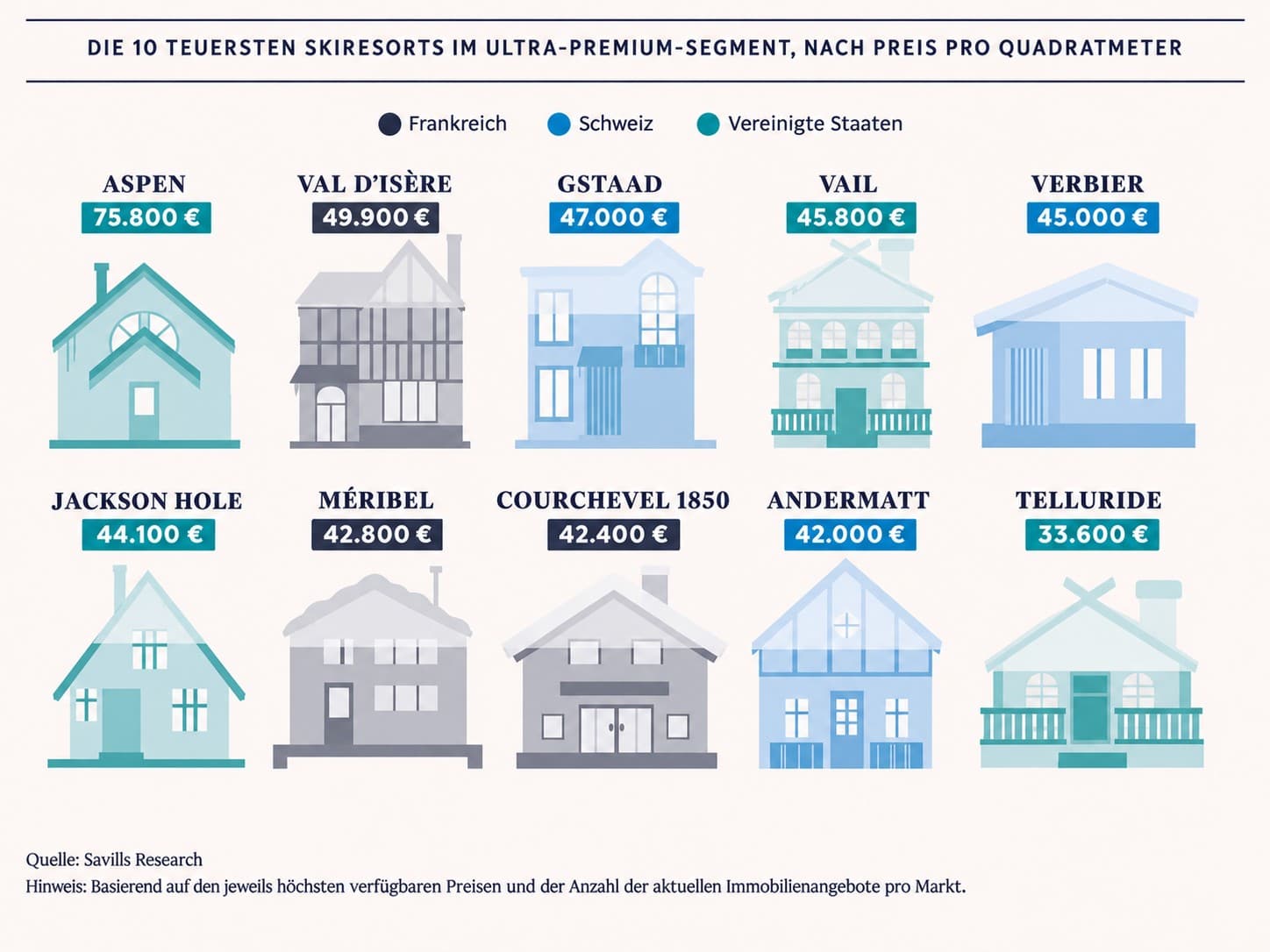
The US, France and Switzerland also stand out in the ultra-premium segment – and here too, Aspen tops the ranking with average asking prices of 75,800 euros per square metre. It is followed by Val d’Isère at 49,900 euros and Gstaad at 47,000 euros per square metre.
Glacier resorts score highly for climate resilience
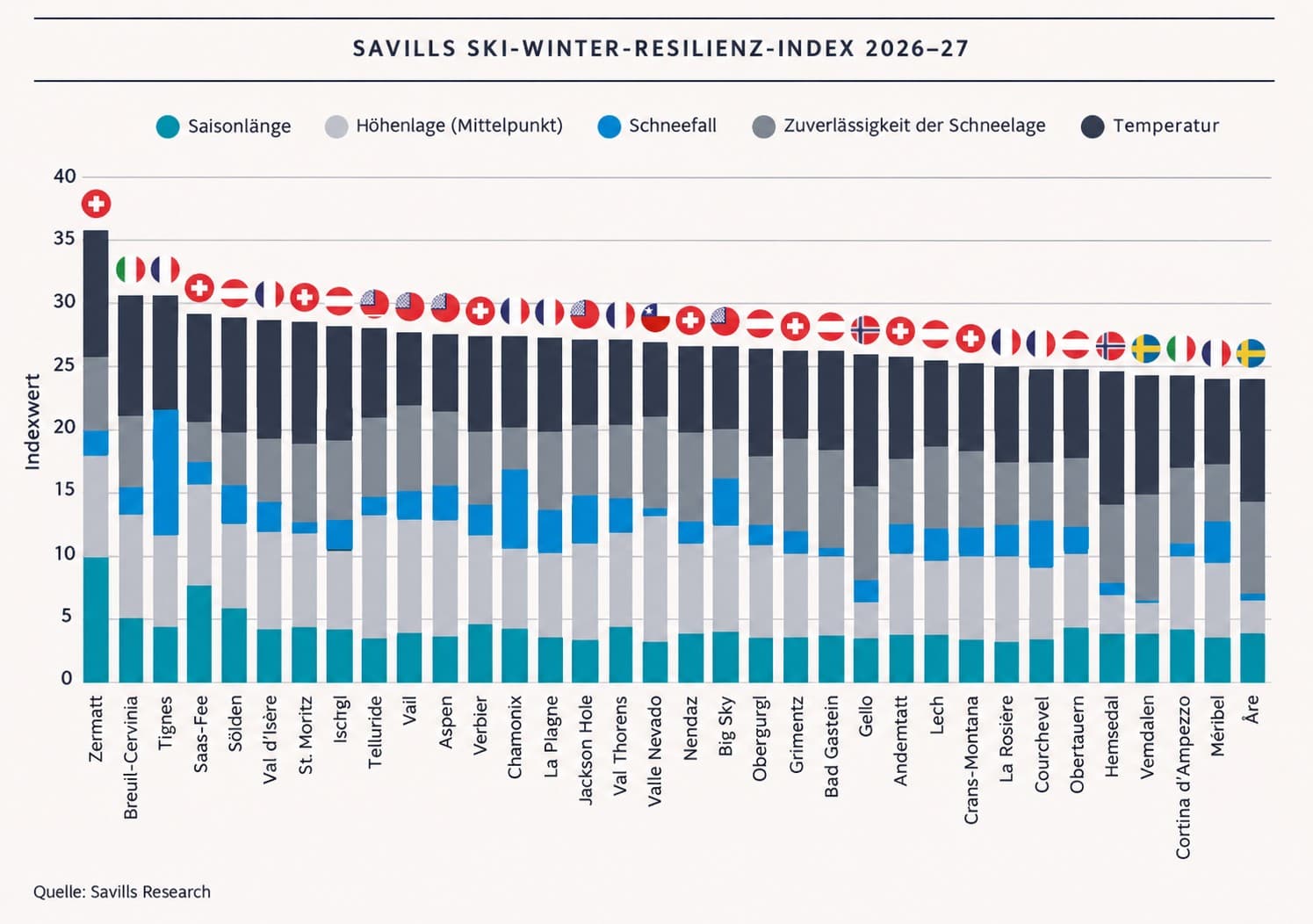
According to Savills, glacier ski resorts and destinations in northern latitudes in particular demonstrate significantly higher winter resilience. Unsurprisingly, the top six places in the Ski Resilience Index are occupied exclusively by glacier resorts: Zermatt, Breuil-Cervinia, Tignes, Saas-Fee, Sölden and Val d’Isère.
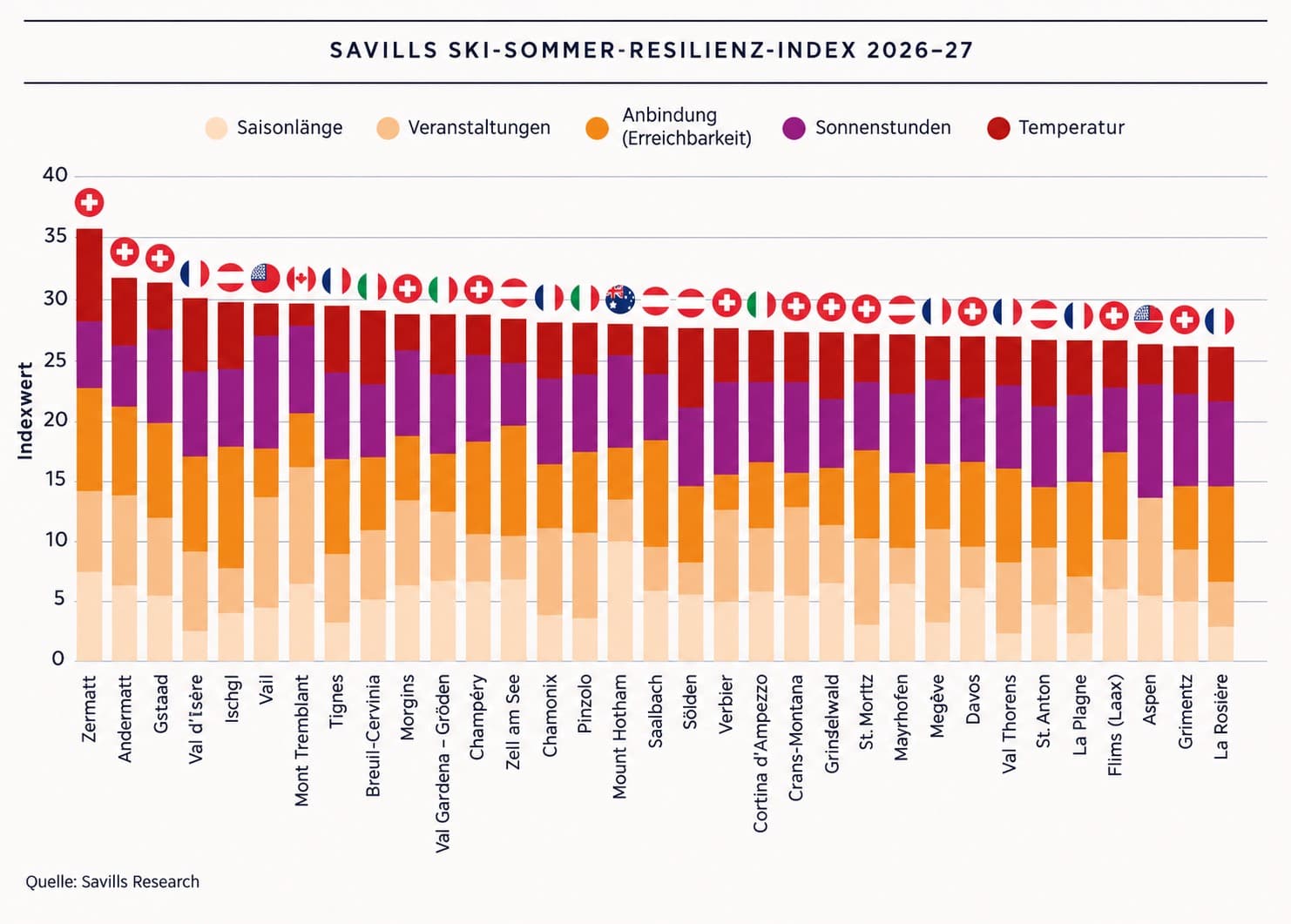
As more and more ski resorts are developing into year-round destinations, Savills has published its own Summer Resilience Index for the first time. It assesses how well destinations attract visitors outside the ski season. The index is based on five criteria: the length of the summer season, the range of events on offer, accessibility and the number of hours of sunshine in summer.
High-altitude Swiss resorts such as Zermatt and Andermatt perform particularly well in the Summer Resilience Index. Key factors include the comparatively low summer temperatures, good accessibility and a long summer season. In North America, Vail and Mont Tremblant, amongst others, achieve high scores, primarily due to their diverse range of events during the summer months. Italian ski resorts, which often achieve average or below-average results in terms of winter resilience, frequently fare better in the summer rankings. Their good accessibility, high number of hours of sunshine and an attractive range of events all contribute to this. Overall, glacier areas and high-altitude destinations prove to be particularly resilient in both summer and winter – even though summer skiing is becoming increasingly difficult. Zermatt takes first place in both resilience rankings.
Year-round tourism is becoming increasingly important for ski resorts
Jeremy Rollason, Head of Savills Ski, says: “As an El Niño event is expected to persist until early 2027, uncertainty regarding snowfall and skiing conditions is likely to remain. Such weather events and increasingly unpredictable snow conditions are accelerating investment in year-round tourism. Destinations that offer attractive leisure and lifestyle options beyond traditional winter sports will see increasingly positive growth.”