BNP Paribas Real Estate publishes market figures for Q4 2025
In 2025, a total of around €6.23 billion was invested in office properties nationwide. Compared to the previous year, this corresponds to a 20% increase in transaction volume. At the same time, the best result of the last three years was achieved. Even though the current investment volume still lags significantly behind the extraordinary results of the last market cycle, there is a certain stabilization of the market situation, which is accompanied by the first slight upward trends. This is also supported by the fact that turnover was achieved exclusively with transactions of individual properties, whereas no portfolio sales could be registered in the entire year – a novelty in the last twenty years. If you only look at the individual properties, the transaction volume has even increased by around 27% over the course of the year. This is the result of the analysis by BNP Paribas Real Estate.
"After falling to third place behind retail and logistics investments in 2024, office properties now rank directly behind the first-placed retail investments with a market share of 25% of total commercial take-up," says Franc Gockeln, Managing Director and Head of Office Investment at BNP Paribas Real Estate GmbH.
Prime yields remain unchanged and are at the same level as in the previous year in all important locations. This means that the net prime yield for offices in Class A cities is 4.36% on average. Munich remains the most expensive location with 4.20%, followed by Berlin and Hamburg with 4.25%.
A-locations also benefit from the increase in turnover, significantly increased number of major deals
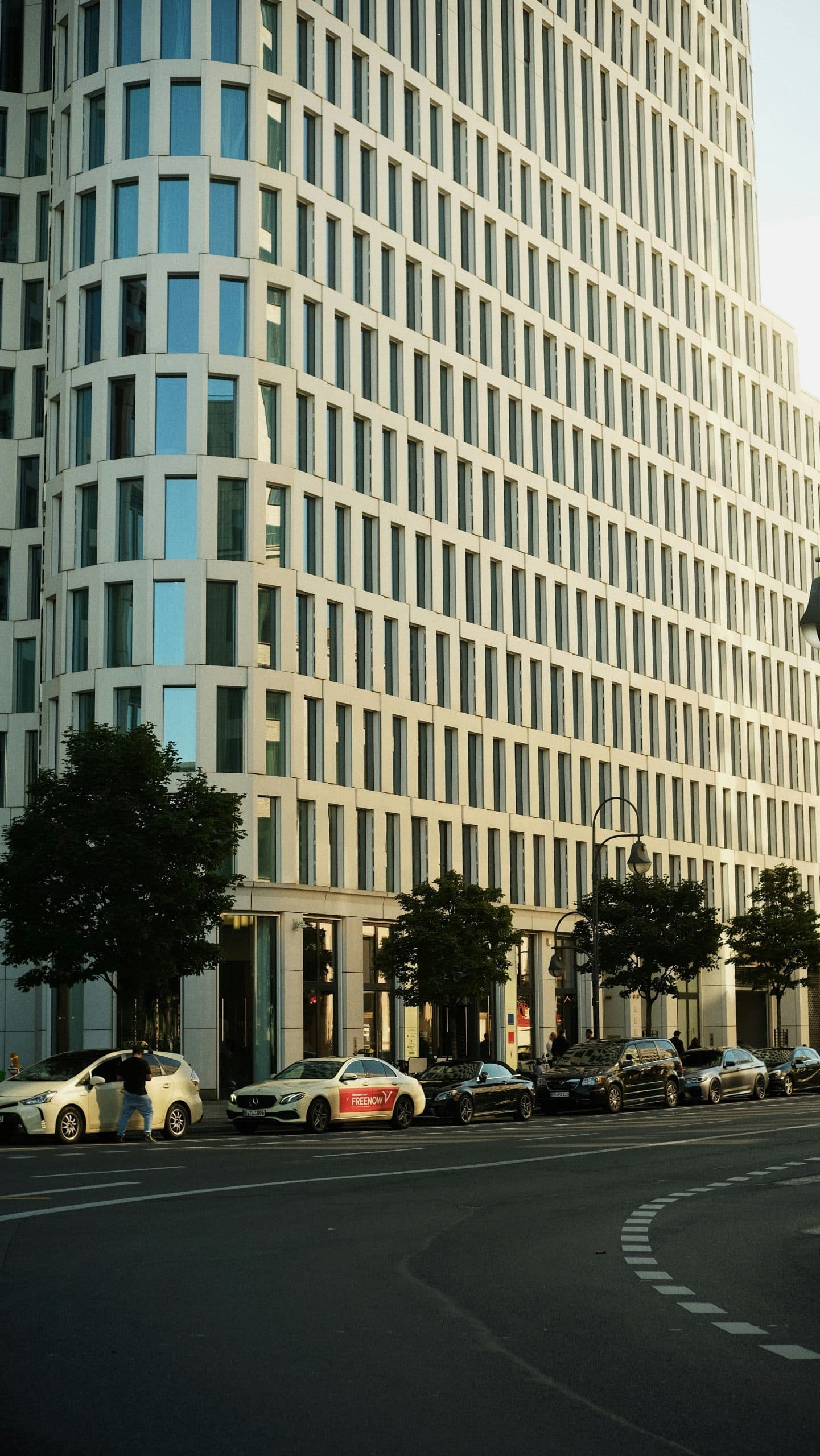
The overall positive development of the office investment markets is also reflected in the A-locations. Here, the transaction volume rose by around 19% to a total of €4.7 billion. This result represents the best value of the last three years. By far the most investments were made in Berlin with just under €1.57 billion (+92%), to which the sale of the Upper West for more than €400 million made a significant contribution. Munich follows in second place with a result of €846 million (+71%). Just behind them are Cologne with €730 million and Hamburg with €717 million in third and fourth place.
After hardly any major deals were observed in previous years, a noticeable increase in investor interest in large properties was again registered in 2025. Once again, a whole series of large-volume transactions was completed, seven of them in the three-digit million range. Overall, however, the distribution of transaction volume across the individual size classes is similarly balanced as in the previous year. This structural feature also speaks for a market revival across the board, which is to be seen as positive. This assessment is supported by the fact that a significant increase in sales was recorded in medium-sized cities. Interest in German office properties is therefore growing slowly, but at a broad level.
Prospects
The office investment markets will also be confronted with a similar environment in 2026 as in the previous year. A distinction must be made here between global influencing parameters on the one hand and economic development on the other. In the global context, uncertainty regarding the sustainability of agreements, tariffs and stable trade relations remains the determining factor.
In terms of economic development, Germany is struggling with a number of structural problems that can only be partially solved in the short term. Nevertheless, many factors point to a gradual improvement in the macroeconomic environment. This is supported by a slight improvement in sentiment in the economy as well as expected effects from the federal government's special infrastructure fund of 500 billion euros, which should provide decisive economic stimulus.
"Against this background, there are many indications that the transaction volume will continue to increase slightly in 2026. Not least because several large-volume transactions with benchmark character are currently still under negotiation, which are likely to be included in the transaction volume in the foreseeable future. In terms of yields, further stabilisation at the level achieved is the most likely scenario from today's perspective," explains Franc Gockeln.