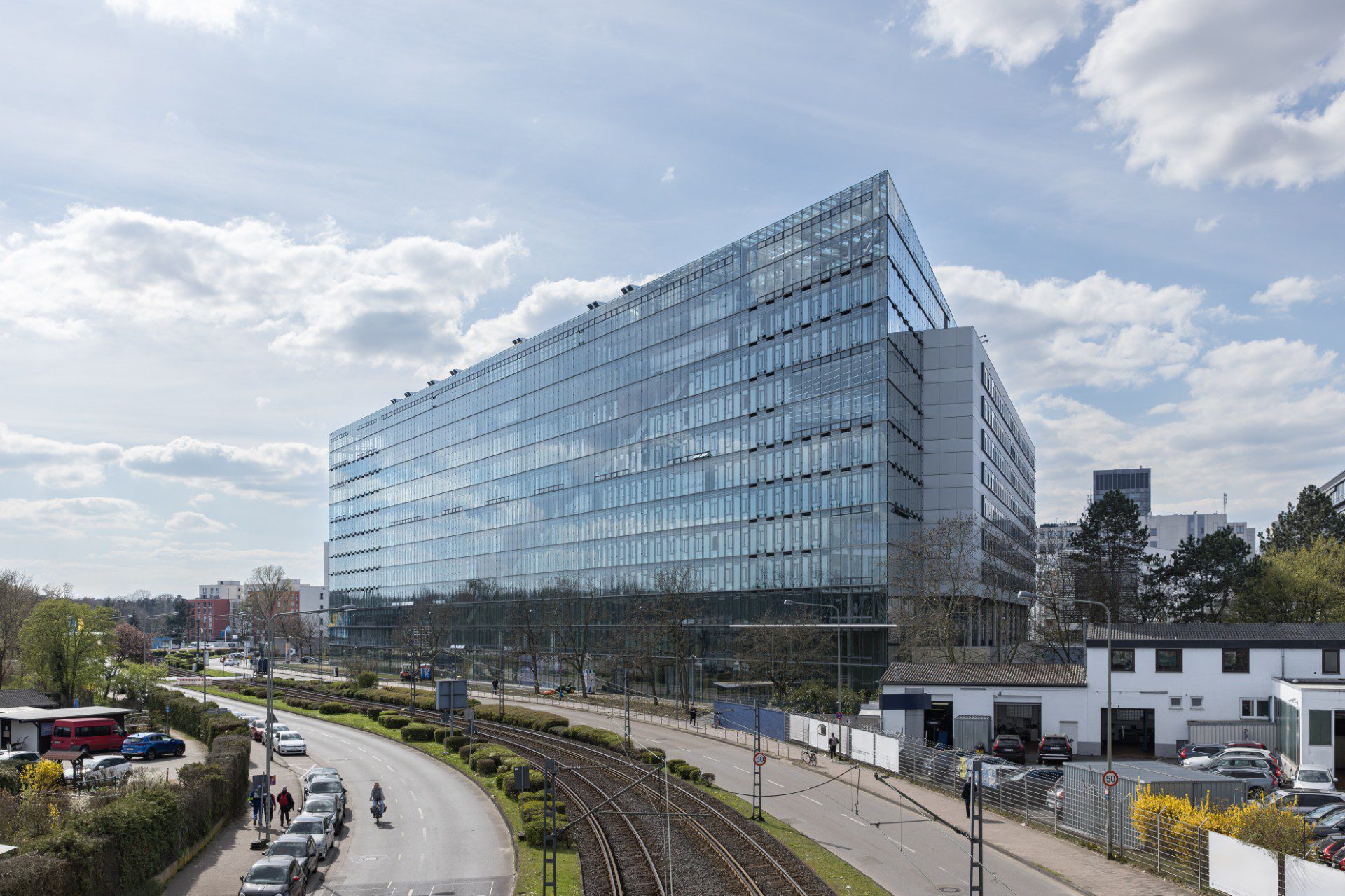
The German office real estate market continues to be in difficult momentum. At the same time, there are increasing signs that the bottom has been reached and could bring new momentum in 2026. We spoke with Prof. Dr. Verena Rock, Professor of Real Estate Investment at the Aschaffenburg University of Applied Sciences, President of gif – Society for Real Estate Research and Advisory Board Member at Sonar Real Estate, and Holger Hosang, Managing Partner of Sonar Real Estate, about why they are optimistic about the coming year.
The mood in the office segment has been subdued for years. Mr. Hosang, you still say: “I see light at the end of the tunnel.” Why?
Holger Hosang:
The current investment figures remain weak, but there are clear signals that the tide is turning. Well-known institutional investors such as Deka, in the person of chief buyer Victor Stoltenburg, have announced that they will invest more heavily in office properties again. That wasn’t the case for a long time. And we see that properties that have undergone repositioning are becoming attractive. The office remains the most important asset class – and we are also seeing a noticeable recovery on the occupier side.
To what extent is the user market recovering?
Holger Hosang:
After Corona, attendance in the office has increased continuously. Home office times are tending to decrease, and only around a third of users are planning to reduce office space at all. Many employees appreciate their own workplace, the familiar environment, their colleagues and, of course, the joint conversations at the coffee machine in the office. The desire for a personal “area” is stronger than many expected.
Ms. Rock, can you confirm this development?
Verena Rock:
Absolutely. The demands of tenants are increasing significantly. Today, it’s all about high-quality, attractive and at the same time sustainable spaces that enable a good meeting and team culture. Companies have recognized that productive work is promoted by personal collaboration. At the same time, we see that the volume on the rental market in Germany is increasing – especially in the segment of small and medium-sized rentals. And: Our gif forecast shows that prime rents will continue to rise and that vacancies in most markets will not increase further after a long phase of increase. The bottom seems to have been reached. This is a very important signal.
New office space is being completed. What does this mean for older existing properties?
Verena Rock:
For some properties, it is actually becoming more difficult – especially in markets such as Berlin, where the supply is large and the location requirements are particularly challenging. The building quality, accessibility and the direct environment remain decisive. Those who are well connected and can offer attractive areas will prevail.
Holger Hosang:
And this is exactly where the advantage of properties that are being modernized or already have a clear strategy lies. You can see it at PRISMA in Frankfurt-Niederrad: excellent public transport connections, high sustainability standards, attractive services such as a restaurant and a fitness studio on site. Such aspects make a property interesting for tenants and investors alike.
You mention sustainability. Has this become a real decision-making criterion?
Holger Hosang:
Yes, absolutely. In our experience, sustainability is now one of the central criteria. Many tenants – especially large companies – pay attention to their ecological footprint. Sustainable buildings also offer lower energy costs, which makes them economically attractive in the long term.
Verena Rock:
For tenants, this simply means lower operating and ancillary costs. That’s why this applies not only to PRISMA, but to all modernised, energy-efficient existing areas. We see that high-quality, sustainable offices are the future. Tenant acceptance of green leases is also increasing.
In 2025, family offices in particular were active buyers. Will this continue in 2026?
Holger Hosang:
I assume so. Family offices are extremely flexible and, unlike institutional investors, can operate without being closely tied to terms or business plans. They are taking advantage of the opportunity to acquire high-quality real estate at reduced prices now. This is noticeably driving the market.
Verena Rock:
And as soon as demand in this segment increases in 2026, institutional investors will also become more active again. We see value-add investors in particular with clear concepts, a lot of creativity and expertise in asset management. Core investors, on the other hand, are even more cautious in the office segment.
Do you see signs of falling prices or even fire sales?
Verena Rock:
The values of office properties have fallen, yes – but we are slowly seeing stabilization. Initial yields, which rose until the end of 2024, are now at a stable level and are also forecast to remain stable for 2026 according to the gif.
Holger Hosang:
Nevertheless, many properties are currently on the market at attractive prices. For investors who pursue a clear development strategy, this is a great opportunity.
Mr. Hosang, you mentioned PRISMA and Frankfurt-Niederrad. The environment there has changed considerably. Can such districts become new winners?
Holger Hosang:
Yes, we can see that. The city of Frankfurt recognised early on that the Niederrad office district had to be transformed into a lively district. Today there are a large number of apartments, supermarkets, restaurants – the urbanity is there. With forward-looking urban planning, such locations can be significantly upgraded.
Verena Rock:
These mixed-use neighborhoods are the future. Niederrad has shown the way, other locations will follow, I’m thinking of Berlin-Südkreuz, for example.
.
Finally, what do you expect specifically for 2026?
Holger Hosang:
I am optimistic. A few years ago, we had a real estate peak, and many financings will expire from 2026 to 2028. This can bring the necessary movement into the market, especially through reallocations and necessary sales. The transaction volume can increase noticeably – not to the level of the zero interest rate phase, but significantly above that of recent years.
Verena Rock:
I agree with that. We will see increasing demand, more stable prices and attractive opportunities for investors. The trend reversal is evident – and 2026 could be the year in which the office real estate market picks up speed again.