BNP Paribas Real Estate publishes data on the logistics market Q4 2025
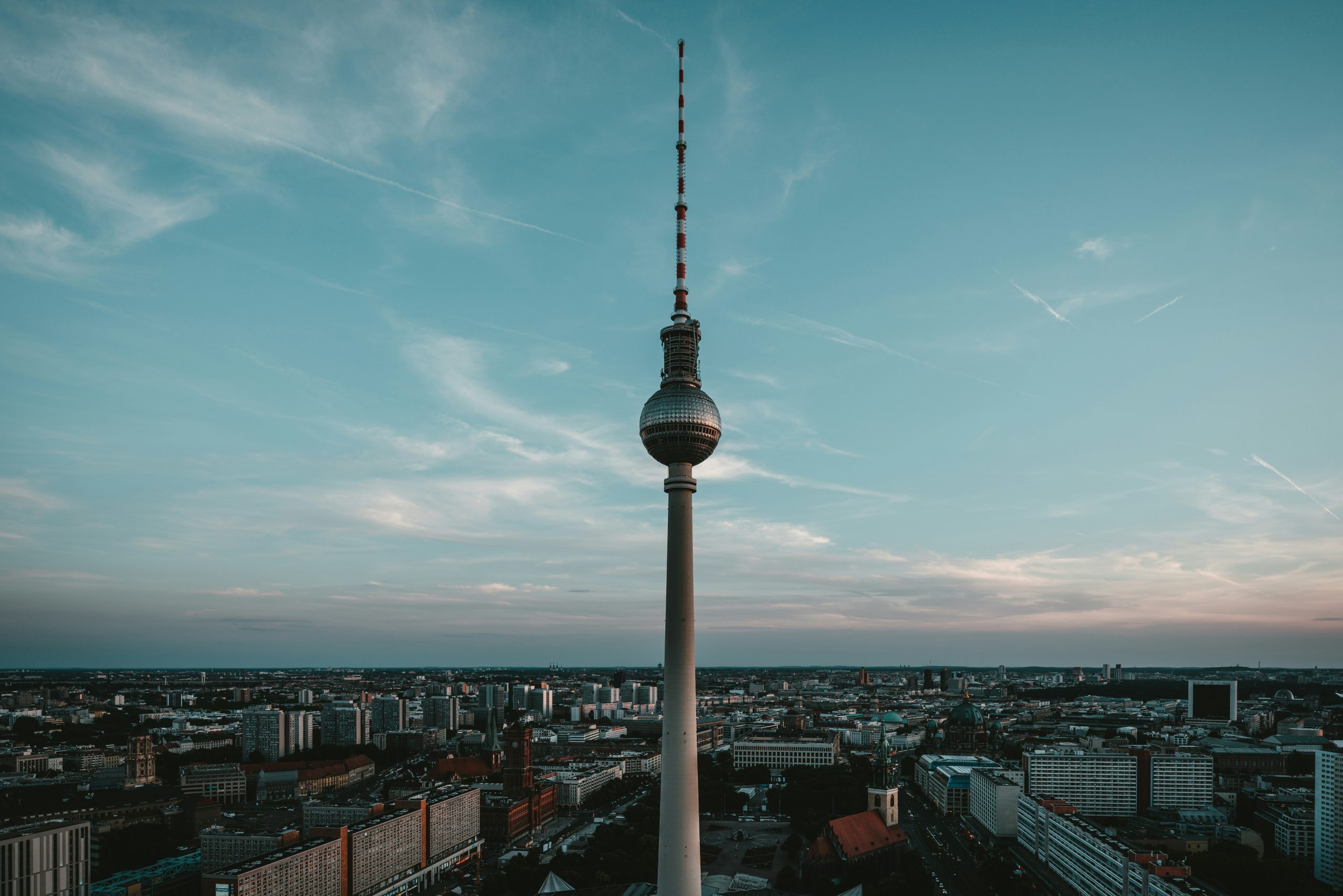
The Berlin logistics market achieved take-up of 425,000 m² in 2025, which corresponds to an enormous increase of almost 55% compared to the weak result of the previous year. After a somewhat moderate start to the year, demand picked up noticeably over the course of the year, which is reflected both in a higher number of contracts and in significantly more extensive contracts. While no contract could be registered in the segment over 20,000 m² in 2024, this category is currently responsible for 35% of take-up and is essentially the decisive factor for the increase. This is the result of the analysis by BNP Paribas Real Estate.
“Central, inner-city locations are in particularly high demand, although modern, large-scale halls are sometimes not available to a sufficient extent. With more than half of the registered contracts and a good 125,000 m² of take-up, almost 30% of the result is attributable to the Berlin urban area. This is particularly dynamic for smaller areas of up to 5,000 m². In the periphery, on the other hand, there is a larger range of services available overall,” explains Christopher Raabe, Managing Director and Head of Logistics & Industrial at BNP Paribas Real Estate GmbH.
The prime rent for logistics space from 5,000 m² has risen slightly to €8.25/m². Significantly higher rents are also achieved for smaller light industrial spaces, especially in the Berlin city area, including around 30 contracts alone, which add up to around 50,000 m² of take-up.
Retail companies are the sector with the highest demand
In terms of the sectoral distribution of take-up, retail companies are in first place with around 39%. The main sales driver here is the new construction of Netto’s self-occupied logistics centre in Kremmen, which alone contributes around 65,000 m² of logistics space to the result. In addition, however, this industry also has by far the highest number of contracts, doubling its turnover compared to the previous year. Manufacturing companies are also showing very strong demand with a third of the result and, supported by two large-scale contracts, achieved the second-highest take-up of space in absolute terms over the past ten years. Logistics service providers, on the other hand, perform rather weakly and contribute only 18% to the balance sheet.
The distribution of take-up by size class shows the decisive difference compared to the previous year: large-scale contracts were again concluded in excess of the 20,000 m² mark, whose substantial result is also above the long-term average. It is also particularly pleasing that the smaller space segments are also showing a high level of dynamism. For example, deals up to 3,000 m² contribute the second highest share of the result at just under 19%, and the 3,000 to 5,000 m² category is also comparatively happy to conclude with a share of 13%.
Prospects
After two weaker years, Berlin’s warehouse and logistics space market has picked up significantly again and achieved a very good result, especially against the backdrop of the challenging economic conditions. Although take-up deviates by around 13% from the ten-year average, it must be taken into account that this will be pulled up by the exceptional year of 2022 with more than 1 million m² of take-up.
In 2026, the further development of the market will continue to be strongly influenced by economic dynamics in conjunction with national and international influencing factors. Rather increasing geopolitical crises as well as the erratic US trade and customs policy remain parameters that are difficult to calculate. Nevertheless, the year 2025 has shown that companies have come to terms with the circumstances to a certain extent and have abandoned their wait-and-see attitude in favour of letting and investment decisions.
“For take-up, it can therefore be assumed that stable development is the most likely scenario. Berlin should also be able to benefit from the demand from the e-commerce segment, with an increasing number of Chinese players and companies from other nations being active in the German market and implementing warehouse space via logistics service providers or directly,” predicts Bastian Hafner, Head of Logistics & Industrial Advisory at BNP Paribas Real Estate GmbH.