Data centers will have established themselves as an independent asset class in the commercial real estate investment market by 2025 at the latest. According to Colliers, data centers accounted for around 1.2 billion euros, a share of around 5 percent of the total transaction volume in Germany, which totaled 25.2 billion euros. Around 90 percent of the volume is accounted for by land transactions for project developments, while existing properties accounted for only 140 million euros. This is one of the results of the online press conference on data center investments in Germany, which was attended by Katja Caspers, Senior Consultant Market Intelligence & Foresight at Colliers, Patrick Brinker, Head of Real Estate Investment Management at Hauck Aufhäuser Lampe, Peter Pohlschröder, Managing Director at HAL Data Center Development, and Marc Trampe, Mayor of the municipality of Rellingen.
According to Katja Caspers, Senior Consultant Market Intelligence & Foresight at Colliers, the dominance of large-volume land deals is striking. 62 percent of the transaction volume is accounted for by the segment between 100 and 200 million euros. These transactions relate exclusively to large-volume hyperscaler project developments. “Three-digit million amounts in land transactions outside top urban locations are unusual in the real estate market,” Caspers emphasizes. “In the data center segment, we are now seeing this order of magnitude more frequently.”
Regionally, market activity is clearly concentrated in the core clusters of Frankfurt am Main and Berlin. The Greater Frankfurt area records both the most and the highest volume transactions. At the same time, land prices have established themselves at a new level. “In the greater Frankfurt area, prices are often between 1,000 and over 2,000 euros per square metre. In comparison, industrial and logistics properties in the Frankfurt region are traded at 350 euros. This shift makes it clear that digital infrastructure is redefining location values,” Caspers emphasizes.
“But not every property owner in Frankfurt or Berlin is sitting on an oil well,” Caspers says clearly. In order for a plot of land to achieve more than 2,000 euros per square metre, decisive conditions must be met. These include, above all, the assured availability of electricity within a period of 5 years. The location must also be within a cloud availability zone, which the data center operators define themselves. Whether there is also building rights for multi-storey development also affects the price of the land.
Peter Pohlschröder, Managing Director at HAL Data Center Development, classifies the development: “We are currently expecting annual demand growth of around 14 percent from classic digitization alone. By 2030, we expect the installed computing capacity in Germany to double.”
Data sovereignty increasingly as a demand driver
Patrick Brinker, Head of Real Estate Investment Management at Hauck Aufhäuser Lampe, explains the increasing demand: “The driver of the strong growth in demand is primarily the ongoing digitalization of the economy. In addition, artificial intelligence is an additional topic, which further increases the need for computing power. But massive AI investments are currently taking place primarily in the USA, so there is no danger of a possible AI bubble in Germany. In addition, developments such as the American Cloud Act and geopolitical developments are bringing the question of data sovereignty more into focus. Companies are increasingly questioning where their sensitive data is physically stored.”
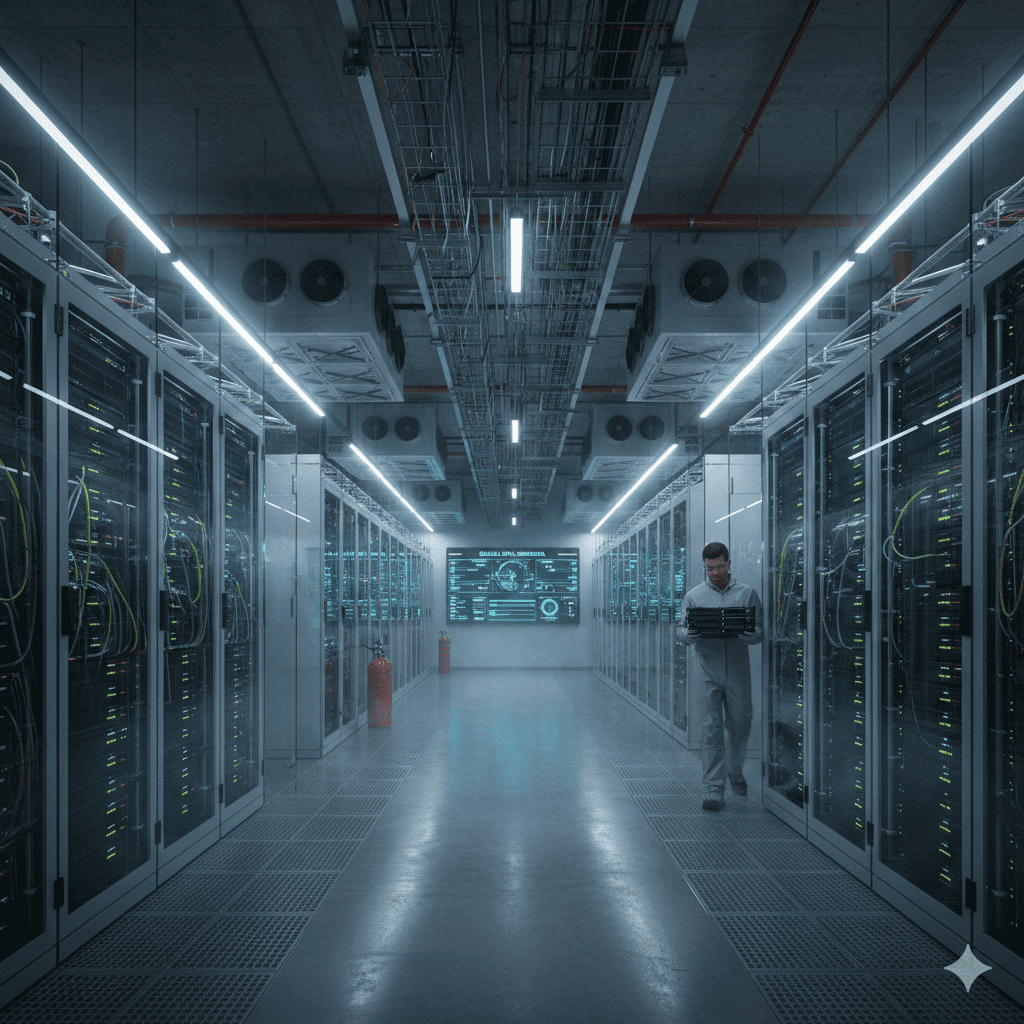
For companies, regional co-location data centers are suitable for this purpose, where they can rent server capacities from the operator. Since these data centers comprise smaller power dimensions, i.e. about five to ten megawatts, and the availability of electricity, for example, is not such a major obstacle, the land prices are closer to classic commercial or logistics areas. In addition, large-scale data center projects, such as hyperscalers, tend to be cluster-driven in Frankfurt or Berlin, while regional co-location data centers are being built throughout Germany. [PB1.1]
Pohlschröder adds: “Despite high energy prices, Germany remains an attractive location overall, with a stable legal framework, resilient electricity grid and high economic power. Foreign investors rate the market very positively. At the same time, it would be desirable if more German institutional capital were also involved in this critical infrastructure.”
Municipal perspective: Data centers as an urban development impulse
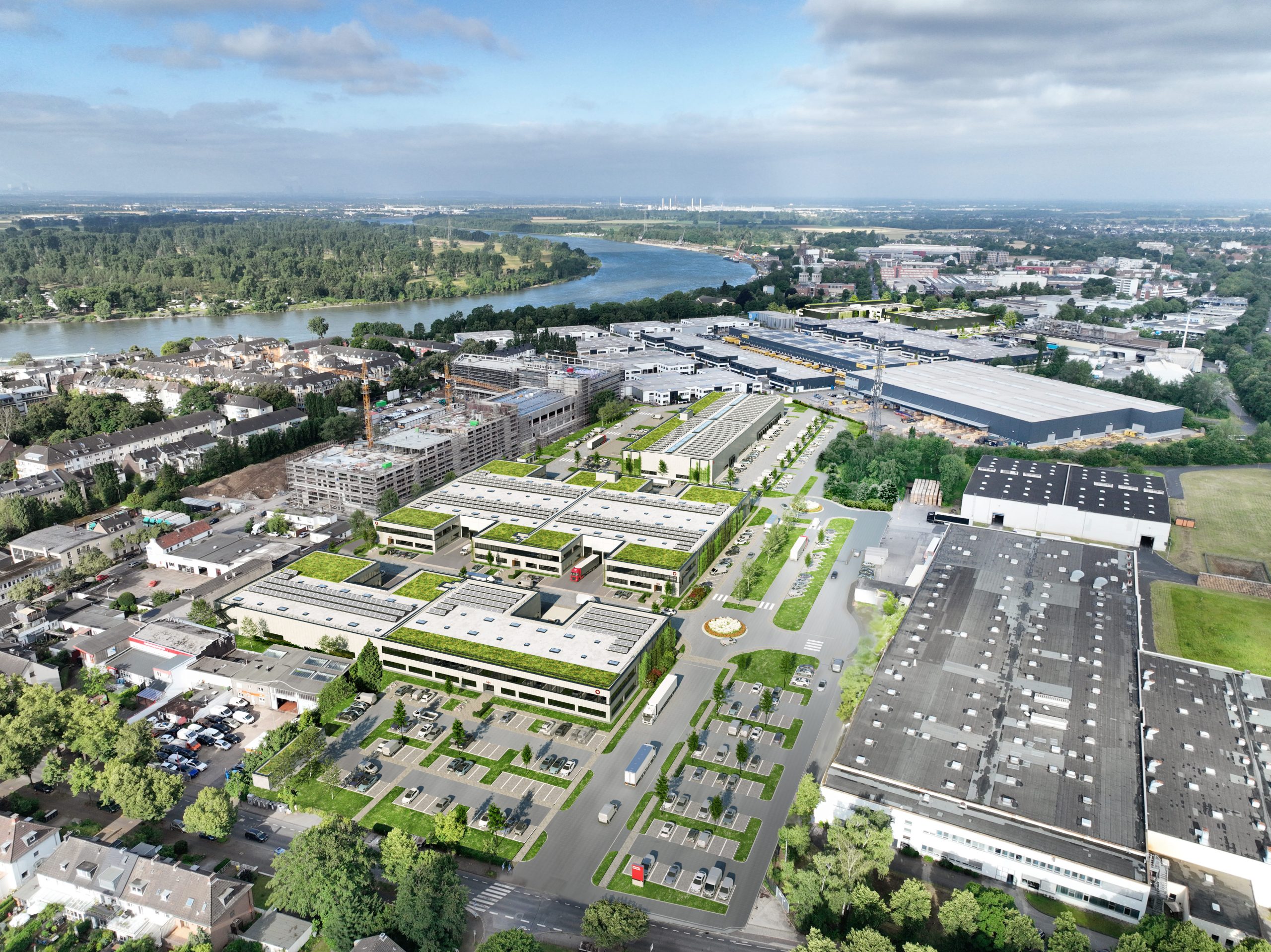
The fact that data centers can also provide impetus for stand development at the municipal level is shown by the example of Rellingen in Schleswig-Holstein. A co-location data center with a connected load of around six megawatts is currently being built there. Marc Trampe, Mayor of the municipality of Rellingen, reports: “After intensive citizen dialogues, we deliberately embedded the project in an integrated neighbourhood development. A decisive factor for acceptance was the use of waste heat from the data center for a new school and sports hall.” In addition, according to Trampe, the municipality sees other advantages: “In addition to trade tax revenues, the data center is a clear location factor. Companies can store their data on-site. The topic of data sovereignty is becoming noticeably more important, also for medium-sized companies.”
Outlook for 2026: Growth in the co-location segment
For 2026, the experts expect demand in the core markets of Frankfurt and Berlin to continue to rise, as well as an increasing shortage of space. Katja Caspers predicts: “We are seeing an increasing demand from cloud operators for data center capacities. Accordingly, hyperscalers will continue to shape the market volume in the current year.” Patrick Brinker adds: “Many companies will outsource their own data centers in the future, as operation and regulation are becoming increasingly complex and costly. This speaks in favor of regional co-location models.” Peter Pohlschröder summarizes: “The really large AI clusters are currently emerging mainly in the USA. In Germany, however, we are seeing sustainable, structural growth, especially in the regional area. Small, inefficient existing data centers will disappear in the future, while modern, energy-efficient systems will gain market share.”