Industrial and logistics properties make a steady start to the investment year
The German investment market for industrial and logistics real estate has made a stable start to 2026. In the first quarter, the transaction volume reached EUR 1.09 billion, almost on a par with the same quarter of the previous year (Q1 2025: EUR 1.08 billion). However, the result is still well below the long-term average: Compared to the ten-year average for the first quarters (1.77 billion euros), this represents a minus of 39 percent. The number of transactions remained constant at 61, after 60 in the previous quarter and 67 in the prior-year quarter.
“The market is solid at the beginning of the year, but the low starting level must be taken into account. However, it is positive that we were able to record a major transaction with a transaction volume of more than EUR 200 million right at the start of the year,” says Diana Schumann, Head of Industrial & Logistics Investment at JLL Germany. At 460 million euros, 43 percent of the total volume was accounted for by the five largest deals. This is a significantly higher share than in the same quarter of the previous year (35 percent). “This is a good indicator that larger transactions are gaining in importance again, provided that the quality of the location and the tenant is good,” says Schumann. “If the overall package is right, even large-volume opportunities will find their buyers.”
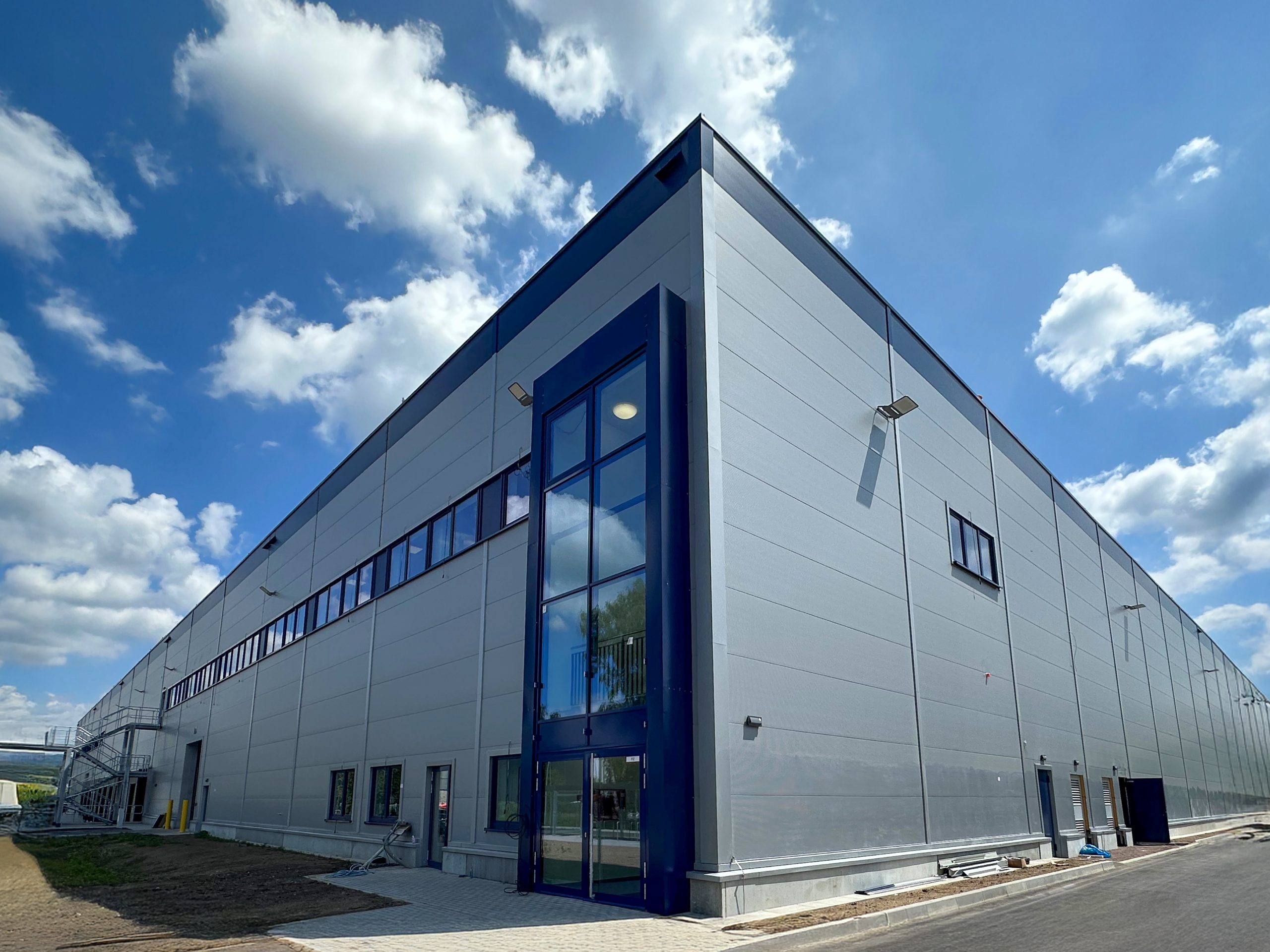
The five largest transactions in the first quarter were all in distribution properties, including the Mercedes-Benz logistics center in Bischweier, which Kajima sold, and a property in Leipzig-Schkeuditz, which the Belgian Weerts Group sold to LCN Capital.
International investors consistently expand their portfolio
The continued strong interest of international investors in German industrial and logistics real estate is also clearly evident in the first quarter of 2026. Foreign players accounted for 71 percent of the transaction volume on the buyer side (770 million euros), while on the seller side they accounted for 58 percent (630 million euros). On balance, they expanded their holdings by 140 million euros. This is the tenth year in a row that foreign players have increased their holdings in Germany.
Core-plus objects remain preferred – due to a lack of value-add alternatives
In the risk classes, there is a shift from core-plus to core compared to the previous year. Although core-plus properties still have the largest market share at 38 percent, core properties are already following with 34 percent. In 2025, the ratio had been 52 percent to 19 percent. “This shift is mainly due to the supply side and shows that pricing for top products has increasingly leveled off again,” Schumann analyses. “There are currently numerous new-build products of convincing quality on the market – but not necessarily in top locations.” Meanwhile, value-add investments at 19 percent and opportunistic properties at nine percent remained almost constant. “However, the demand on the buyer side for these products remains significantly higher than the supply.”
On the buyer side, asset and fund managers dominated the action with a market share of 41 percent. The return of REITs as an important investor group is remarkable: With a market share of 19 percent, they again played a significant role in the first quarter of 2026.
Prime yields remain
There was a sideways movement in prime yields compared to the previous quarter: Berlin, Düsseldorf, Cologne and Stuttgart remained at 4.6 percent, while Frankfurt, Hamburg and Munich remained unchanged at 4.5 percent. “How the current geopolitical tensions and effects on the interest rate landscape could affect purchase prices of logistics properties in the short and medium term will remain closely monitored in the coming weeks. Although the logistics industry is susceptible to uncertainties that could affect supply chains, increased demand for space on the rental market as a result of this circumstance in turn supports confidence in the logistics market,” Schumann summarizes.