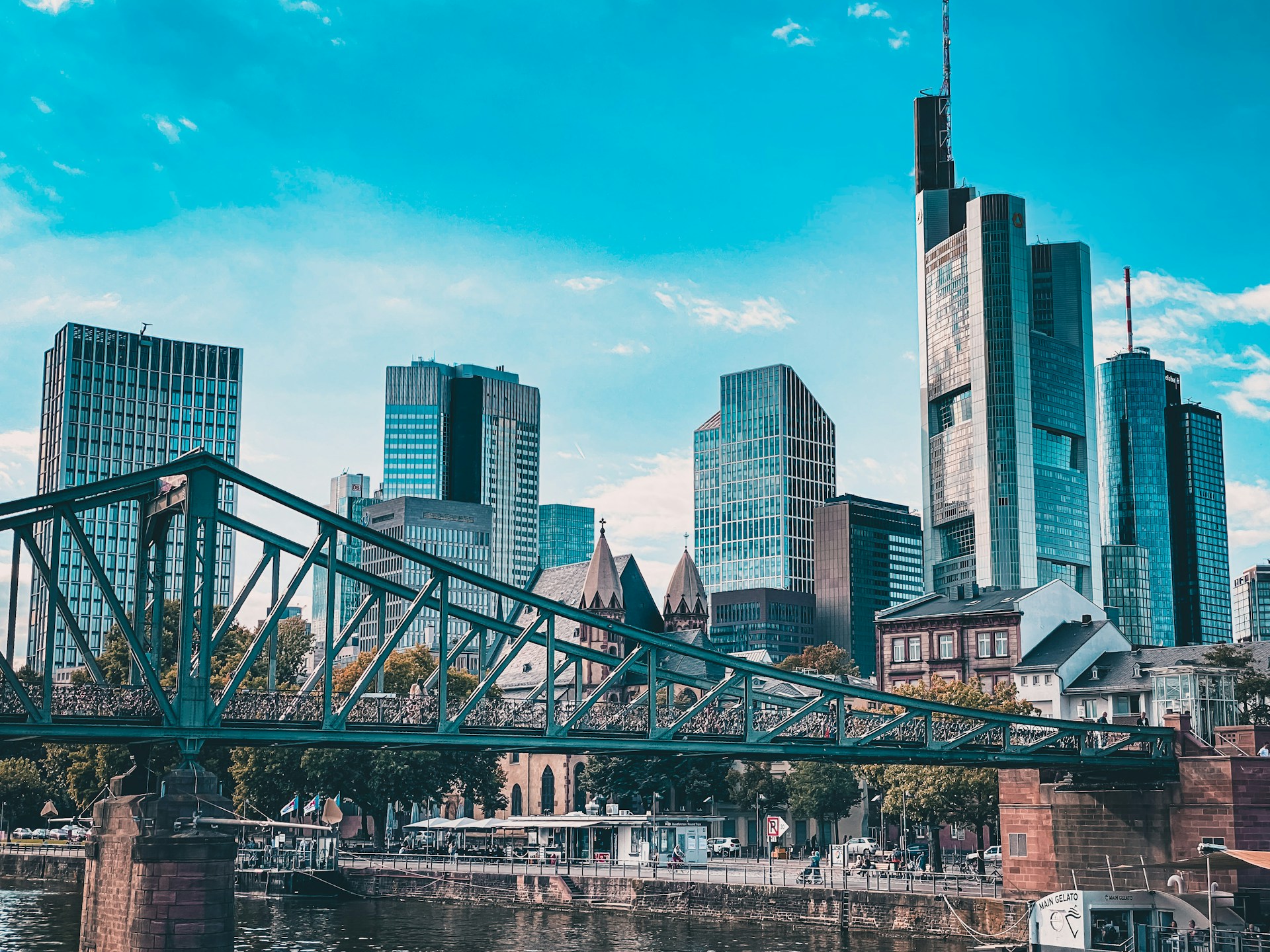
The Frankfurt office letting market (including Eschborn and Offenbach/Kaiserlei) remained characterised by restrained letting momentum in the first half of 2026. With take-up of 148,800 square metres, the result remained below the long-term average. Demand continues to focus on high-quality office space in central locations and modern buildings. Meanwhile, the Frankfurt real estate investment market is showing increasing stabilization. The transaction volume in the first half of the year amounted to EUR 251 million, with office properties once again accounting for the largest share. This is the result of a recent analysis by the global real estate service provider CBRE.
Office rental market
“We continue to observe solid demand – but space decisions today take longer and are prepared much more carefully. Modern, ESG-compliant office space in good locations remains clearly in the focus of users,” says Alexander Riegel, Head of Office Leasing Frankfurt at CBRE.
After the exceptionally strong letting year 2025, the Frankfurt office market developed more calmly in the first half of the year, as expected. The market activity was predominantly driven by small and medium-sized leases, while large-volume leases were more selective. Companies are increasingly aligning their space strategies with efficiency, quality and sustainability. At the same time, the use of AI is gaining in importance as an additional influencing factor, as it changes work processes, workplace concepts and resource planning worldwide and thus also has a stronger influence on office space decisions.
The defining transactions in the first half of the year include the owner-occupier acquisition of Fifty Avon by DZ BANK as well as the leases of Fraport in THE SQUAIRE and Willkie Farr & Gallagher in the Opernplatz 2 project development. Companies from the consulting, banking and transport sectors were therefore particularly active.
For the first time in several quarters, there is a slight easing on the supply side. The vacancy rate fell slightly to 11.2 percent compared to the previous quarter. The decisive factors for this were both additional space recordings and the conversion of older office buildings into alternative types of use. At the same time, the development illustrates the increasing differentiation in quality in the market: while high-quality space continues to be well absorbed, older existing properties continue to be under marketing pressure. The high number of lease extensions was also striking. Many companies made a conscious decision to continue existing locations instead of relocating in a challenging market environment.
The pipeline also remains shaped by the economic conditions. Higher financing costs, rising construction costs and stricter profitability requirements mean that new projects are mainly only implemented when demand is secured. By the end of 2028, around 510,000 square metres of office space are in the pipeline, more than half of which has already been leased or is in advanced marketing processes. The limited number of new speculative developments is likely to further limit the availability of high-quality space in the medium term.
The achievable prime rent remains at 55.00 euros per square metre and month. Nevertheless, with the completion of the Opernplatz 2 project development, a rent was achieved in an absolute prime location that is significantly above this level. This is to be classified as the maximum rent achieved on the market and is still considered an exception in the absolute premium segment, which does not reflect the current market. This is clear from the development of the average rent. This was a good 10 percent below the previous year’s figure. In view of the economic environment, many companies continue to operate cost-consciously, so that rising rent levels have not yet been reflected across the board in the overall market.
Real estate investment market
“The long phase of price discovery is increasingly turning into a phase of market adjustment. Investors are once again concentrating more strongly on property quality, leasing prospects and active asset management. Frankfurt continues to benefit from its role as one of the most established investment locations in Europe,” says Bent Roggenbock, Head of Investment Frankfurt at CBRE.
In particular, high-quality office properties in central locations remain in the focus of investors. Office properties were once again the most important asset class in the first half of the year. At the same time, interest in value-add investments remains high. Many investors see attractive opportunities to benefit from the persistently robust rent level in Frankfurt, especially in properties with rental and development potential.
“The stable prime yield shows that high-quality office properties in the best locations continue to develop with stable value. At the same time, the differentiation between modern premium properties and older existing properties continues,” says Sebastian Tiemann, Team Leader Valuation Advisory Services Office at CBRE. The prime office yield in the CBD remained stable at 4.90 percent at the end of the first half of the year.
Outlook for the rest of the year
“For the Frankfurt office rental market, we expect continued solid demand for high-quality space in the further course of the year. The letting volume is likely to remain below 400,000 square metres in the range of our annual forecast, even if companies continue to carefully weigh up their decisions in view of the economic environment,” says Alexander Riegel.
There is also much to be said for a further revival in the investment market. Several ongoing sales processes and an overall well-filled deal pipeline give reason to be optimistic that the transaction volume will increase in the second half of the year. “Frankfurt continues to offer investors attractive framework conditions. With the increasing market stabilisation and the sustained rental growth of high-quality office properties, investment activity is likely to increase further in the further course of the year,” says Bent Roggenbock.