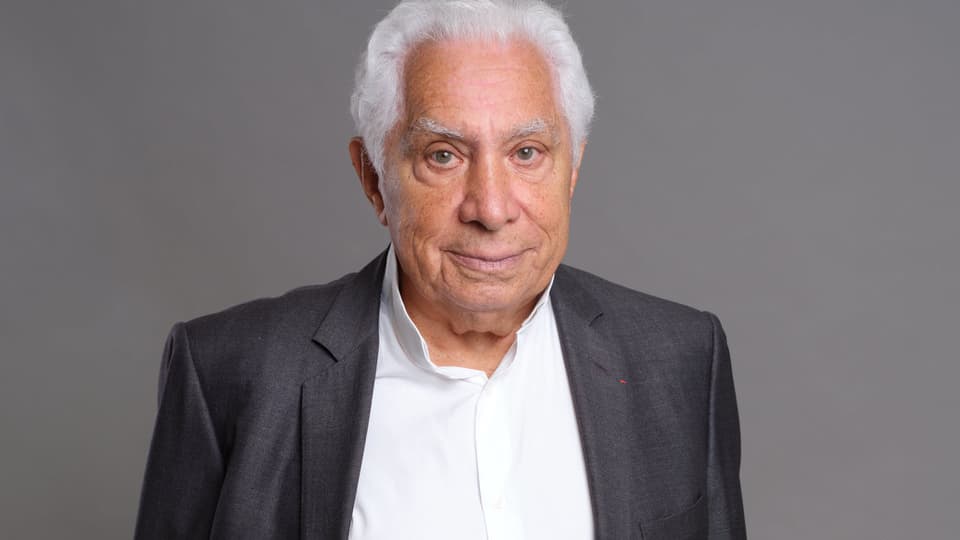
Fifty years of market observation and active involvement in private equity – from co-founding Apax Partners in 1972, through the establishment of Altamir, to the present day – have taught Maurice Tchenio, CEO of Altaroc Partners, one lesson above all: the structural and sustained excess return of private equity compared with public stock markets is by no means a foregone conclusion. It is by no means automatically granted to the investor, but requires ironclad discipline – something that even experienced investors often neglect in their day-to-day dealings.
Anyone who sets investment horizons too short, seeks to force excess returns too quickly, or makes concessions when selecting fund managers will be disappointed by this asset class. A patient and methodically grounded allocation, on the other hand, can fundamentally transform total assets over decades. Drawing on five decades of successful investments, having weathered crises, market bubbles and turnarounds, Maurice Tchenio has derived six golden rules on the principles of a successful private equity investment.
1. Plan
for a time horizon of at least 20 to 25 years
Private equity cannot, under any circumstances, be managed in the same way as a liquid share portfolio. The minimum time horizon for such an investment is 20 years. It is only after this period that the mechanics of compound interest come into their own – or, as Warren Buffett puts it: It is the time it takes for money to work whilst you sleep.
The mathematical evidence highlights the difference compared with traditional markets: if you invest seed capital on the public stock markets at an assumed average return of 6 per cent per annum over 20 years, the capital will grow by a factor of approximately 3.2. To be specific: 1 euro becomes 3.21 euros. If a return of 13 per cent per annum is achieved in private equity over the same period, that same euro grows to 11.50 euros – an elevenfold increase in the capital invested.
In practice, there is another key factor to consider: as the gradual build-up of the portfolio through capital calls usually takes five to six years – the time it takes for the total capital to actually be deployed in the market – the effective time horizon for the overall investment is realistically around 25 years.
2. Defining
the asset allocation with absolute precision
A key rule of risk management applies without exception: only capital that is guaranteed to remain uncommitted for the next ten years may be allocated to private equity. This illiquidity does not represent a structural disadvantage, but rather constitutes the essential prerequisite for enabling portfolio companies to be restructured operationally and developed in a way that adds value, free from the pressure of quarterly stock market reports.
Every allocation decision must be preceded by two fundamental questions: What total amount should be invested in private equity over a period of 25 years? Is this amount fully available for a long-term commitment without compromising current liquidity, cash flow or strategic projects?
The answers to these two questions define the fixed target allocation – and only this sum may be raised and committed over time.
3. Invest exactly the same amount every year (re-up discipline)
Private equity is a cyclical asset class. An excellent fund vintage can achieve a smoothed rate of return (IRR) of 30 per cent or more, whilst a weaker vintage may hover around 12 per cent. Even with 50 years’ market experience, it is not possible to reliably predict the peaks and troughs of these cycles.
The answer to this uncertainty lies in a consistent commitment – known as ‘re-up discipline’ – to invest exactly the same amount each year into a new fund vintage. Over a period of 20 to 25 years, outstanding and weaker vintages statistically balance each other out. The result is a smoothed average performance at the level of the first quartile. It is precisely this methodology that large US pension funds and university endowments such as Harvard and Yale have been applying successfully for decades.
4. Select
only managers in the first quartile.
Unlike public markets, where many funds track indices closely, the performance dispersion – that is, the gap between the best and worst managers – is enormous in private equity. Selecting the right General Partner (GP) is therefore the crucial factor.
Three criteria are non-negotiable:
• A track record spanning at least 20 years: Assessing managers based on performance over just 5 or 10 years falls short. A track record spanning at least 20 years is the only way to distinguish between random effects and repeatable operational value-creation expertise.
• Focus on buy-out and growth: Historically, these are the two strategies with the most attractive risk-return profile over long time horizons.
• Broad diversification: The portfolio should be geographically balanced across Europe and North America and specifically target structural growth sectors – particularly technology, healthcare and digital B2B/B2C services.
As the detailed analysis and selection of these top managers requires in-depth market knowledge, long-standing networks and access to proprietary data, this selection process can rarely be replicated by individual investors acting in isolation.
5. Actively managing
cash flows
With shares or bonds, 100 per cent of the purchase price is paid up front, followed by regular dividends, coupons or interest, before the capital is repaid at the end. Private equity follows a fundamentally different logic.
Capital calls are made in stages over the first four to five years of the fund’s term. It is only from the fourth year onwards that the first distributions begin, consisting of income, capital gains and capital repayments, as a private equity fund liquidates itself upon maturity. As purchases and sales fluctuate depending on market conditions, these capital calls and distributions are irregular and unpredictable. Without precise management and full transparency regarding annual cash flows, there is no basis for determining the actual working capital – which jeopardises the consistent implementation of a long-term portfolio strategy.
6. Rely
on a trustworthy partner on an equal footing
. An investment horizon of 25 years spans several market cycles. Markets change, crises give way to upturns, and the temptations over time are manifold – such as selling out of panic at the wrong moment, missing out on a strong year, or making mistakes when selecting fund managers.
Successful asset allocation therefore requires a long-term partner who combines four key qualities: at least 20 years’ experience in the top quartile; direct access to the world’s leading funds; the technical infrastructure to manage complex cash flows and reporting; and a perfect alignment of interests through their own co-investment stake in the portfolio.
Conclusion: Discipline as the key to outperformance
Private equity is not an asset class like any other – it is a long-term commitment that requires a clear framework, patience and an uncompromising approach. Those who consistently adhere to the principles of compound interest, re-up discipline and uncompromising manager selection allow time to work in their favour. Ultimately, it is not short-term market timing that determines success, but the quality and consistency of portfolio construction.