
Core is synonymous with stability and predictability in institutional real estate investment. But if properties held for many years require significant reinvestment, a more fundamental question arises: whether common core classifications actually fully reflect the economic life cycle of real estate – and what consequences this has for the exit logics of open-ended real estate funds.
Was it really Core – or does the price only show up in the life cycle?
In institutional real estate investment, there are terms that have hardly been questioned for years. Core is one of them. The category stands for stability, predictable cash flows and a comparatively low risk profile. This classification is particularly important in open-ended real estate funds, as it shapes expectations regarding distributions, liquidity and risk history.
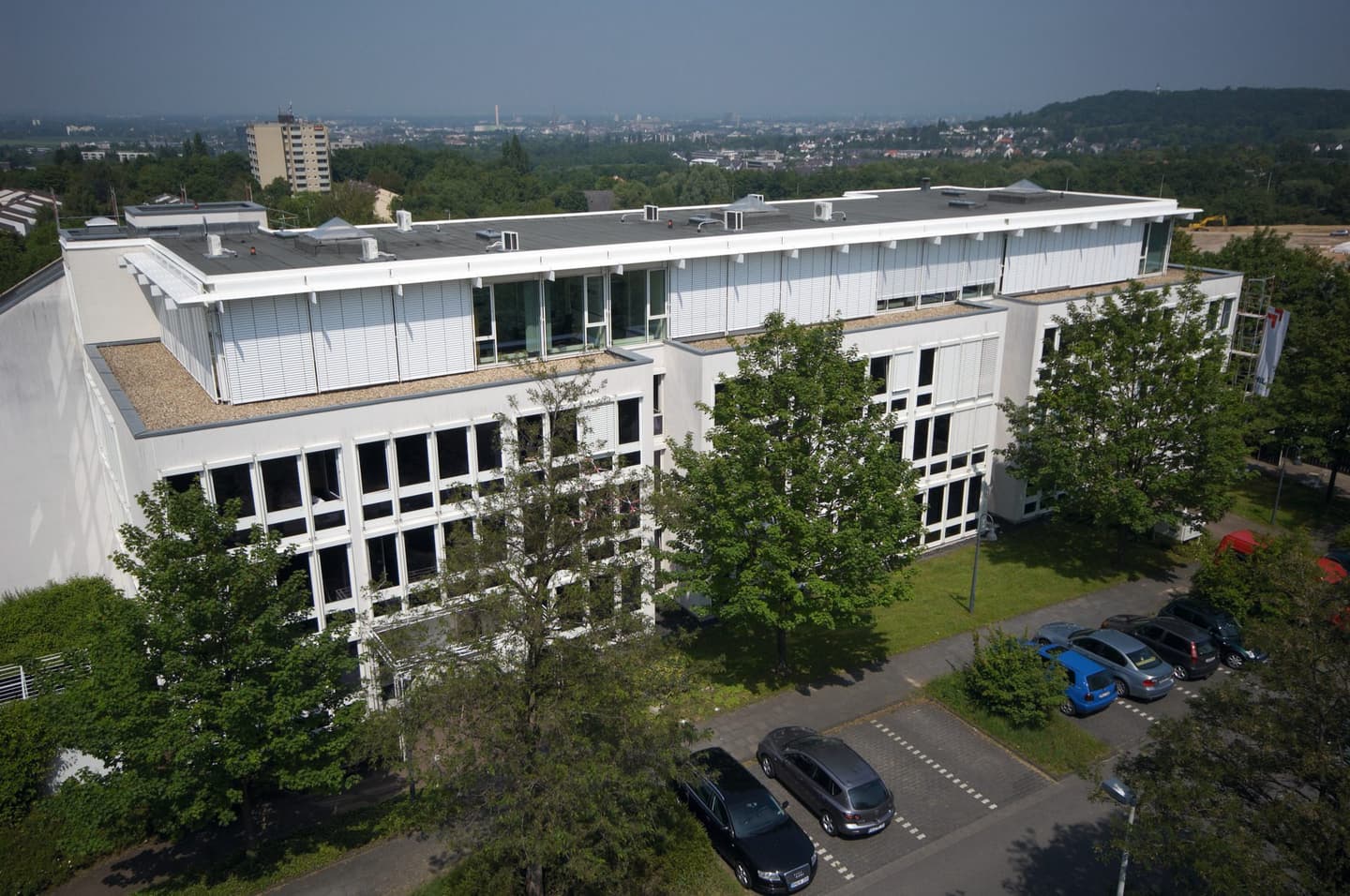
At the same time, there has been an increase in cases in recent years in which properties that have been held for many years require considerable structural investments after ten – sometimes even (sometimes significantly) fewer – years. This does not mean ongoing maintenance or selective modernizations, but capex volumes that account for a significant proportion of the original purchase price.
At this point, a sober question arises: whether the current core classifications are actually suitable for mapping the economic reality of real estate over its entire life cycle.
Core as an expectation construct
Core is less a yield category than an expectation construction. Usually, this refers to objects that
- can be rented out on a long-term basis,
- deliver stable cash flows,
- have low fluctuations and
- and do not reveal any significant structural risks.
This logic is particularly relevant for open-ended real estate funds. Liquidity management, valuation systems and investor communication are based on the assumption that core properties are not only stable in value, but can also be largely planned in terms of their cost structure .
However, this predictability is often derived from a static consideration: location, tenant structure, construction quality and market environment at the time of acquisition. The problem here is whether and to what extent the complete life cycle of the building is taken into account.
Lifecycle Capex as a Structural Issue
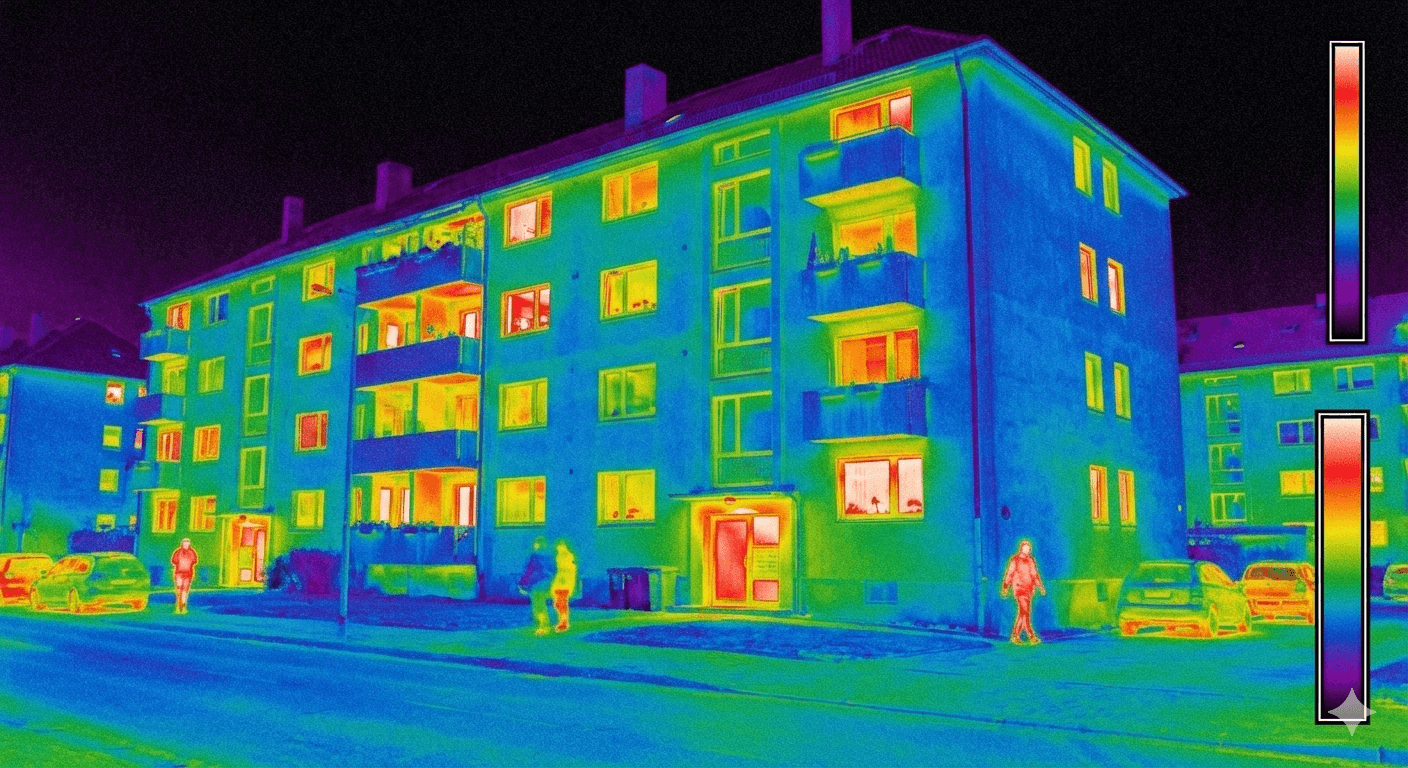
Real estate is not subject to linear ageing. Technical standards, regulatory requirements and usage profiles change over time, but not evenly. In the office segment in particular, value-relevant changes have accelerated in recent years – for example due to energy efficiency requirements, ESG criteria or changing user demands.
If, after a longer holding period, investments are required that go beyond ongoing maintenance and de facto represent a structural renewal, this is not an anomaly case at first. Real estate is a real asset. They require adjustments in order to maintain their marketability and usability.
This circumstance becomes relevant where such investments were not or only insufficiently taken into account in the original logic of expectations.
Capex as an implicit exit trigger
If, for example, after ten to twelve years, a property is faced with the decision to reinvest a significant part of the original purchase price or otherwise to accept structural value and letting risks, the phase in which the property functions as a core in the classic sense effectively ends. In these cases, the core characteristic is obviously no longer present, but would have to be actively restored by a new investment decision.
This decision is not a technical measure, but a reset of the business plan – with a changed risk-return profile and a renewed capital commitment.
This also fundamentally shifts the exit logic . While exits for core properties have traditionally been primarily market-dependent – driven by price levels, cycles or portfolio reallocations – they are becoming investment-dependent in this phase. The exit is no longer because the market is favorable, but because the question of a new, substantial investment must be answered.
This balancing is further intensified against the backdrop of changed refinancing conditions. Higher interest rates compared to the time of purchase increase the cost of capital and thus directly influence the profitability of a reinvestment.
Capex thus becomes the exit threshold. A change in view of core as a characteristic thus has a direct effect on the entire exit logic of open-ended real estate funds.
Capex transparency as a governance issue
The question of early transparency about structural capex requirements of core properties is not only a question of analysis, but also of governance. The incentive and evaluation logics of many management models are comprehensibly based on current earnings ratios, distribution stability and periodic performance. This orientation makes sense in principle, as it is intended to create a congruence of interests between management and investors – at least if the incentive is designed appropriately.
At the same time, a structural field of tension arises here. Early, substantial capex measures can weigh on cash flows in the short term, affect valuations and distort ongoing performance, although they are necessary from an economic perspective to limit long-term value and rental risks. The incentive logic does not seem misdirected, but can collide with the requirements of lifecycle-oriented portfolio management in certain phases.
This area of tension is always an inherent dilemma between short-term presentation of results and long-term economic substance. This makes it all the more important to have a governance system that identifies structural capex requirements at an early stage, communicates them transparently and implements them consistently – even if this is temporarily at the expense of current earnings figures.
It is precisely here that a central key for institutional investors can be identified that should not be given out of hand. It is clear that the responsibility for classifying, prioritizing and implementing lifecycle-relevant investments in the course of a mandate lies with the manager as a typical management performance. However, it is also clear that a purely passive delegation of this responsibility to the manager does not fully contribute to optimal mandate governance of special funds. Constructive and critical support for institutional investors combined with clear expectations management can therefore have a beneficial effect in order to ensure that economically necessary investments are not postponed in favour of – merely – short-term stability.
Total cost of ownership instead of static categories
For institutional investors, this means that the consideration of the total cost of ownership is coming more to the fore. It is not only the initial yield or the current distribution that is decisive, but the net profitability of an asset over the entire holding period.
These include, in particular:
- structural capex risks,
- regulatory retrofits,
- functional obsolescence
- as well as the point at which a property goes from being a stable cash flow carrier to a focus of investment.
These factors were also known in the past, but were often only implicitly taken into account in the Core classification logic. On the other hand, it can be assumed that the increased number of cases in recent years has led to a sharpening of the awareness of institutional real estate fund investors. It probably follows that institutional investors will take a particularly critical view of this point in the future. Institutional investors are likely to want to avoid being confronted with significant capex only at the targeted end of the term of a core real estate fund. In the new cycle, this is likely to have a direct impact on the fund design of products that are still marketable (keyword: how investors "access" the real estate asset class) and entire exit logics.
📌 Result
👉 Core is not a static state and therefore no guarantee for permanently low investment requirements.
👉 Core describes a risk classification at a certain point in time under certain assumptions.
👉If assumptions change over time, this is not necessarily a mistake. However, it requires all the more precise expectation management as well as early transparency and communication with investors.
👉Especially in the case of long-term portfolio holder intentions, a realistic classification in the economic life cycle of real estate is required – including its total cost of ownership. Investments to maintain Core thus influence not only the condition of the property, but the entire fund logic – right up to the exit decision.