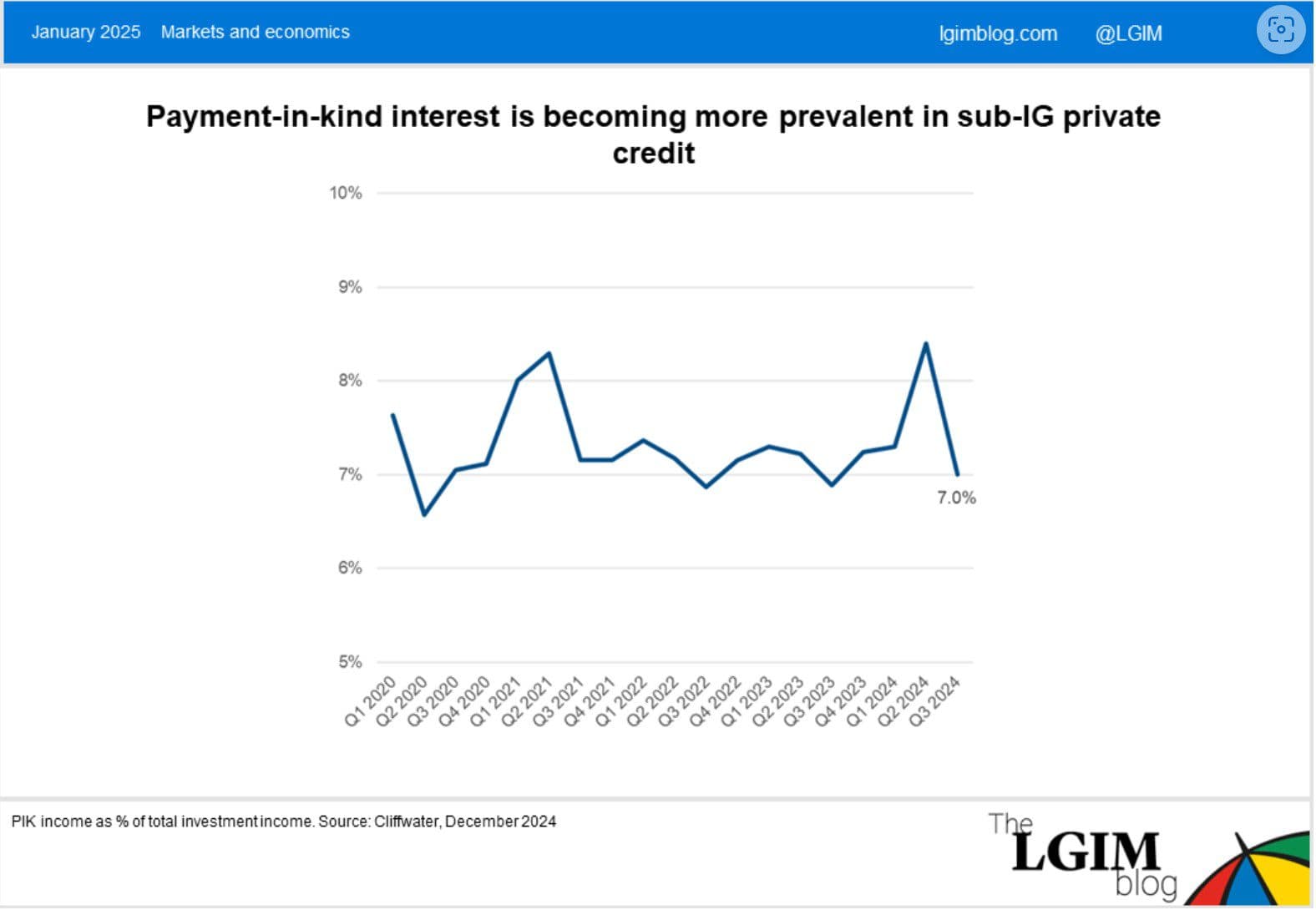
In our first instalment of our 2025 outlook, we outline why we believe private credit is well-positioned for 2025, supported by still-elevated interest rates, positive GDP growth in the US and an improving M&A environment. Nevertheless, our view is that investors should remain focused on fundamentals and relative value. We like assets with highly predictable cash flows, aligned with structural megatrends and less exposed to geopolitical-related disruptions.
Navigating the macro uncertainty
The global macro picture had been improving in the second half of 2024, with robust growth in the US, stimulus in China, falling inflation and monetary easing from the Federal Reserve and the European Central Bank. November's US presidential election result, however, has added more uncertainty to 2025, in our view, with potential disruptions to trade, immigration and geopolitics.
What does this mean for private credit? We think it's potentially a double-edged sword. Potential tax cuts and deregulation may boost economic growth and dealmaking in the US – a tailwind for transaction volume and credit quality. Extreme trade policies, however, could have severe knock-on implications for the rest of the world while also weakening the medium-term US macro picture.
It could be months until we have more clarity. In the meantime, central banks are expected to continue cutting interest rates and corporate fundamentals remain healthy. Our base case, therefore, remains that there'll be supportive market conditions in 2025.
Despite recent cuts, interest rates are still relatively high compared to the last 10 years and are not expected to fall back to pandemic-level lows. All-in yield still looks attractive in our view (about 5-8% for investment grade [IG], 8-12+% for sub-investment grade [sub-IG] debt). Bouts of volatility are possible, but these could generate attractive investment opportunities for private credit (as we witnessed in 2022 and 2023) and demonstrate the value of robust structural protections.
Nevertheless, we think it is important to keep focusing on fundamentals and stress-test against different scenarios. Assets with highly predictable cash flows, long-term contracts with strong counterparties and regulatory/secular support should perform well. Resilience against inflation will remain important, in our view.