Denne artikel er automatisk oversat.


The demand for specialized buildings that can combine laboratory research, production and office work is growing steadily. The new spotlight of the CORPORATE REAL ESTATE INITIATIVE sheds light on the complex segment of life science real estate.
Real estate in the life sciences industry is becoming increasingly important, not only due to current challenges such as pandemics, but also due to demographic change and the need for innovation in medicine, biotechnology and pharmaceuticals. However, the quality and safety standards due to regulatory requirements, especially in the pharmaceutical and biotech industries, such as laboratories, clean rooms and production areas, require very specialized real estate.
The technical specifications, such as increased safety standards, sophisticated ventilation and cooling systems, and special infrastructures for media such as gases and compressed air, are essential for the operation of life science facilities.
Life science real estate includes various types, including pharmaceutical logistics centers, research and development space, and office and production space. Meeting the high regulatory requirements and safety standards makes the properties expensive to build and operate. This poses a particular challenge for investors, as high initial investments are required and the properties often have to be strongly adapted to the needs of individual tenants. At the same time, however, these properties also enable investors to diversify their own portfolios at both property and tenant level.
Types of space in a life science property
Pharmaceutical logistics: Specialized areas for the logistics and storage of pharmaceutical products, with a controlled environment to ensure the integrity of the substances.
Research and development areas: Laboratories and technical facilities for experimental or product tests, with a high degree of specialization.
Office and conference space: For administrative and strategic activities, often with additional conference or open-plan spaces for collaboration.
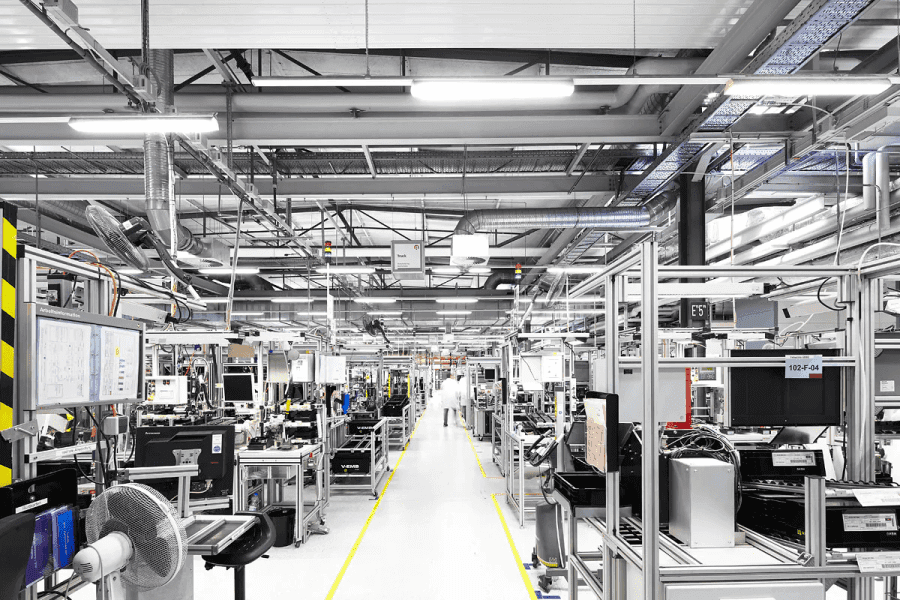
Production areas: Specialized production areas, e.g. with clean rooms, which are subject to strict EU quality standards for pharmaceutical and biotech production.
High technical requirements and limited third-party usability limit flexibility and make an investment complex. In addition, tenant retention is often long-term, which increases profitability but also entails risks.
The demand for specialized buildings designed for research, production and office work is growing steadily. However, these properties also pose challenges for investors, as high technical requirements and limited third-party usability limit flexibility. In addition, tenant retention is often long-term, which increases profitability but also entails risks.
Life Science is a strong growth market from which a high demand for space is also expected. It is becoming apparent that this demand cannot be met to a sufficient extent. The market is still very owner-occupier-driven in parts. Due to the specifics of life science space, project developers are still hesitant when it comes to this asset class. Here, corporate real estate, which is already characterized by flexibility in terms of types of use, can help to compensate for this excess demand.
Contact: Daniel Sopka, consultant in the field of corporate and logistics real estate, sopka@bulwiengesa.de and Felix Werner, team leader, werner@bulwiengesa.de