BNP Paribas Real Estate publishes logistics market data for 2025
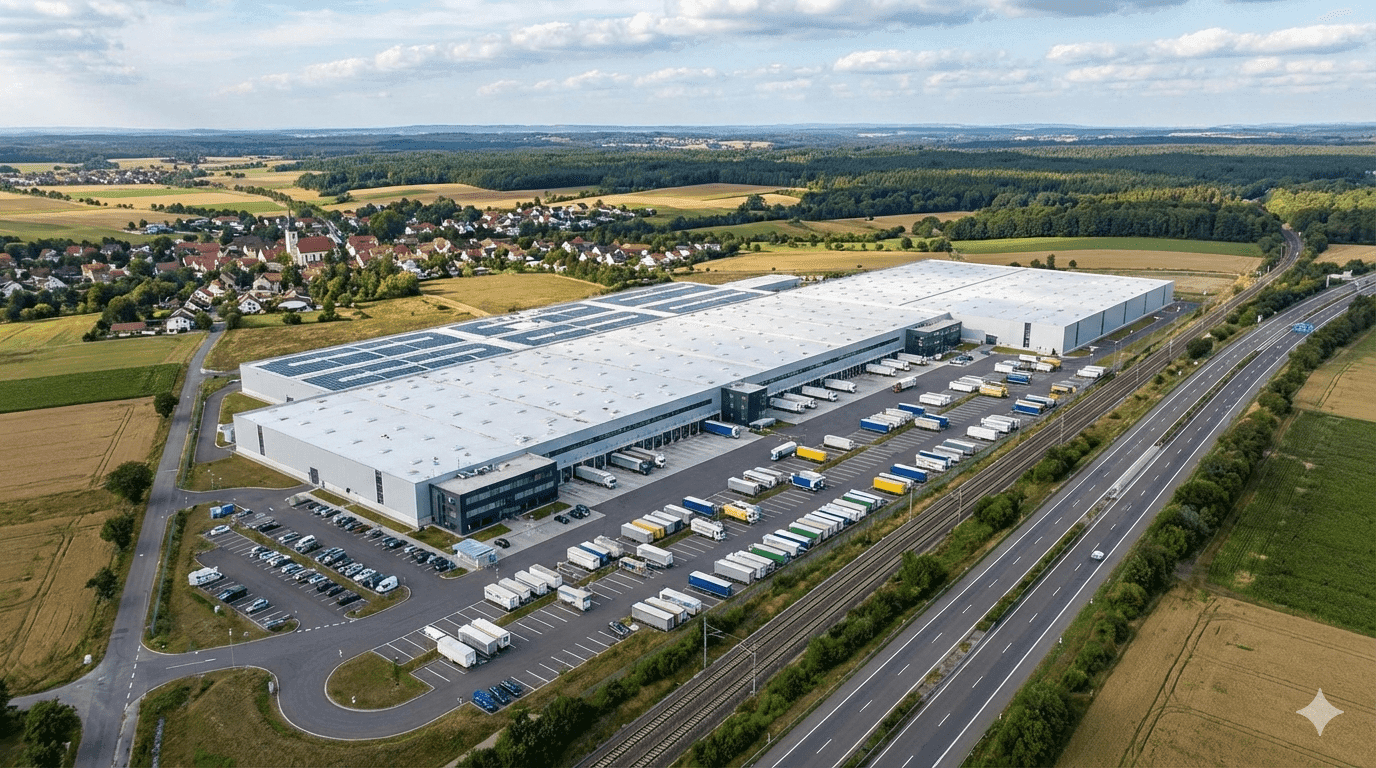
After a relatively subdued start to the year, the nationwide warehouse and logistics space market increased from quarter to quarter in 2025 and achieved take-up of just under 6.1 million m² for the year as a whole. This corresponds to a significant increase of almost 14% compared to the previous year. The logistics market is thus holding its own in a weak economic environment and is showing a positive development over the course of the year. Nevertheless, the deviation from the ten-year average is 13%. This is the result of the analysis by BNP Paribas Real Estate.
"Overall, more contracts were signed than in the previous year and, above all, a higher number of large-scale contracts were again recorded, which naturally have a strong impact on the overall result. The size category from 20,000 m² increased by an impressive 30% compared to the previous year. In this space segment, logistics service providers stand out in particular, accounting for almost half of the turnover in large contracts and thus above the ten-year average. This reflects the fact that many industries appreciate the flexibility of logistics service providers, especially in economically difficult times. In this context, it is also noteworthy that companies from the e-commerce sector are much more active in the market again, but also often have their business handled by logistics service providers," explains Christopher Raabe, Managing Director and Head of Logistics & Industrial at BNP Paribas Real Estate GmbH.
The top logistics markets (Berlin, Düsseldorf, Frankfurt, Hamburg, Cologne, Leipzig and Munich) benefit somewhat more extensively from the higher market dynamics than the market as a whole. They increased by a good 15% compared to the previous year and closed the year with a combined take-up of just over 2.2 million m², which, however, fell short of the 10-year average by 12%. Compared to 2024, almost all markets are increasing, in some cases considerably, with only Cologne remaining below its above-average previous year's result. Frankfurt achieved the highest result with 464,000 m² (+14% compared to 2024) and is ahead of Berlin, which also exceeded the 400,000 m² mark with 425,000 m². Düsseldorf moved up to third place with an impressive take-up of 335,000 m² (+5%), relegating Hamburg (310,000 m²; +19%) and Leipzig (270,000 m²; +22%) to second place. Munich increased by 26% to 266,000 m², while Cologne recorded a decline of 33% to 173,000 m² due to the limited space available. In addition to these locations, the polycentric Ruhr area also achieved an excellent result with 637,000 m², which corresponds to an increase of 78% compared to the previous year and 10% compared to the average.