



In this follow-up article, I take up central questions together with Henrik Westermann and Frederic Gros from Quartierkraft and deepen selected aspects.
Tenant electricity refers to electricity that is generated in the immediate vicinity of a building – typically via photovoltaic systems on the roof – and sold directly to tenants by the operator of these systems. The first article examined the business models in which tenant electricity can be organised and the advantages for owners, operators and tenants. The discussion about a decision of the Federal Court of Justice (BGH) was particularly topical: Did the BGH fundamentally question the so-called customer system privilege or is it merely a case-by-case decision with limited effect?
1. Marketable amount of the roof lease
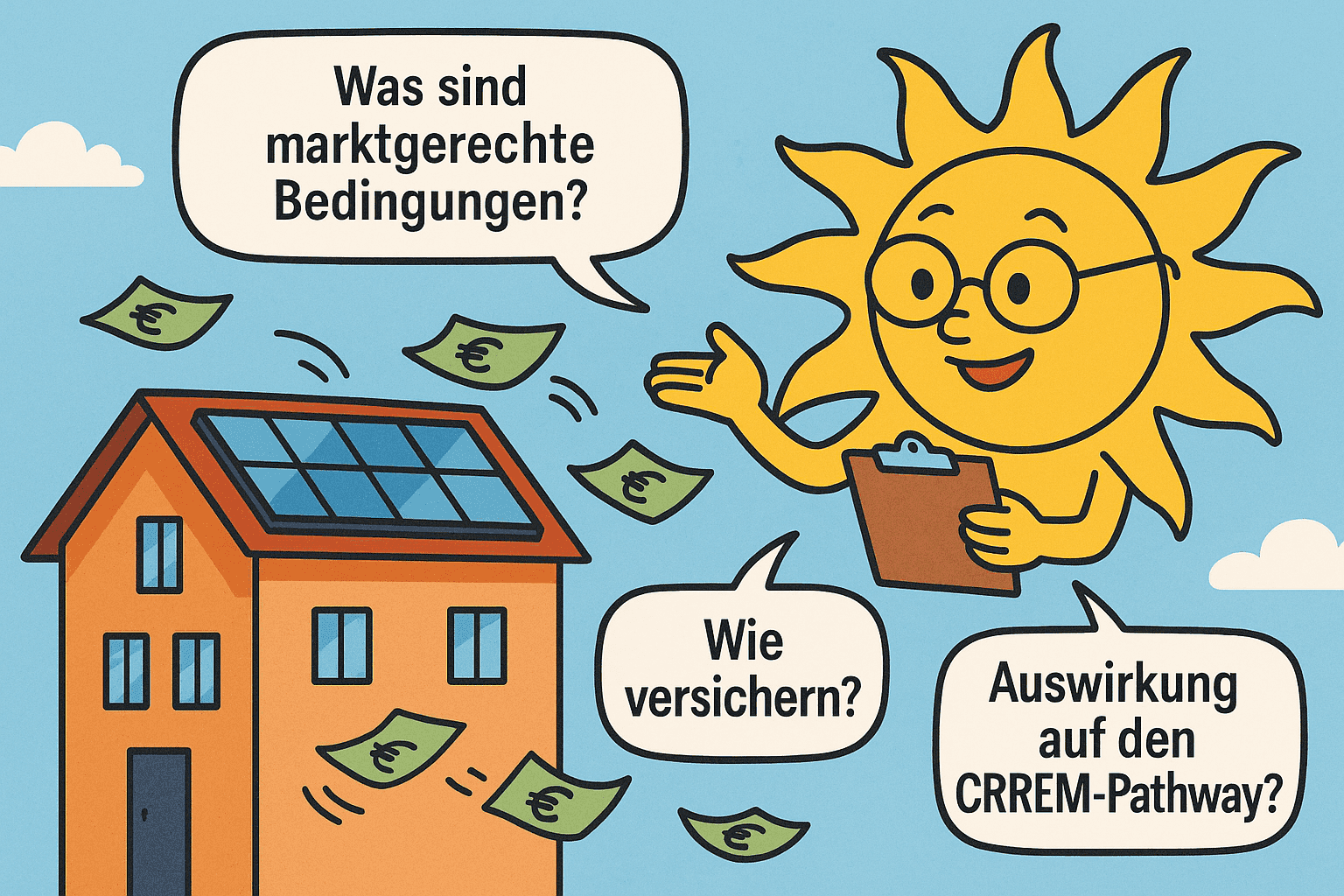
Several institutional investors, especially those with indirect real estate investments via special funds, wanted to understand more precisely what market lease ranges apply to roof areas. Interest is particularly high when the lease is carried out within a group of companies – for example, when a so-called "full-range KVG" (in which the asset manager and KVG are identical) leases to a separate operating unit.
Answer: It depends on the circumstances of the individual case.
The amount of the roof lease cannot be fixed across the board, but can be classified on the basis of certain parameters:
Market indicator:
Another key point concerned the CO₂ balance: Can owners include the PV electricity generated on the roof in their decarbonization strategy even if the system belongs to the operator?
Answer: Yes.
This creates investment security, especially for regulated real estate funds that cannot act as PV operators themselves or at best to a limited extent for tax or regulatory reasons.
Questions were also asked about insurance – in particular, how to deal with potential hazards from PV systems on the roof.
Tenant electricity can make an important contribution to ESG optimization of real estate. At the same time, institutional investors want clear information about market-driven conditions and transparent structures – especially in the context of regulated investment vehicles such as special real estate funds.