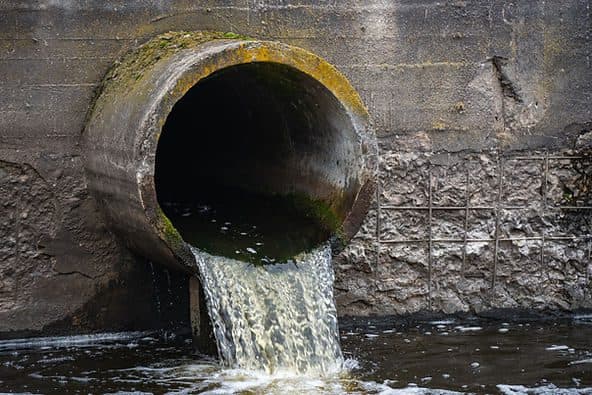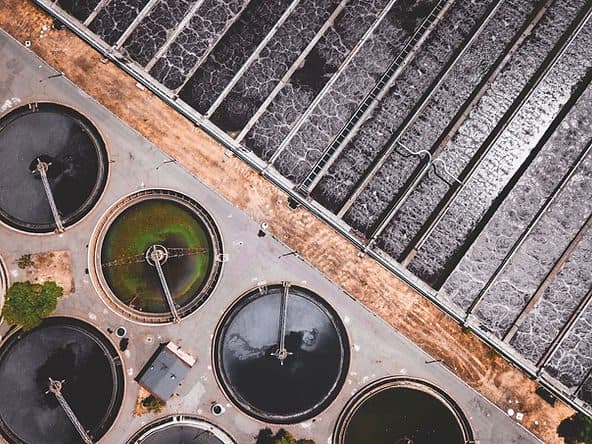
UK Water is going through a public and investor relations nightmare. Water nowadays has the toughest PR amongst infrastructure sectors as the public tends to get much more emotional about water compared to other utilities.1 Headlines about storm overflows, quality of bathing waters,2 anger over bills, and company-specific problems have not been helpful to say the least. UK’s watr industry3 being the only fully privatised water and sewerage networks in Europe, it usually remains in the middle of the political debate about privatisation in general.
Privatisation aside, institutional investors prefer not to be associated with such issues even if the returns are acceptable. And the returns, at least in a few cases that keep making headlines, are not acceptable. Investor sentiment is arguably at its lowest level, pushing capital away from the UK water sector,4 especially for large utilities with wastewater treatment responsibilities. Water-only companies are relatively protected but the overall negative sentiment on the sector affects them as well.
Yet the new five-year business plans for UK water utilities approved by Ofwat — the 2024 Price Review (PR24), covering 2025–2029 — lock in the largest investment programme since privatisation, which will require a significant level of additional capital investment.
As the largest investable market with the longest track record, UK water utilities were once considered the core foundation in any infrastructure portfolio. Water utility is supposed to be a resilient investment, providing stable cash yield through market fluctuations with its inelastic demand in both tariffs and GDP growth as well as automatically inflation-indexed revenues. The recent equity wipe-outs should not have happened in a sector that was the poster child for core infrastructure. Hence the deep disappointment.
Having said that, equity and debt investors will come back to the sector as the fundamentals remain strong and the regulation improves.5 UK water exposure will once again be a pillar of the core foundation of infrastructure portfolios. Given current investor sentiment, there is a significant opportunity for the early movers with the core investment discipline. Now may be the time to go against the flow.
UK water quality holds up well, improvement needed in bathing waters
The average water bill in the UK fell in real terms for much of the last decade, which created headroom for the new cycle of rate rises and elevated level of capital expenditures. The Independent Water Commission estimated about a 15% real terms reduction between 2014–2015 and 2022-2023.6
The lesson-learned for the regulator and the policy makers is to allow much needed environmental expenditure rather than one-sidedly focusing on the politics of customer bills.7 As bills are expected to rise in real terms for a while in the next 10 – 20 years,8 a single national social tariff recommended by various bodies is being considered, so the vulnerable households with affordability issues can be protected while keeping the investment programme intact. Despite growing bills and the headlines, UK water actually holds up well against peers.9
- Drinking water quality: Compliance exceeds 99%, the highest level comparable to Germany, the Netherlands and Denmark.
- Bills: UK household charges remain mid-table—below Germany, Denmark, and the Netherlands—even after recent increases.
- Bathing waters: The UK lags top performers. Only 85% of England’s bathing waters are rated “Excellent,” versus 97% in Germany and 94% in Ireland. France and the Netherlands also outperform.
Improving the environmental performance of bathing waters is exactly where PR24 directs a meaningful share of the resources. Developing strategic water resource schemes also receive significant attention in PR24.