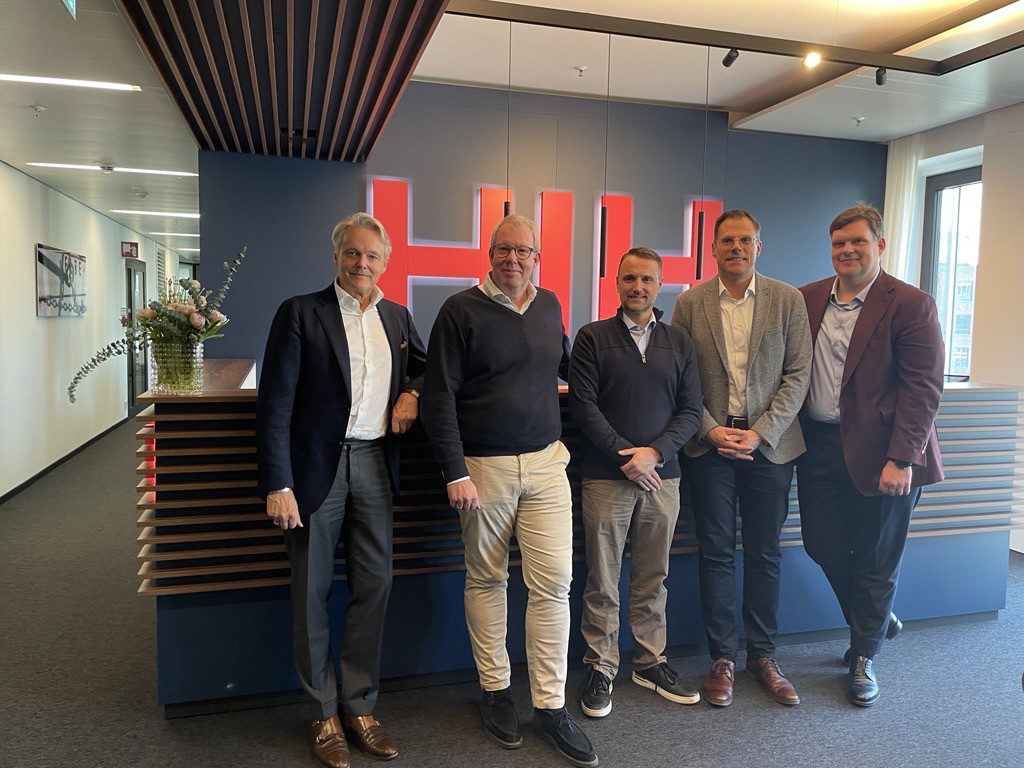
At the beginning of 2026, Hamburg’s real estate market is caught between structural challenges and the first signs of stabilisation. While the housing market continues to be characterized by a significant supply deficit and rising rents, the residential property market is recovering noticeably, but remains vulnerable to economic uncertainties. At the same time, the office market is in a phase of realignment: high-quality space in central locations is benefiting from the ongoing “flight-to-quality” trend, while older portfolios are coming under increasing pressure. In this context, flex office concepts are becoming more attractive again. At the same time, flexible usage concepts, mixed-use developments and the transformation of existing buildings, as shown by the commercial developments “Am Holstenwall” and “Thalia-Haus”, are becoming increasingly important for urban development and the range of demand-oriented usage concepts. These are the key findings of the press conference on the 2026 outlook for the Hamburg real estate market with company representatives from CELLS, Colliers, Dahler, HIH Invest and neworld.
Rental housing market with noticeable price increase
Hamburg’s housing market remains clearly characterised by a structural overhang of demand. While the number of households continues to grow, new construction is declining significantly – with the result that the supply deficit is further exacerbated. The development is already reflected in the rental prices. Sascha Hanekopf, Regional Manager Hamburg at Colliers in Germany, classifies: “We saw significant increases in both existing and new buildings in 2025, and there is no relief in sight in the medium term either. While existing rents rose by 6.6 percent in 2025, asking rents in new buildings increased by 7.6 percent to an average of 21.95 euros per square metre at a stronger pace, which is comparable to commercial rents.” The persistently high demand is offset by a further decline in the number of residential building completions. As a result, Colliers expects a continuous rent increase of around 15.8 percent in the portfolio until 2029. “In the new construction segment, asking rents are expected to grow by 3.9 to 4.0 percent annually,” Hanekopf continued.
Residential property market between revival and uncertainty
Hamburg’s residential property market recovered noticeably in 2025 and is once again recording rising transaction numbers. In the overall market, sales of condominiums increased by 13.4 percent and houses by 5.6 percent. Björn Dahler, Managing Director of the Dahler & Company Group, says: “In the premium segment, growth was even stronger at 15.1 percent for condominiums and 13.5 percent for detached and semi-detached houses, showing a clear return to 2021 levels in demand.”
Prices have also developed positively recently: the average price for condominiums has risen by 0.9 percent to 6,348 euros per square metre compared to 2024. Prices for detached and semi-detached houses rose somewhat more dynamically, with an increase of 1.3 percent to an average purchase price of 565,000 euros. This is because the increased supply is being met with restrained demand, which in turn can be explained by the higher price sensitivity of buyers and more difficult financing conditions for residential property. This means that the market is currently caught between revival and new uncertainty, with more stable activity but limited scope for further price increases,” Dahler summarizes.
At the transaction level, Hanekopf notes positively that the share of residential market transactions in Germany in 2025 was back at the level of 2021. In addition, demand, capital inflows and investor interest point to continued positive development and solid transaction activity in 2026.
Top locations in demand, stock under pressure: office market in transition
The Hamburg office market proved to be robust in 2025 despite challenging economic conditions, but is clearly in a phase of structural readjustment. “The Hamburg office market performed solidly in 2025 under difficult conditions. However, we see a clear shift towards quality,” says Hanekopf. With take-up of around 396,400 square metres, the result was below the record years, but in line with the historical average. At the same time, the vacancy rate rises to 5.5 percent, while the prime rent rises to 38.00 euros per square metre – an expression of increasing market segmentation. The average rents are 22.30 euros per square metre of office space. Demand is driven by a wide range of industries, in particular the manufacturing industry, consulting firms and the public sector, which together account for around 40 per cent of take-up.
Felix Meyen, Managing Director of HIH Invest, confirms from an investor’s perspective: “We see that the market continues to function very well, especially in the central locations. Despite an overall more restrained demand, we continue to let high-quality space quickly and at attractive conditions, such as in our Hanse-Forum property on Axel-Springer-Platz.” The fully let property was acquired in 2018 and has a tenant mix from various industries as well as retail space and a fitness studio.
While demand is becoming more subdued overall due to the economic situation and many companies are reviewing or reducing their space requirements, high-quality, centrally located office properties remain in high demand. Especially in the best locations, the market is stable with solid letting performance, low vacancy rates and attractive rent levels. “Capital is concentrated on core properties in good locations, while peripheral or lower-quality portfolios are coming under greater pressure. At the same time, it is evident that Hamburg has a comparatively stable vacancy rate compared to other top German locations and continues to be perceived as a resilient investment location,” Meyen continued.
Against this backdrop, Colliers expects a slight revival in 2026 – with further increasing pressure on existing space that is no longer up to date.
“Am Holstenwall” and “Thalia-Haus”: New usage concepts for Hamburg’s city centre
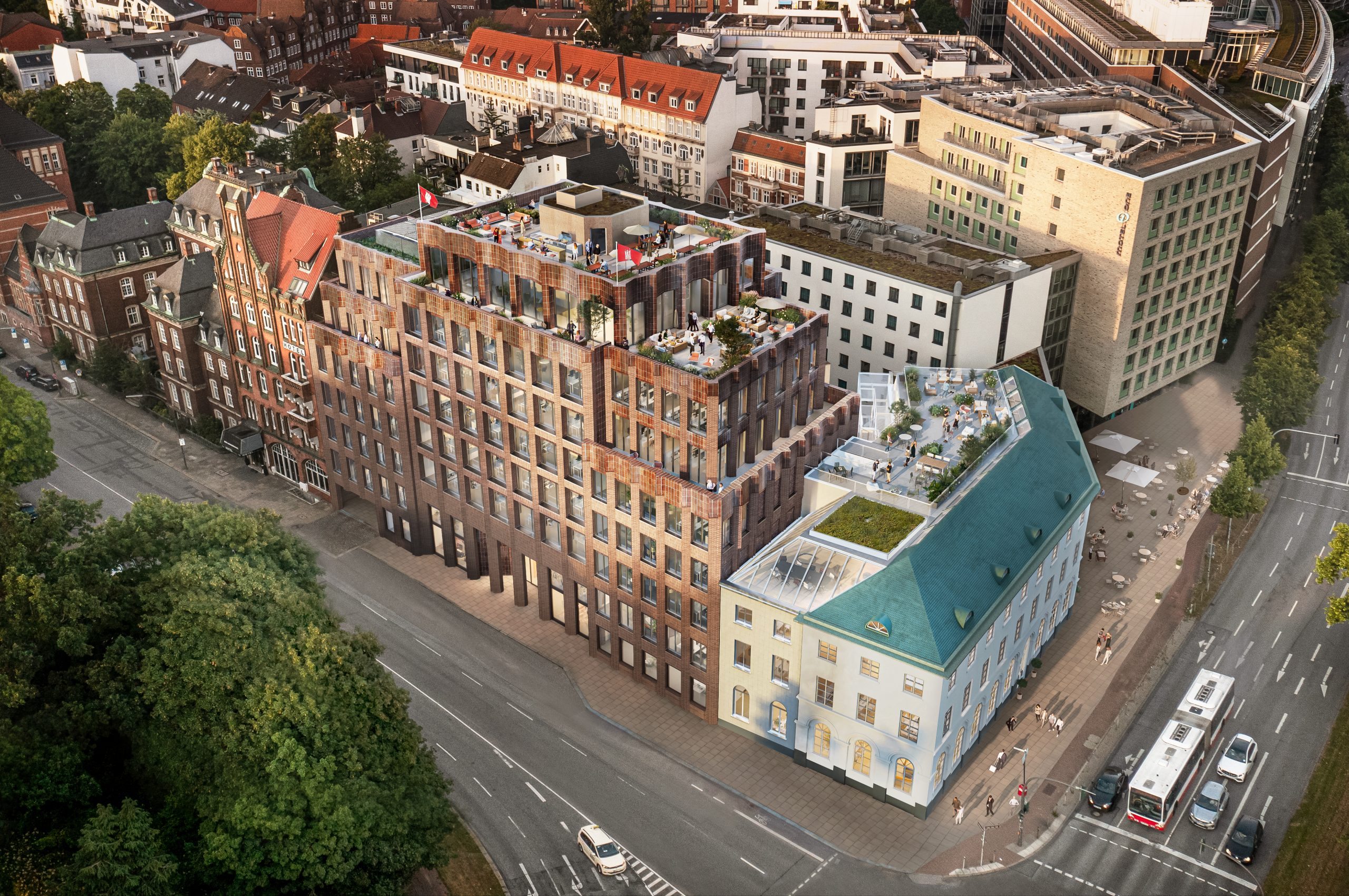
In its current Hamburg projects such as “Am Holstenwall” and the “Thalia-Haus”, the project developer CELLS is focusing specifically on the conversion and repositioning of existing properties that are no longer up-to-date or vacant. The former Haspa building on Holstenwall, which had been vacant for around twelve years, was enlarged from around 8,000 to around 11,800 square metres through expansion and restructuring and functionally reorganised. Supplemented by extensive terrace and recreational areas, the property is nearing completion in the second quarter of 2026 and is already 83 percent leased on a long-term basis to users with strong credit ratings. “We are deliberately intervening in the existing building structure, expanding and supplementing it where it makes economic and functional sense, instead of demolishing and building a new one,” says Norman Schaaf, CDO of CELLS.
The “Thalia House” is still at the beginning of its transformation. The former department store and parking garage will be structurally restructured and developed into a mixed-use quarter. A 5-star hotel with around 150 rooms, which has already been secured via a head-of-term, around 6,000 square metres of office space and apartments on the upper floors are planned. Supplementary roof and restaurant uses further strengthen the situation. An Icelandic family office has been won as an investor, a preliminary building application has been submitted, and the building permit is expected by the end of the year. “Especially in inner-city locations, it is a matter of repositioning existing buildings and developing them structurally in such a way that they can sustain different uses in the long term,” explains Schaaf.
Flex office as a supplement and selective driver in the office market
In addition to the classic office market, the flexible office space segment continues to gain in importance and is establishing itself as an integral part of modern usage concepts. In Germany, the flex office stock has almost doubled since the pandemic and now covers more than 1 million square meters. Demand is also stable in Hamburg, especially in central, well-connected locations, which further underlines the ongoing “flight-to-quality” trend. Since the beginning of the year, the flex office provider Scaling Spaces has been represented with its first location in Hamburg in the Sprinkenhof (Burchardstraße 14). “Flex Office offers are mainly used by small and medium-sized companies as well as project teams of larger companies that need scalable space at short notice or are testing new locations. Many companies can only plan in the short term due to the volatile economic situation. This is exactly where Flex-Office comes in and offers the necessary flexibility in terms of lease terms and office sizes, which can be easily enlarged or reduced,” says Alexander Lackner, CEO of neworld, which is the investor behind Scaling Spaces. “We still see a lot of potential for flexible office space in Hamburg and can also imagine other locations in the Hanseatic city.”