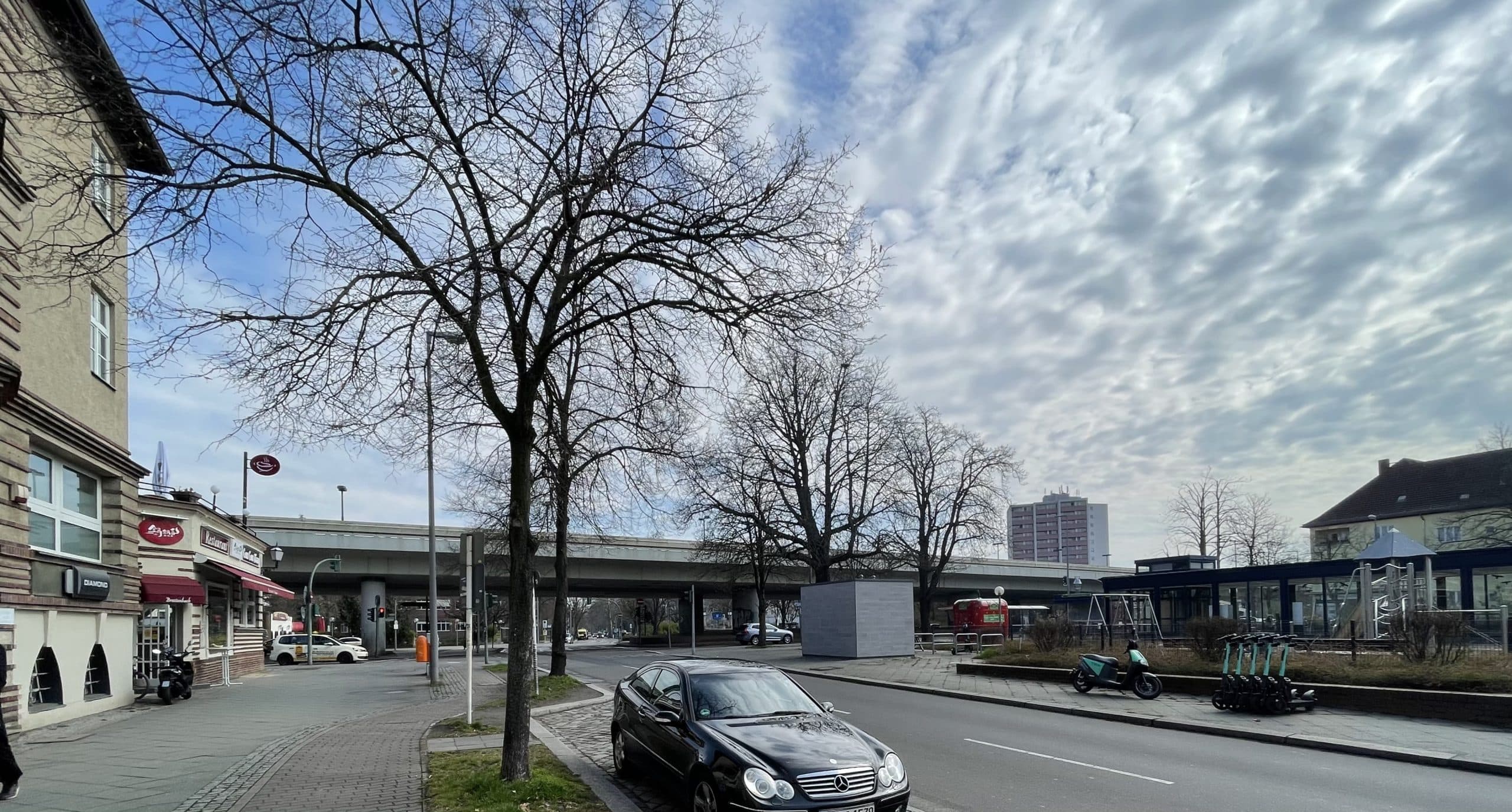
The former A104 urban motorway at Breitenbachplatz is being discussed as a potential site for the International Building Exhibition (IBA) Berlin 2034–2037. What is currently attracting attention as a future project has a long history. As early as 2021, the Berlin-Brandenburg Association of Architects and Engineers (AIV) and Patzschke Architects presented initial concepts for the redevelopment of the former motorway route under the title ‘Stadt statt A104’ (City instead of the A104). The AIV now sees the IBA as an opportunity to turn these plans into a concrete urban development project.
“The International Building Exhibition offers Berlin the chance to rethink urban development – not just by talking about new neighbourhoods on greenfield sites, but by harnessing the potential of the existing city. That is precisely what our ‘City Instead of the A104’ project is all about. Back in 2021, we demonstrated how a former urban motorway can be transformed into new urban space. We wholeheartedly welcome the fact that this idea is now being discussed in the context of the IBA. The key now is to develop concrete projects based on the existing concepts,” said Christian Müller, Chairman of the AIV Executive Board.
Up to 6,000 flats on and along the former motorway route
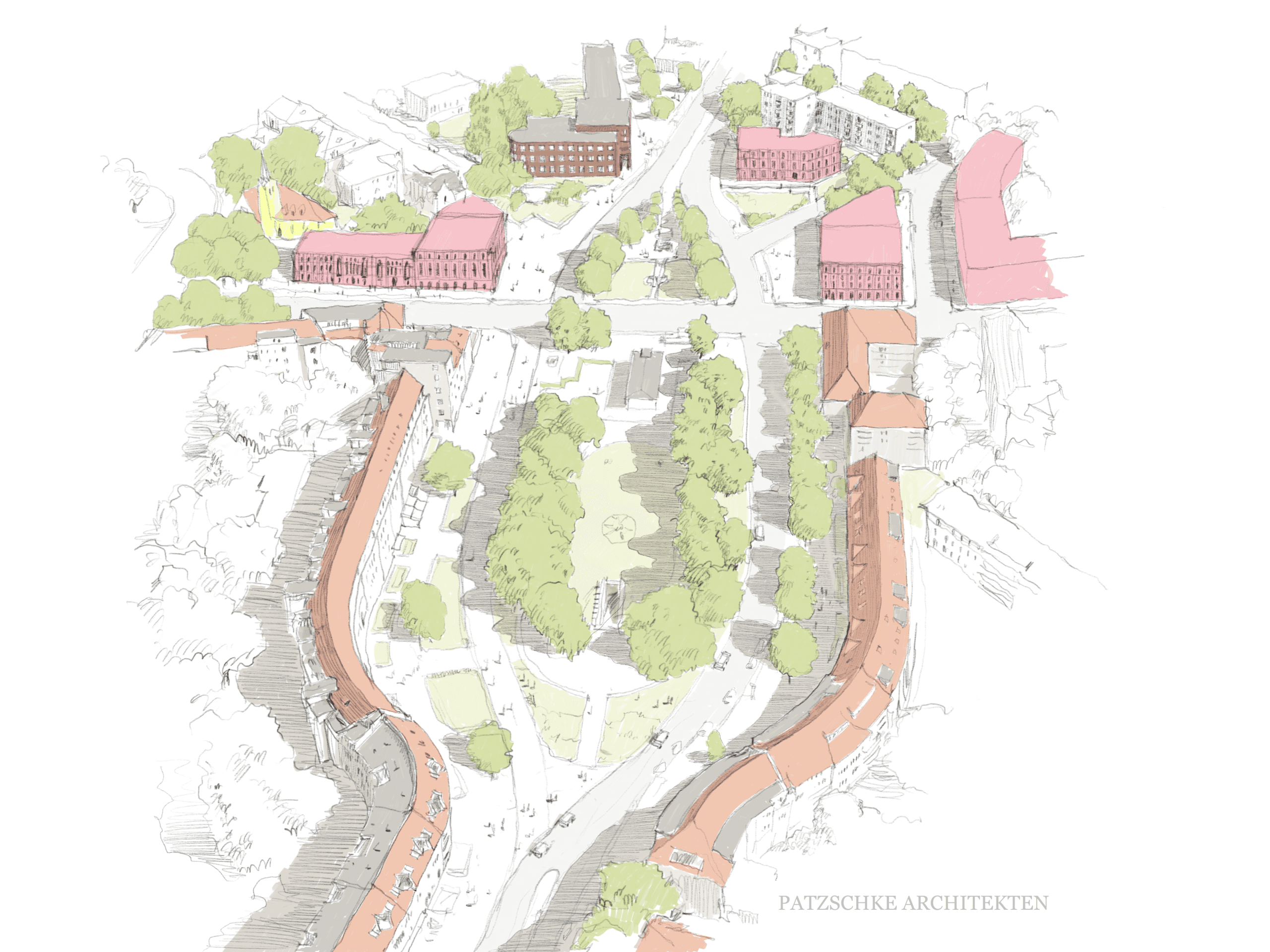
The urban development concept ‘City instead of the A104’ covers the entire former A104 between the Wilmersdorf motorway junction and Schlossstraße. According to the calculations, there is potential along the route for around 600,000 square metres of gross floor area, or approximately 6,000 flats. At the same time, new green spaces, public squares, social infrastructure and attractive links between neighbourhoods previously separated by transport infrastructure could be created.
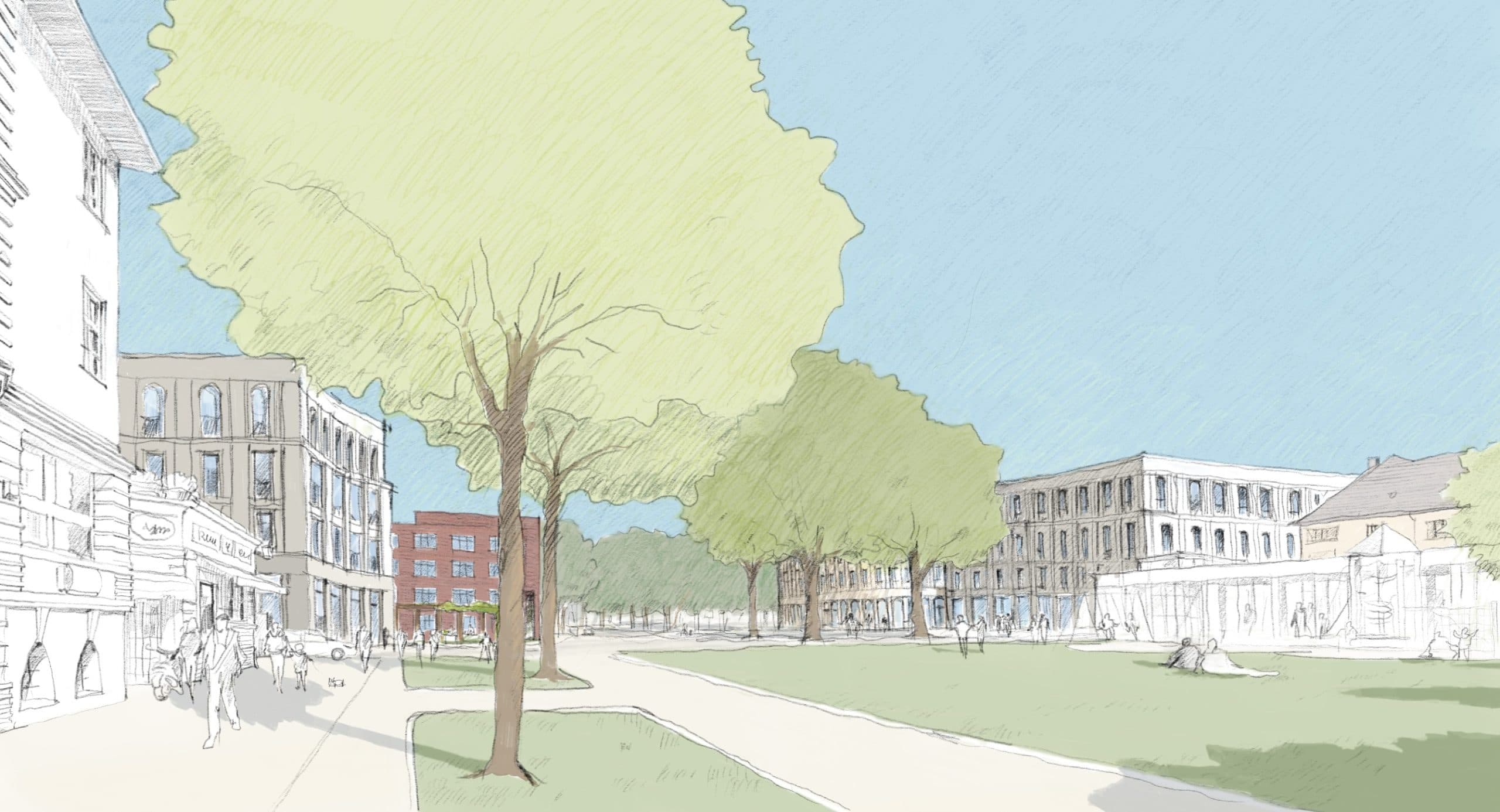
Particular emphasis is placed on the area between the Schlangenbader Straße motorway overpass, Breitenbachplatz and Schildhornstraße. An in-depth urban planning concept study for this section, entitled ‘City instead of the A104 – Rethinking Breitenbachplatz’, is already available. It demonstrates how around 800 to 1,000 flats could be built across a gross floor area of approximately 75,000 square metres, the majority of which would be publicly subsidised. At the same time, the concept envisages a significant reduction in paved areas, additional green spaces and the restoration of Breitenbachplatz as a cohesive public urban space.
“The A104 is an example of how transport infrastructure has fragmented urban structures over decades. Today, we have the opportunity to reverse this trend. Instead of an elevated motorway, new homes, vibrant street spaces and green spaces can be created here. It is not just about creating additional housing, but about restoring the city. It is precisely these kinds of transformation projects that should be at the heart of an International Building Exhibition,” said Robert Patzschke, architect and member of the AIV Executive Board.
Breitenbachplatz as a specific IBA pilot project
For the AIV, Breitenbachplatz in particular offers an opportunity to give tangible expression to the IBA’s vision in a concrete project. The decision to demolish the elevated road has already been taken at a political level. This means that the question is no longer simply how the existing transport infrastructure is to be removed, but above all what is to be built in its place. The AIV’s concept therefore goes far beyond the demolition of the flyover. It envisages new residential buildings, public spaces, better connectivity between the neighbouring neighbourhoods, new cycle paths and footpaths, as well as measures for climate adaptation. Among other things, the concept study highlights ways of reducing land sealing to 33 per cent and increasing the proportion of green space by 18 per cent. Another advantage is that, according to the initiators, the land is almost entirely publicly owned. This creates favourable conditions for coordinated development.
“We should not view the demolition of the elevated road as an isolated transport measure. This presents a rare opportunity to create a new part of the city right in the heart of Berlin. With the IBA, we now have a framework within which high-quality urban design, sustainable construction, new mobility concepts and social diversity can be combined in an exemplary manner,” said Patzschke.
The IBA must demonstrate new approaches to urban development
The AIV had been campaigning for many years for a new edition of the International Building Exhibition in Berlin and had expressly welcomed the Senate’s decision of March 2026. From the association’s point of view, the IBA 2034–2037 must, above all, produce projects that serve as models, are internationally transferable and have a long-term impact. In the AIV’s view, ‘City instead of the A104’ could also set new standards in the planning processes. The transformation of the former motorway requires cooperation between various boroughs, Senate departments and, where necessary, the federal level. The association therefore proposes a collaborative planning process that brings together the relevant authorities, experts and the wider community at an early stage. At the same time, new tools for speeding up planning and approval procedures could be trialled.
“The IBA must not stop at producing good images and ambitious concepts. Its success will be measured by whether it actually generates new solutions for urban development. This also involves simplifying planning processes, coordinating responsibilities more effectively and focusing on implementation. The ‘City instead of the A104’ project is an initiative that could serve as an exemplary test case for precisely this,” said Müller.
From concept to implementation
The initial concepts for the redevelopment of the former A104 were published as early as 2021 and presented to the Berlin House of Representatives in 2022. Since then, the AIV and Patzschke Architekten have further developed these ideas and fleshed them out specifically for the Breitenbachplatz area. The AIV now considers the run-up to the IBA to be the right time to take up the existing plans and translate them into a binding development process. This includes an urban development framework plan, the clarification of responsibilities and a quality-assured planning process involving public participation.
“Berlin does not have to start from scratch for the IBA. There are already well-thought-out concepts that provide answers to key questions about the city’s future. Our project demonstrates the potential that lies in repurposing existing infrastructure. We would like to actively contribute these ideas and our specialist expertise to the IBA process. Breitenbachplatz could become an example of how Berlin is creating new urban spaces from its existing structures,” Müller concluded.