Market fundamentals remain strong – interest rates carry risk
The German housing market will continue to be dominated by the pronounced supply-demand imbalance in 2026. Vacancies are low in many cities and the vast majority of these markets continue to record a decline in vacancy rates. Due to the low project development pipeline, this will continue in the medium term and will lead to rising rents across the board. The large metropolises could see less momentum in rental development this year – rents here are already extremely high. It is more likely that the affordable and at the same time attractive cities in the second and third tiers will experience a more dynamic population development and a more dynamic rent development.
So while the rental market side continues to be positive for investors and portfolio holders, the recent development on the bond and financing markets once again poses a challenge. After the attack on Iran by Israel and the US, oil and gas prices initially rose rapidly, and subsequently bond yields and financing costs. For example, the German 10-year government bond remained above three percent at the end of March and swap rates were also at a two-year high of 3.1 percent at the end of March.
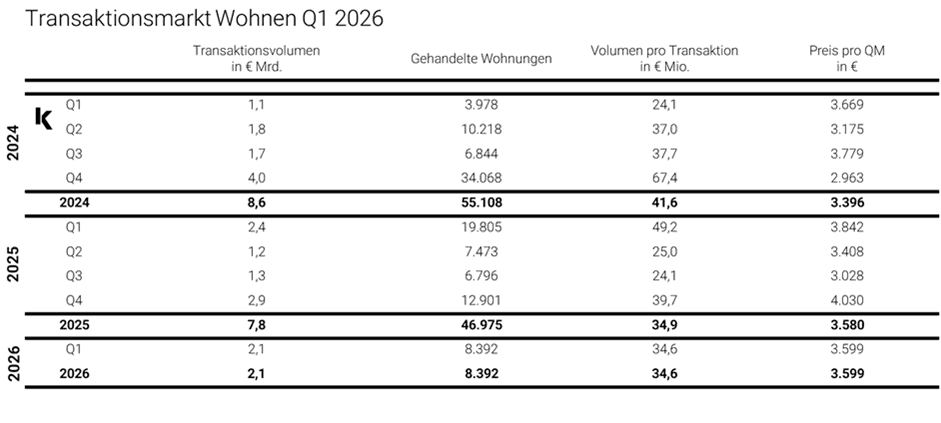
The volatility of the interest rate markets is also likely to cause increasing uncertainty for real estate transactions – at least in the short term. "Nevertheless, we expect investment momentum to pick up in 2026 due to the strong fundamentals in the rental market and demand for housing to continue to rise," says Marc Sahling, CEO at Lübke Kelber, commenting on market developments.