



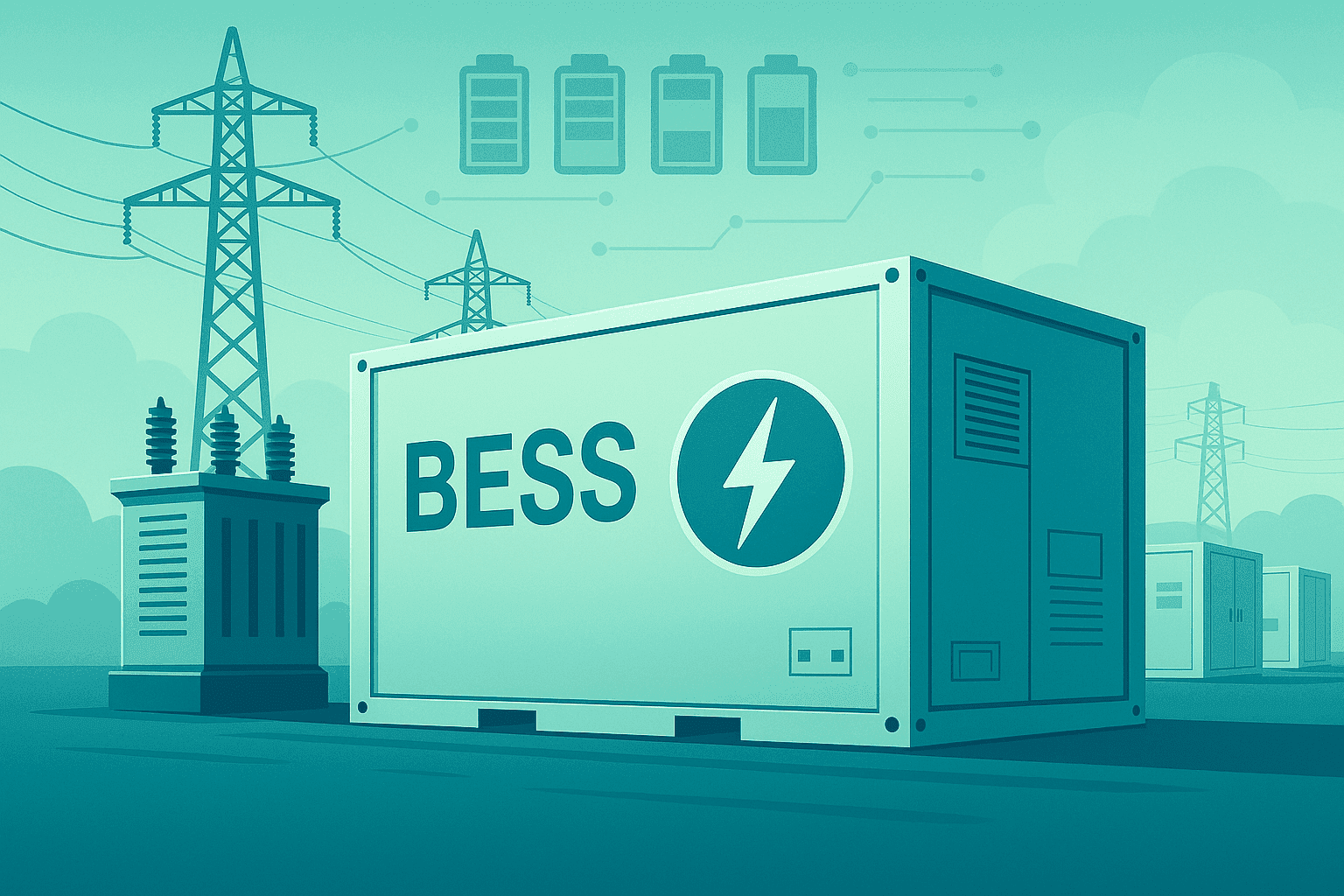

While the German AnlV diverts capital flows, Solvency II tries to accompany them in a risk-appropriate manner. Reduced capital requirements are intended to open up capital in particular for infrastructure – keyword: qualified infrastructure. The example of the investment in large-scale battery storage technology (BESS) clearly shows that successful capital mobilization depends on deeply anchoring template criteria such as long-term, calculable and contractually well-secured cash flows in the product design.
From the idea to the template
Solvency II does not have an infrastructure quota – but a strong concept: qualified infrastructure investments. The telos is clear: where risks are lower and cash flows are more stable, insurers' capital requirements may fall. The regulatory logic is therefore that those who invest with certainty need less collateral. But the way to get there is through proofs, definitions and structures that do not arise by chance, but must be consciously created in the product design.
What the stencil requires
Article 164a and b of Delegated Regulation (EU) 2015/35 describe an ideal picture: predictable cash flows, limited corporate purpose, robust contracts, resilient governance.
(While Article 164a is aimed at infrastructure projects with clearly defined assets and project-related contracts, Article 164b extends the privilege to infrastructure companies – i.e. operating or holding structures whose business activities are permanently focused on the ownership, operation or financing of such assets.)
These requirements are intended to translate the economic stability of real assets into insurance regulatory security. Those who operate within this framework benefit from a capital adequacy requirement of around 22% instead of 39% – a privilege that is directly relevant to insurers' investments.
BESS – Batteries as an interesting use case
Large-scale battery storage systems (BESS plants) that can be monetized in the electricity and balancing power market are increasingly attracting the interest of institutional investors as an infrastructure asset class – not least because of return expectations in the double-digit range.
Technical insights into the asset class are provided in the practical contribution by Dr. Andreas Peppel on ASSETPHYSICS. In the latest article , also by Dr. Andreas Peppel on this platform, the opportunities and risks of this asset class are summarized.


