Political stalemate in France likely to drag on, but limited impact on real economy expected
A vote of no confidence in the government forced French Prime Minister Bayrou to resign in early September. President Macron appointed ally and former defence minister Sebastien Lecornu as the new prime minister, tasked with cobbling together sufficient votes to pass the 2026 budget by year-end.
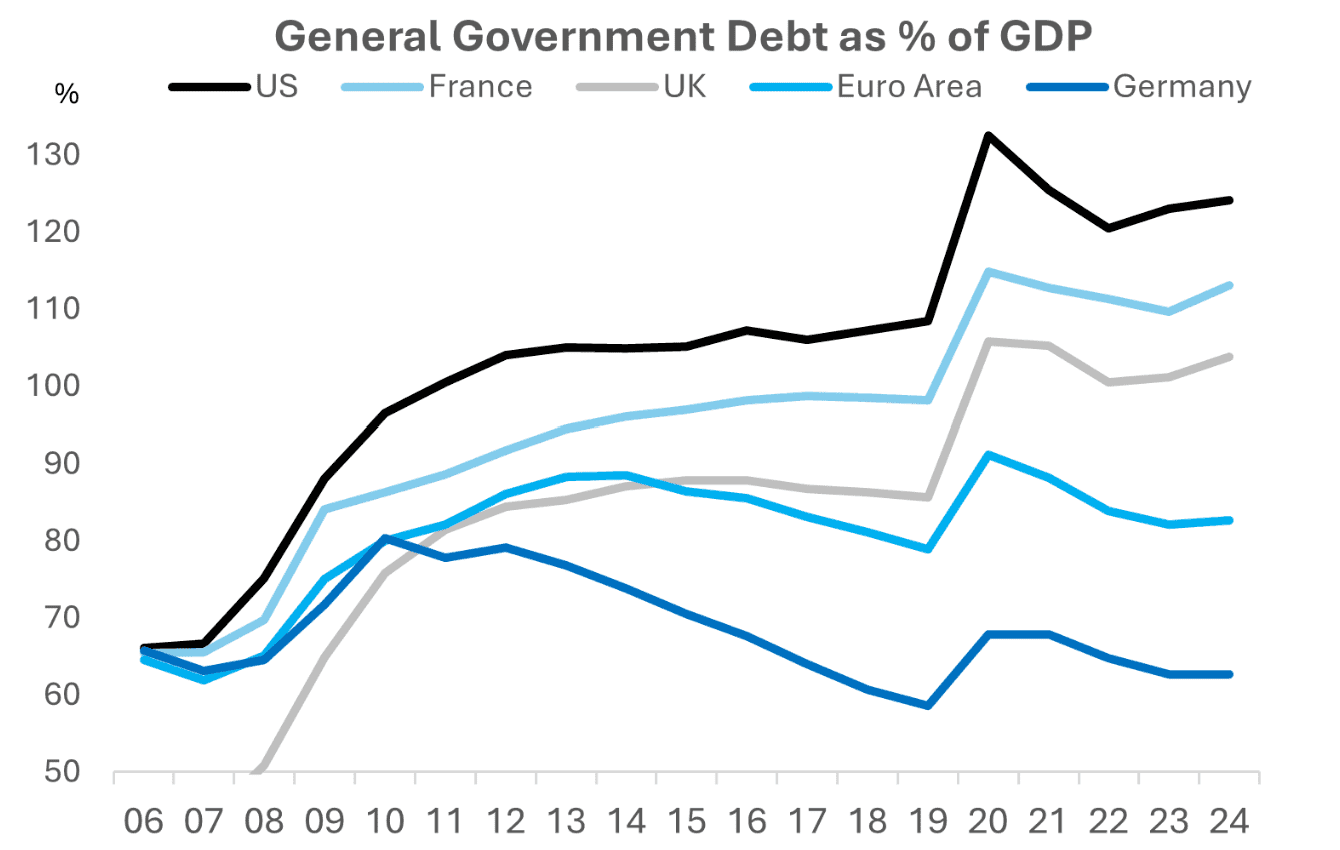
While the political noise level is high, neither the extreme right or left have sufficient votes to implement their respective agendas. Therefore, the most likely scenario is continued muddle through, with government policy staying mostly on autopilot and the fiscal deficit remaining in the 4.5-5.5% of GDP region until new presidential elections are held (likely in 2027).
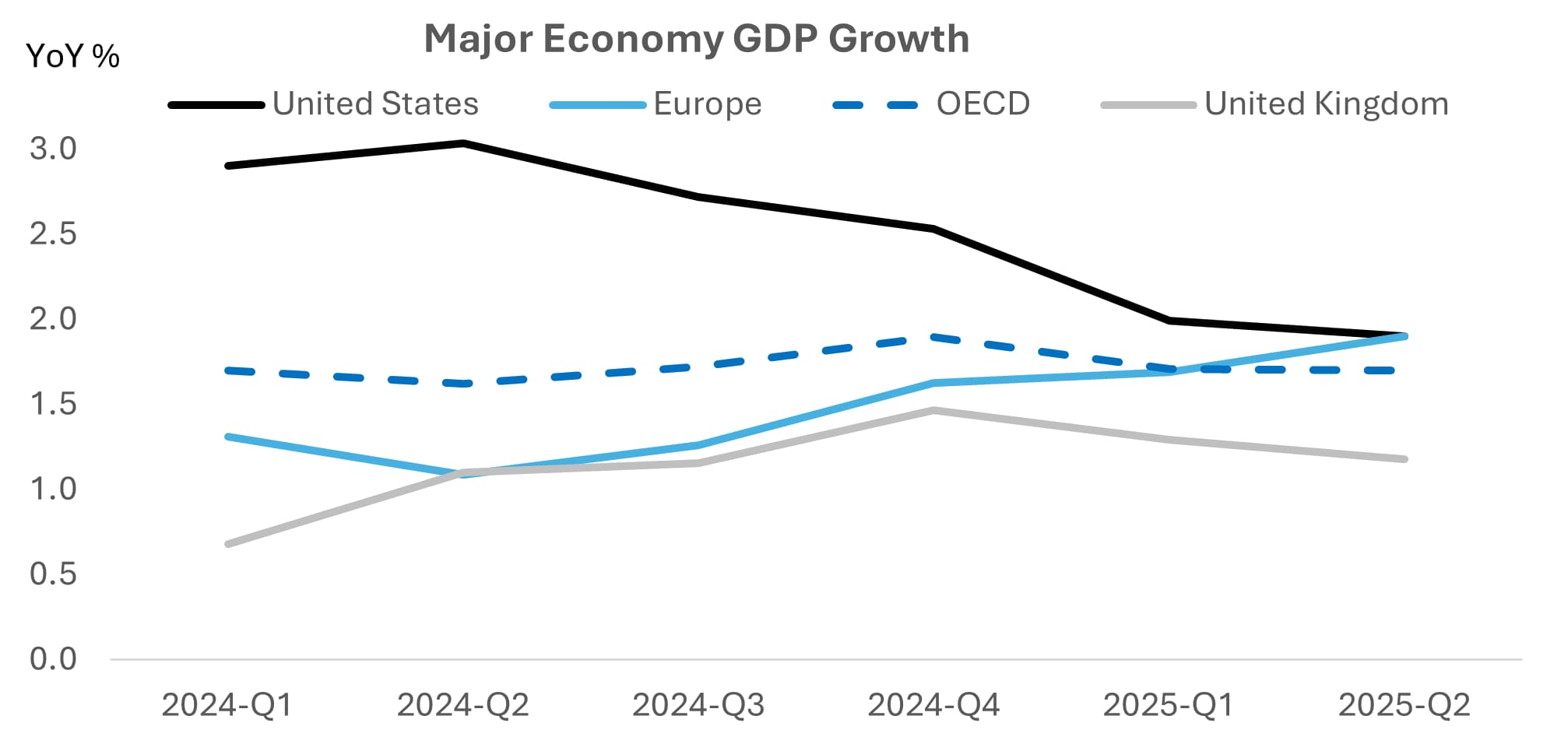
Although policy gridlock may limit the upside potential of France’s economy, it also means damaging extremist policies will not be implemented. Recent business surveys indicate company executives continue to see a positive operating environment into the third quarter, with economic growth likely to continue to trend in the 0.5%-1% range.
The markets have taken recent political developments in stride, with French government bond yields declining and the stock market rising in the run-up to and after the vote.