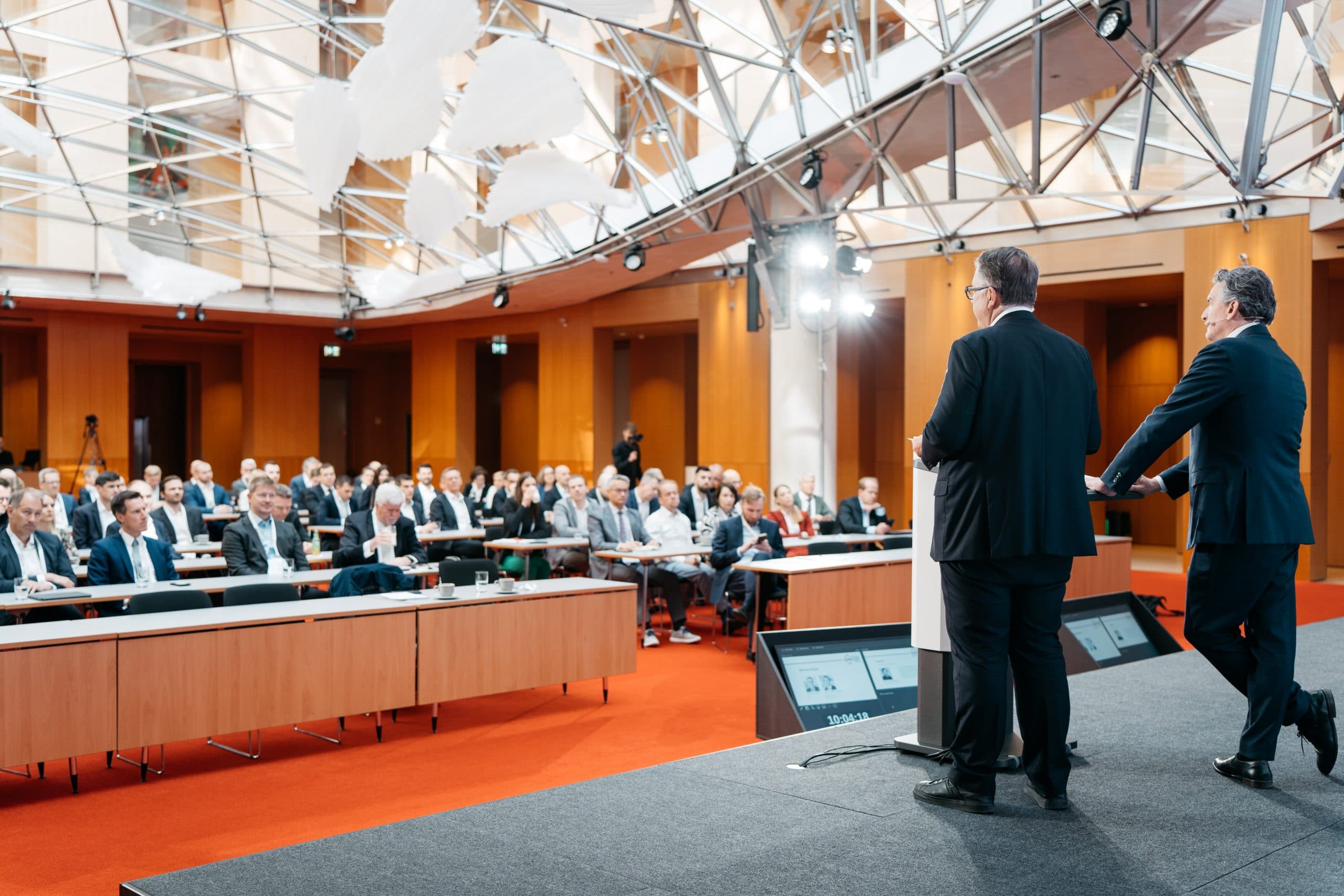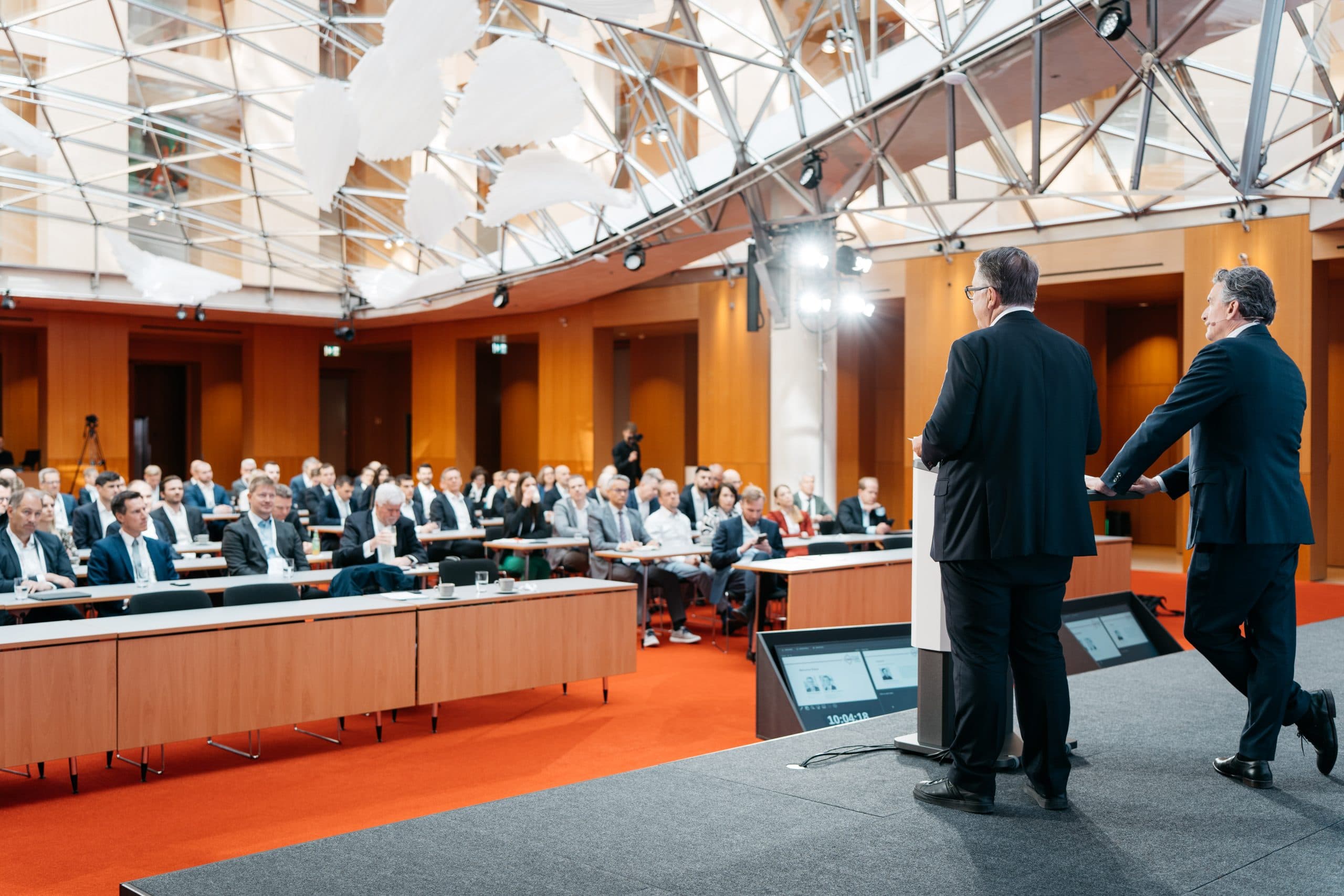
BF.direkt, IREBS and RUECKERCONSULT welcomed around 130 guests to the Real Asset Finance & Debt Summit in Berlin on 23 April 2026. "What began ten years ago in Frankfurt has grown and developed. The congress has moved from Frankfurt to Berlin, we have survived Corona and we have changed the name from Annual Congress Financing for the Real Estate Industry to Real Asset Finance & Debt Summit," said Francesco Fedele, CEO of BF.direkt AG. Last year, the organizers already expanded the range of topics to include debt and infrastructure.
The programme was moderated by Professor Dr. Steffen Sebastian, Chair of Real Estate Finance at IREBS and, together with Francesco Fedele, Chairman of the Advisory Board of the Real Asset Finance & Debt Summit. His assessment of the current financing environment: "Anyone who wants to make forecasts for the financing market at the moment not only needs very good military and geopolitical knowledge. Above all, one must also be able to predict how the increasingly erratic US president will behave in the coming months. After the developments on the bond markets, the majority of market participants expect both long-term and short-term interest rates to rise. At the same time, the economy will probably weaken due to higher energy prices."
In his keynote speech at the start, Prof. Dr. Moritz Schularick, President of the Kiel Institute for the World Economy (IfW), said: "Europe is in a sandwich position between the USA and China in the global economy. Europe must therefore stick together. But it is not without problems to establish this European unity." In addition, there are structural challenges at home: too little public investment over many years, weak private investment and stagnating working hours.
In his keynote speech, Prof. Dr. Andreas Löschel, Chair of Environmental/Resource Economics and Sustainability at the Ruhr University Bochum and researcher at RWI – Leibniz Institute for Economic Research, shed light on how the European energy market is currently developing. He emphasizes: "Geopolitical tensions and shocks are becoming more frequent. Oil prices in Europe in particular are susceptible to geopolitical shocks. We need to make our energy supply more resilient."