

In business, ESG is often used synonymously with sustainability. When investors, banks, legislators, or companies talk about sustainability, they often say "ESG" and, conversely, when they speak about ESG, they mean sustainability. The combination of environmental, social, and governance (ESG) aspects equals sustainability for them.
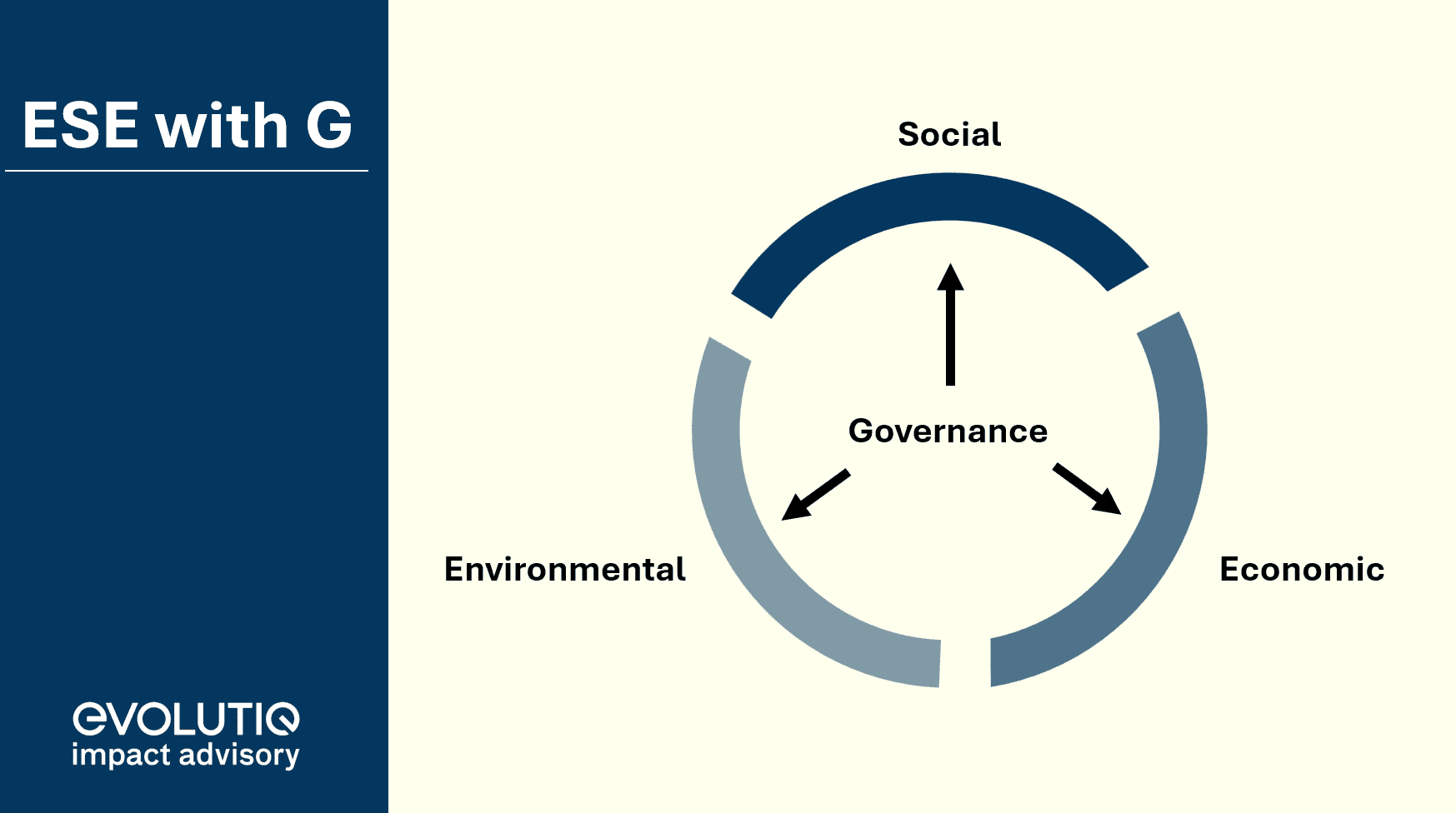
However, in this concept, the economic aspects of sustainability are being overlooked. This distinguishes the ESG view from the classic definition of sustainability, which is seen as the interplay of environmental, social, and economic (ESE) factors. Therefore, institutions that manage ESG are only managing sustainability if they also consider the economic perspective within their sustainability management. Usually, companies tend to place a strong focus on the economic perspective of their business activities. They are required to produce value-add in the form of profitability and often provide numerous positive economic impacts for society. To be able to holistically manage sustainability, the economic dimension of sustainability must be reflected in the discussion in the same way as the social and environmental aspects.
So, how do you manage sustainability? This is where the "G" (Governance) is the key connecting element. Governance makes it possible to meaningfully address conflicting goals and link value-added activities in business with relevant impact issues.