

From textbook to reality: Stagflation in focus
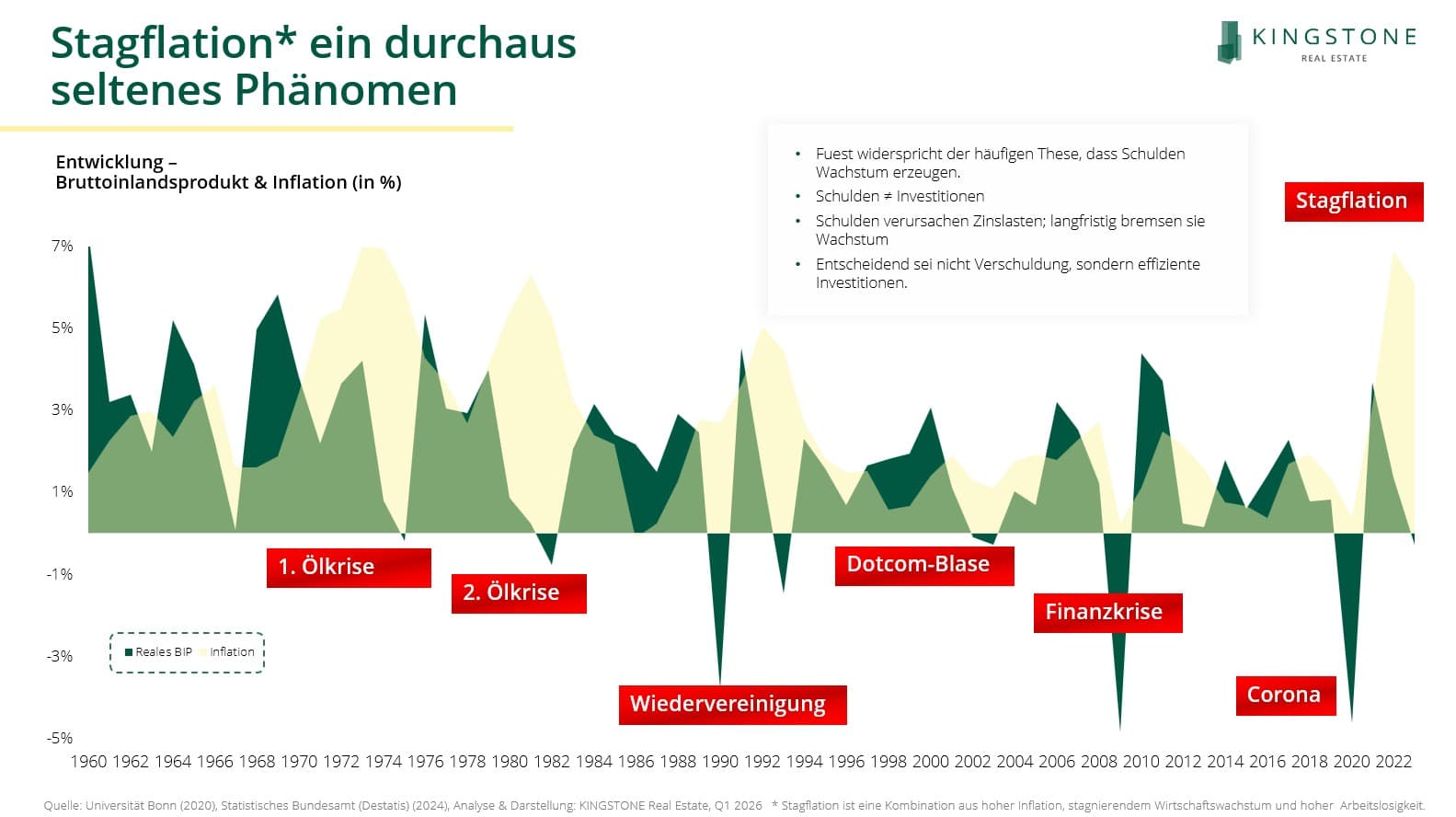
In the 1970s, Chancellor Helmut Schmidt summed up a central economic policy dilemma. Behind this was the assumption of an opposing relationship: inflation rises, unemployment falls – theoretically founded by the Phillips curve. Falling unemployment was seen as an expression of economic dynamism. Inflation and stagnation therefore appeared as opposites.
But it was precisely this connection that broke down in the 1970s. The simultaneous combination of high inflation and weak growth – later referred to as stagflation – challenged economic doctrine. What was considered a theoretical contradiction became empirical reality.
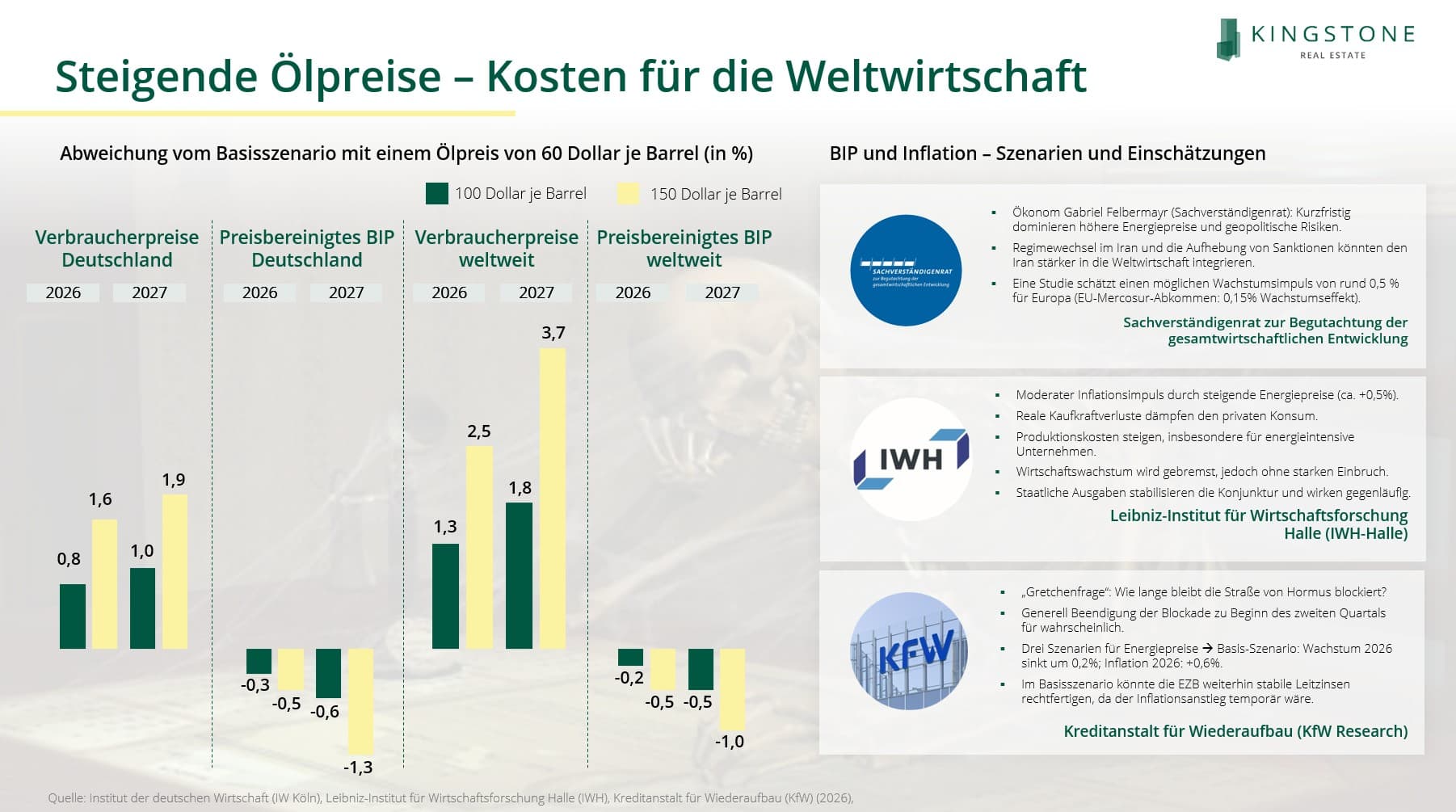
Today, this scenario comes back into focus. As part of our webinar "Macro Matters – Investment Insights" (March 2026), we discussed this mixed situation: geopolitical tensions around the Iran conflict, rising oil price risks and fiscal policy debates are meeting new regulatory decisions. Traditional macroeconomic contexts are coming under increasing pressure.
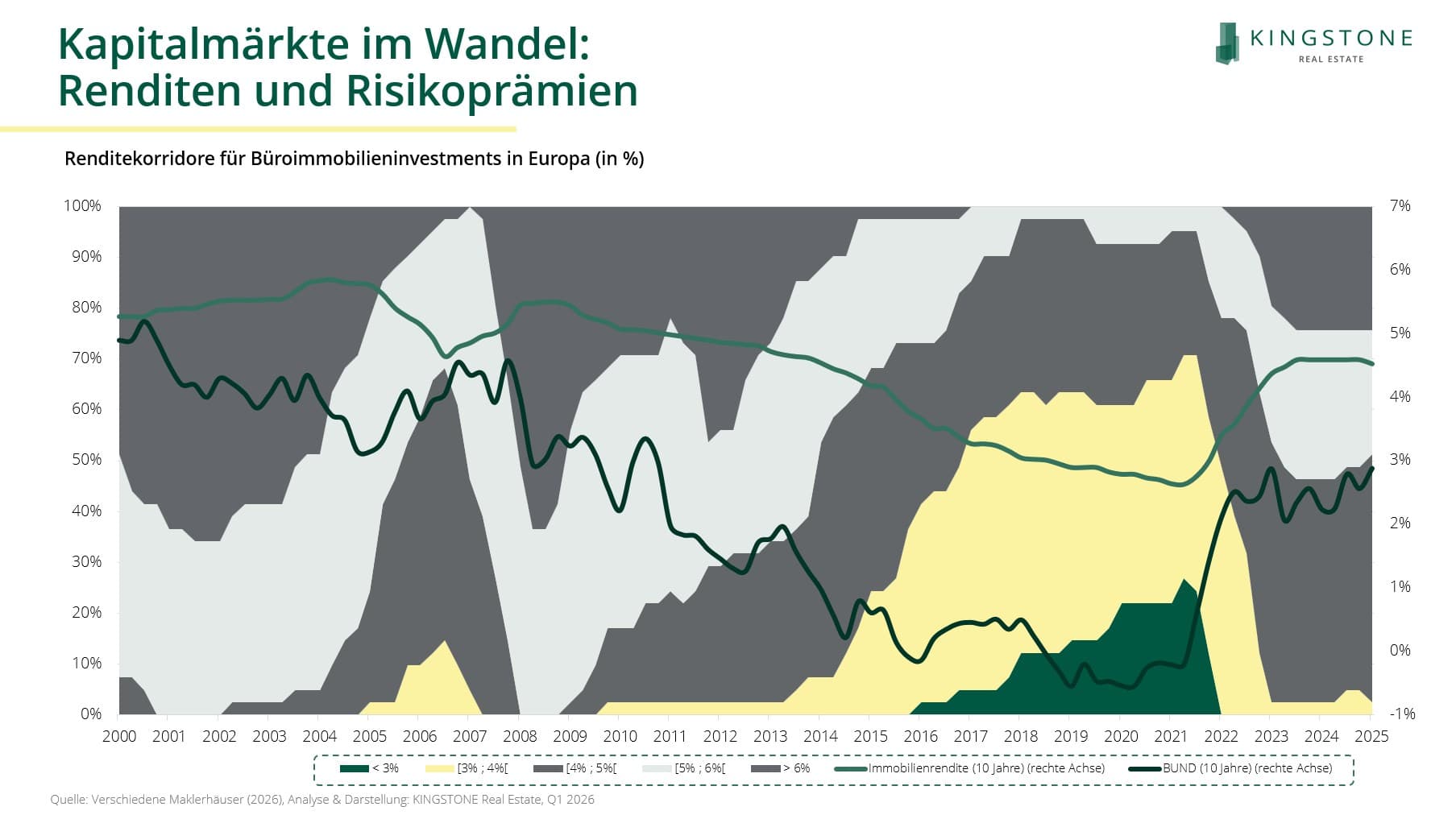
In addition, once the "stagflation monster" has established itself, it develops a dangerous momentum of its own. Inflation is becoming entrenched in expectations and wage demands, while growth remains weak. An environment is emerging that can only be stabilized again at considerable economic cost. Against this background, the question arises as to whether this is merely a temporary risk or whether the first signs of a renewed stagflationary phase are already emerging. And what are the implications for real assets, especially real estate as a central component of institutional portfolios?