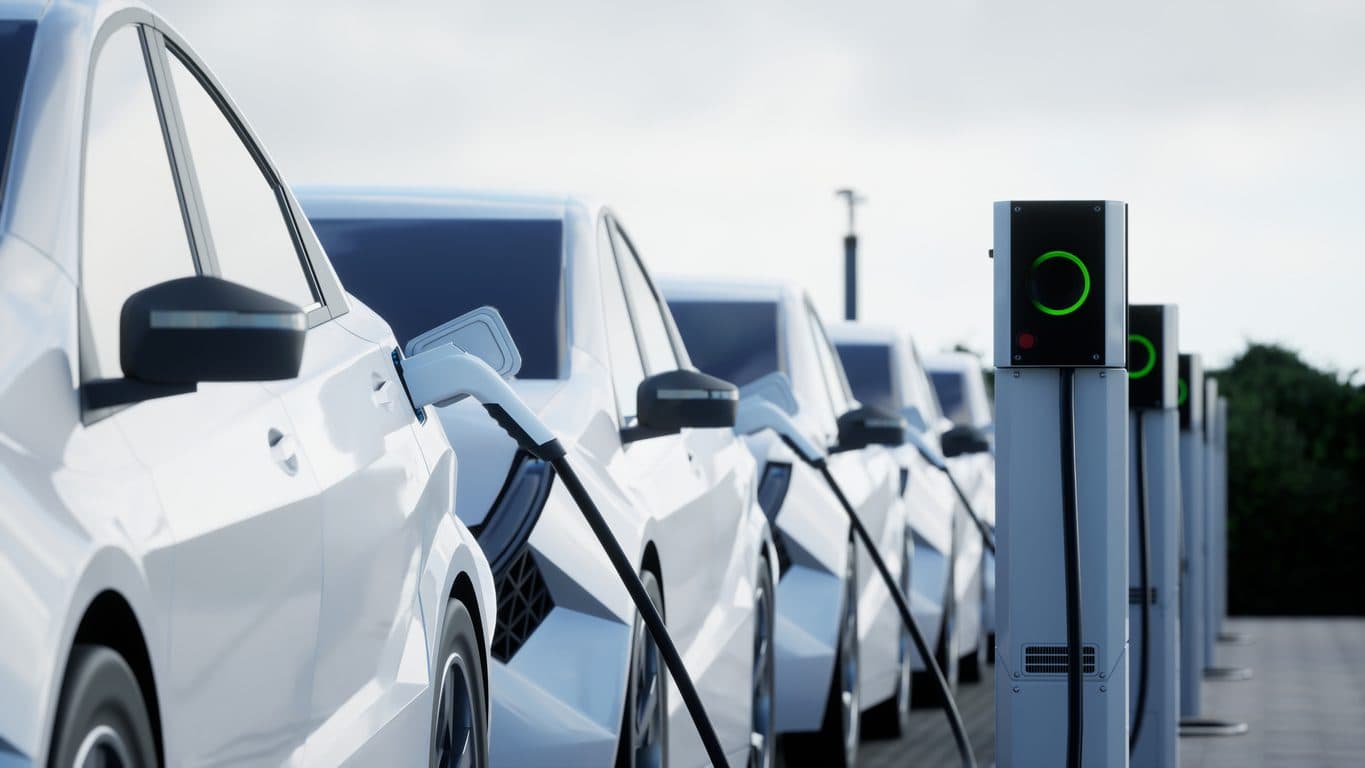
The former German government has formulated ambitious goals for the transformation of the transport sector: By 2030, 15 million fully electric vehicles are to be on the roads, flanked by one million public charging points. This target implies a ratio of 15 electric vehicles per public charging point. Tim Deemann, Director Institutional Sales, and Felix Kreppel, Senior Investment Manager Infrastructure Equity, both MEAG, talk about this ambitious but necessary step for climate protection and the energy transition in the mobility sector.
TD: If we look at the target of 15 million electric vehicles by 2030 – where do we really stand today, also in terms of the willingness to invest in the infrastructure sector?
FK: The path to these goals is difficult. Currently, only around 1.79 million purely electric cars are registered in Germany – only about 14 percent of all new registrations are currently electric cars. Although an increase of around 380,000 vehicles was recorded compared to the previous year, this is around 27 percent below the previous year's level. The main reasons for the decline include the discontinuation of state purchase premiums, continued high acquisition costs and a charging infrastructure that is still insufficiently developed and regionally unbalanced.
TD: And what about the expansion of the charging infrastructure?
FK: The number of public charging points has more than doubled to around 154,000, including 33,000 fast-charging stations. Nevertheless, the expansion varies greatly from region to region. A third of all municipalities do not yet have a single public charging point. If plug-in hybrids are included, there are currently about 17 vehicles per charging station – for fast chargers, the ratio is as high as 82:1.