
ASSETPHYSICS LOGO
ASSETPHYSICS LOGO
    • EN
    • DE
    EN
    • DE
    ASSETPHYSICS LOGO
    • Statements
    • Deals
    • Cooperations
    • Developments
    • Dynamics
    • Markets
    • Cases
    • Regulatory
    • Real Estate
    • Energy
    • Infrastructure
    • Private Equity
    • Private Debt
    • Our authors
      • Our Authors
      • You want to publish as an author on ASSETPHYSICS?
    ASSETPHYSICS LOGO
    • About the hub
    • Real Assets
    • Contact
    • Newsletter
    • Privacy Policy
    • Terms
    • Imprint

    This article is translated automatically.

    AnalysisQuarterlyReport
    Oct 5, 2026

    The German property investment market: Increased supply meets new price realities

    Savillsby Savills
    Share
    LinkedInXingInstagramEmail
    Copied!
    Save
    Like0
    MarketsReal Estate
    The German property investment market: Increased supply meets new price realities
    Karsten Nemecek ist Deputy CEO Germany bei Savills und verantwortlich für den Bereich Capital Markets. Bildquelle: Savills

    The German property investment market: Increased supply meets new price realities

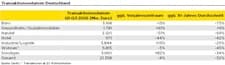
    In the German investment market for commercial and residential property*, the transaction volume in the first three quarters of 2026 amounted to just under 21.4 billion euros, which was slightly below the previous year’s level (approximately 22.3 billion euros). This volume is spread across more than 830 transactions, representing a 4 per cent increase on the previous year’s figure. Karsten Nemecek, Deputy CEO Germany at Savills and head of Capital Markets, comments on market developments as follows: “Despite the numerous uncertainties, the investment market has lost little of its momentum so far this year. At the same time, the number of properties for sale has risen noticeably in recent months. This fundamentally increases the potential for more transactions. However, the significant rise in interest rates over the summer has caused fresh uncertainty. Whether the increased supply will actually lead to more deals depends largely on how sellers respond to the changed interest rate environment. Experience from numerous transactions shows that those who are willing and able to adjust their asking prices to the new realities will attract interested capital. Overall, however, liquidity remains limited.”

    Initial yields are rising – and are likely to continue doing so

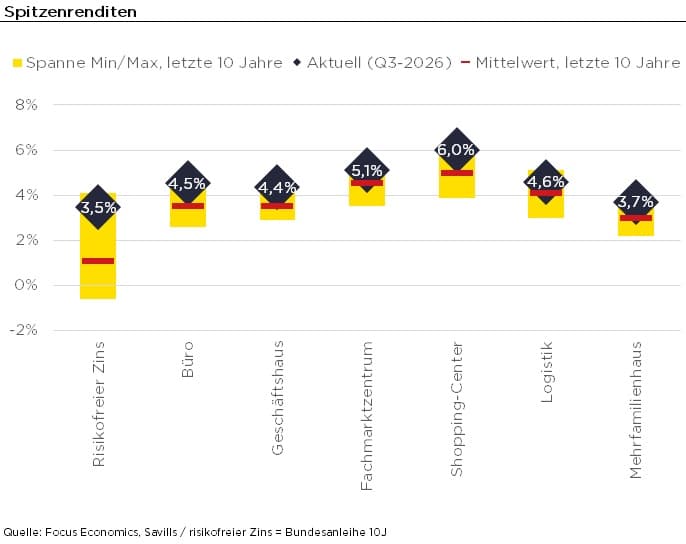
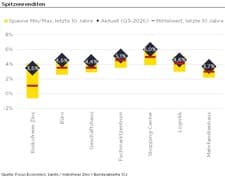
    Against a backdrop of a fairly significant rise in bond yields and interest rates, as well as increasing selling pressure, Savills has observed an upward trend in initial yields across most property sectors in recent months. As at the end of September, prime yields ranged from 3.7 per cent for multi-family dwellings (+10 basis points compared with Q2-26) to 6.0 per cent for shopping centres (+/- 0 basis points). “It remains to be seen to what extent the rise in interest rates over recent months and the large supply of properties will lead to even higher initial yields,” says Nemecek, looking ahead. Private investors and family offices (accounting for 7 per cent of purchase volume), as well as the public sector (11 per cent), continued to play a disproportionately large role as buyer groups this year, whereas institutional investors typically remained net sellers. A prime example of this is the insurance sector, which has reduced its property portfolio by around a quarter of a billion euros on balance so far this year and has numerous other properties currently on the market. This means that the trend towards deinstitutionalisation in the investment market is continuing for the time being, and Savills does not foresee a reversal of this trend. Nemecek states: “The past three years have shown that owners who have postponed a sale in the hope of a better market environment have often found themselves in an even weaker negotiating position. Unless one has a great deal of patience, there is little to be gained from a wait-and-see approach even today.”

    * Transactions involving 20 or more residential units only
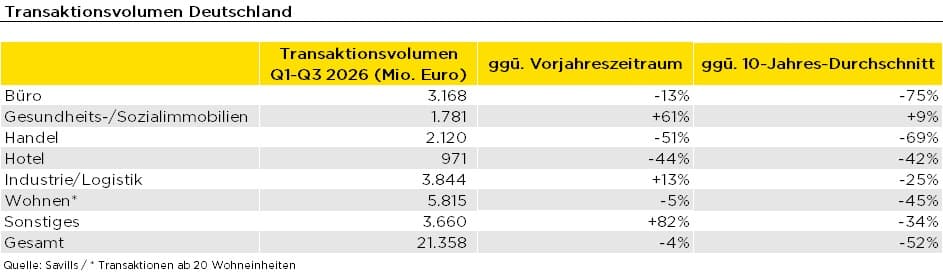
    Tabelle mit Transaktionsvolumen am deutschen Immobilienmarkt nach Nutzungsarten für Q1-Q3 2026, inklusive Vergleich zum Vorjahr und zum 10-Jahres-Durchschnitt.
    Transaktionsvolumen in Deutschland nach Immobiliennutzung für Q1–Q3 2026. Bildquelle: Savills
    Diagramm zu Spitzenrenditen verschiedener Immobilienarten in Deutschland, Stand Q3 2026, inklusive Min-/Max-Spanne und Mittelwert der letzten 10 Jahre.
    Grafik zu Spitzenrenditen verschiedener Nutzungsarten am deutschen Immobilienmarkt im 3. Quartal 2026. Bildquelle: Savills
    Porträt von Karsten Nemecek, Deputy CEO Germany bei Savills, im Anzug vor einem Büro-Hintergrund
    Karsten Nemecek ist Deputy CEO Germany bei Savills und verantwortlich für den Bereich Capital Markets. Bildquelle: Savills
    Tabelle des Immobilientransaktionsvolumens in Deutschland nach Nutzungsarten für Q1 bis Q3 2026, inklusive Vergleich zum Vorjahr und zehnjährigem Durchschnitt.
    Das Immobilientransaktionsvolumen in Deutschland von Q1 bis Q3. Bildquelle: Savills
    Balkendiagramm zu Spitzenrenditen verschiedener Immobiliensegmente in Deutschland im dritten Quartal 2026.
    Die aktuellen Spitzenrenditen in unterschiedlichen Immobiliensegmenten in Deutschland im dritten Quartal 2026. Bildquelle: Savills
    Porträt von Karsten Nemecek, Deputy CEO Germany bei Savills
    Karsten Nemecek ist Deputy CEO Germany bei Savills und verantwortlich für den Bereich Capital Markets. Bildquelle: Savills
    MarketsReal Estate
    Share
    LinkedInXingInstagramEmail
    Copied!

    Related posts

    Real I.S. leases 1,250 m² in the modern AERA office property in Berlin-Charlottenburg
    News

    Real I.S. leases 1,250 m² in the modern AERA office property in Berlin-Charlottenburg

    Real I.S. is leasing around 1,250 m² in the AERA office property in Berlin-Charlottenburg to BEW Berliner Energie und Wärme GmbH. BEW is setting up a project office there for the transformation of the nearby combined heat and power plant. The move-in is planned for July 1, 2026.

    DealsReal Estate
    Berlin is once again at the top of the A-locations, investment turnover only slightly below the previous year's level
    QuarterlyReport

    Berlin is once again at the top of the A-locations, investment turnover only slightly below the previous year's level

    In 2025, Berlin will remain the leading A-location in Germany with an investment volume of 3.25 billion euros. Despite a slight year-on-year decline, Berlin is outperforming the average of the last three years, thanks in particular to significant transactions such as the sale of the Upper West.

    MarketsReal Estate
    Savills: German office investment market faces acid test: More supply meets restrained capital
    QuarterlyReport

    Savills: German office investment market faces acid test: More supply meets restrained capital

    In Q1 2026, the German office investment market recorded a 22% year-on-year decline in transaction volume. Karsten Nemecek of Savills emphasizes that despite the increased real estate supply, purchases remain limited by selective capital.

    MarketsReal Estate
    Frankfurt: Strongest office market in Germany, take-up exceeds 600,000 m² again for the first time
    QuarterlyReport

    Frankfurt: Strongest office market in Germany, take-up exceeds 600,000 m² again for the first time

    At the end of 2025, the Frankfurt office market recorded take-up of 611,000 m², the best result since 2019. With an increase of 54% compared to the previous year, Frankfurt is the strongest market in Germany, ahead of Munich and Berlin.

    MarketsReal Estate

    #Newsletter: Stay up to date!

    Sign up for our newsletter and receive regular updates on the latest topics.

    Register now