The German office investment market achieved a transaction volume of around €3.2 billion in the first half of 2026, thus maintaining its position as the strongest commercial asset class. This is the result of the analysis by BNP Paribas Real Estate.
“Although the long-term average of €7.9 billion is still clearly missed, there has nevertheless been a gradual upward movement since the cyclical low point in 2024. Compared to the same period last year, there is currently a significant increase of 19%,” says Franc Gockeln, Managing Director and Head of Office Investment at BNP Paribas Real Estate GmbH.
Recently, however, the momentum has slowed somewhat. The Iran war and the rise in energy prices have turned interest rate expectations around and increased uncertainties, so that sales processes are dragging on again. At around €1.3 billion, the past three months were correspondingly slightly weaker than the previous quarters. Nevertheless, more than 50 deals were registered in the second quarter. It has been shown that transactions were mainly carried out where there was a clear willingness on the seller side to engage with the changed market environment.
Against this backdrop, there is slight upward pressure on net prime yields. The higher financing and opportunity costs are reflected in some markets in the form of slight yield adjustments in the range of 10 to 20 basis points. While Munich (4.20%) and Frankfurt (4.50%) maintained their level from the previous quarter, movements were recorded in Hamburg (4.35%; +10bp), Berlin (4.50%; +15bp), Düsseldorf (4.65%; +15bp), Stuttgart (4.65%; +15bp) and Cologne (4.60%; +20bp).
Munich by far the strongest location, significantly more major transactions than in the previous year
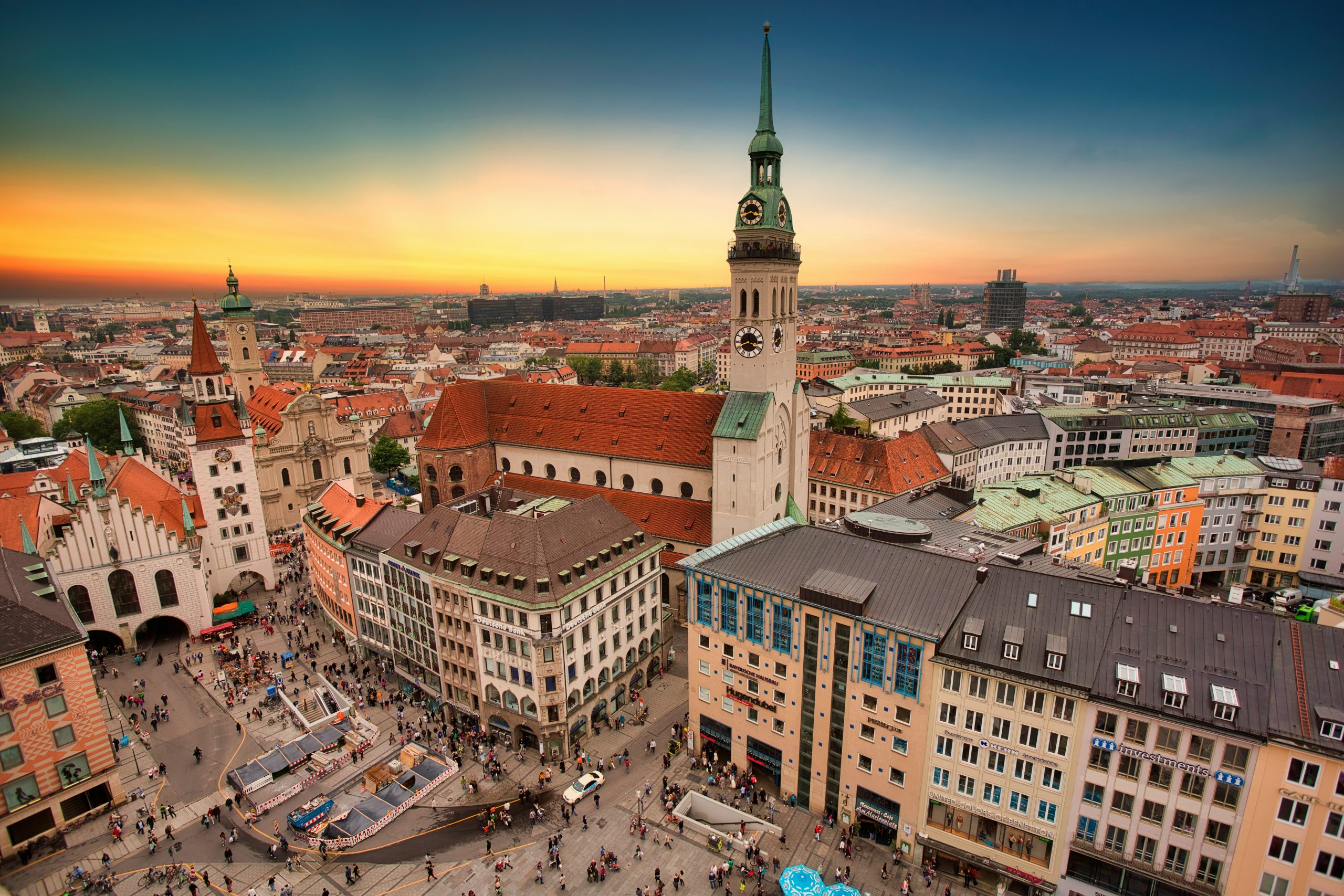
Class A cities (€2.1 billion; +13% compared to H1 2025) continue to be the office hotspots in Germany, accounting for almost two-thirds of the total volume. By far the strongest location is currently Munich with around €580 million. With the sale of the building at Prinzregentenplatz 7-9 and the Lindberg House, two transactions in the three-digit million range were recorded in the Bavarian capital in Q2. Düsseldorf (€361 million), Hamburg (€356 million) and Frankfurt (€343 million) follow closely behind each other. Meanwhile, the least investment among the A-cities was in Berlin, where only €84 million is currently on the books.
A look at the distribution of the investment volume by size class shows that, unlike in previous years, there is also more movement in the large-volume market segment overall. Around €1.2 billion (38% pro rata) was generated with transactions in the three-digit million range. In the previous year, the figure was exactly half. However, this is not the same as the return of larger portfolio transactions. Market activity continues to take place almost exclusively in the individual deal segment, so that the portfolio share of the total volume remains at a very low level of just over 5%. The largest registered transaction of the year so far, the sale of Finanzverwaltung NRW in Kaarst in the first quarter, is also a single transaction.
Outlook: Macro uncertainties remain, stable transaction momentum likely in the second half of the year
For the second half of the year, the market recovery is expected to continue moderately, albeit under different circumstances than at the beginning of the year. The escalation in the Middle East has reduced the planning security that had previously grown and has once again drawn the attention of many market participants more strongly to interest rates, financing costs and risk premiums. Although the first signs of easing have emerged geopolitically in the meantime and the latest inflation data are taking some pressure off the ECB to quickly follow up the key interest rate hike in June with the next one, the situation remains fragile.
Accordingly, the prospect of a longer phase of higher capital costs leaves little room for falling yields for the time being. For office investments, this shifts the value driver and, in the future, the focus is likely to be less on yield compression and more on rental growth and stable, long-term secured income. Since the figures for the occupier markets currently show that first-class properties in established locations are outperforming in terms of rental growth, they are likely to remain in the focus of investors’ attention. At the same time, however, more opportunistic transactions remain possible, provided that the pricing also takes into account the changed financing conditions.
“There are currently a number of properties in the pipeline for both investment segments, so that stable transaction momentum can be expected in the further course of the year. It is therefore likely that the transaction volume will again exceed the €6 billion mark by the end of the year,” explains Franc Gockeln.