What Germany can learn from the Spec Suites in the USA.
The office property is undergoing a transformation. But while the discussion in recent years has mainly revolved around working from home, ESG or declining demand for space, another trend is emerging in the background that has the potential to fundamentally change office leasing.
We are talking about Spec Suites.
In the USA, they are now an integral part of many rental strategies. In Germany, they have so far played only a subordinate role. There are many indications that more and more owners in this country will also take this path.
The classic model reaches its limits
For decades, the leasing of high-quality office space followed a similar pattern.
The lease is signed. The individual expansion planning then begins. Architects, specialist planners and fit-out companies develop a tailor-made office concept together with the future user. The move-in does not take place until months later.
For a long time, this approach was taken for granted. After all, leases were often concluded for five or ten years and the high investments in tenant fit-out were amortized over correspondingly long terms.
Today, however, the framework conditions are changing.
Companies are growing faster, consolidating locations, constantly adapting their space requirements or wanting to integrate new teams at short notice. At the same time, economic uncertainties remain high. According to the CBRE 2024 Americas Office Occupier Sentiment Survey, companies want significantly more flexibility in terms of terms, space size and expansion options.
For many companies today, it is no longer the quality of a space alone that determines the choice of location, but increasingly also the speed with which it can be used productively.
Why wait months for a space?
The crucial question is therefore:
If a high-quality office already exists, why should every new tenant start from scratch again?
This is exactly where Spec Suites comes in.
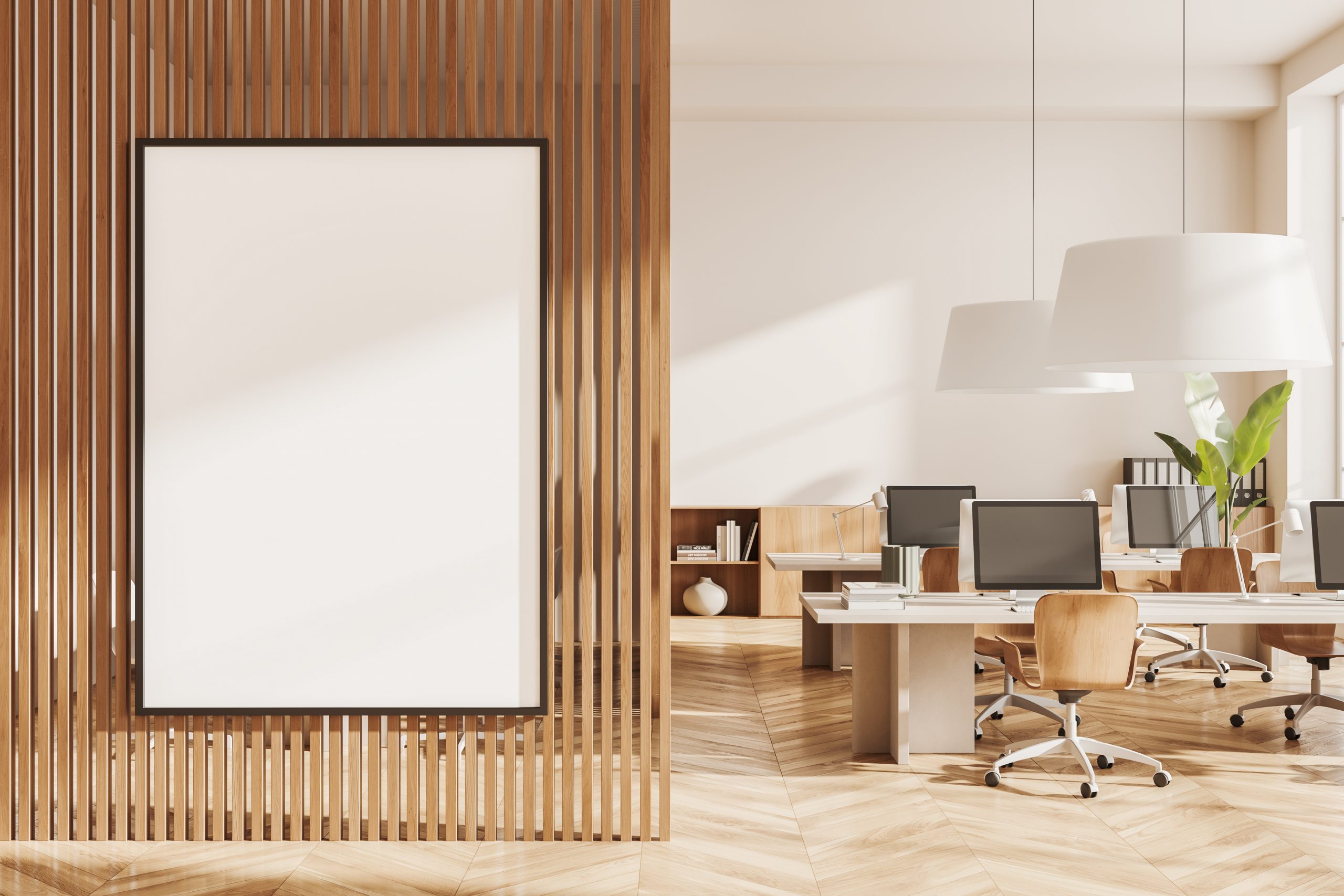
These are fully developed, high-quality office spaces that are completed before a lease is concluded. The landlord invests in a modern standard fit-out with meeting rooms, kitchenette, lighting and often even furniture.
It is important to distinguish it from classic flex offices. Unlike WeWork, Regus or Design Offices, Spec Suites do not pursue an operator concept. These are still classic office spaces that are rented out under regular leases. The only new thing is that the high-quality fit-out takes place before the lease.
Spec Suites thus closes a gap between classic office leasing and flex offices. Companies get the speed and simplicity of a ready-to-move space without having to compromise on exclusivity, corporate identity or long-term space control.
The area is already finished. The tenant only decides when to move in.
Instead of waiting months for planning, tendering and finishing work, the time between signing the contract and moving in is reduced to a few days or weeks.
A win-win situation
For tenants, the advantages are obvious:
- Significantly faster occupancy
- Less organizational effort
- Fewer internal resources for planning and expansion
- Greater flexibility
But owners also benefit.
Every month of vacancy causes costs. At the same time, owners are competing more than ever for a limited number of high-value users. The sooner an area is ready for occupancy, the lower the marketing risk.
In addition, there is the considerable effort involved in individual tenant fit-outs, which tie up capital, time and human resources. Spec Suites shorten marketing times, reduce the time to first rental income and create an attractive product for companies that need space at short notice.
CBRE is observing an increasing demand for so-called plug-and-play offices, i.e. space that can be used almost without notice, especially in the USA. At the same time, more and more owners are specifically relying on Spec Suites in order to differentiate themselves in the competition for tenants and to shorten marketing times.
Less customization doesn’t mean less quality
Another aspect is often overlooked.
Does it really make sense to dismantle a high-quality fit-out every time there is a change of tenant, only to reinstall an almost identical fit-out a few months later?
In many office buildings, this is exactly what is still common practice today. Although large parts of the interior work would still be technically usable, they will be removed, disposed of and replaced. This ties up capital, extends marketing times and causes avoidable construction waste.
Spec Suites take a different approach.
The expansion is deliberately planned in such a way that it can outlast several rental cycles. Adjustments are made where they actually add value, rather than starting from scratch for each user.
This not only reduces the use of resources and construction waste, but also improves profitability over the entire life cycle of an office space. Sustainability is thus becoming the result of a more economical rental model.
Germany is probably only at the beginning
Of course, there will still be companies in the future that need highly individual space. Corporate headquarters or particularly prestigious locations will continue to be tailor-made in the future.
For a growing part of the market, however, something else is likely to be decisive:
Speed.
Those who can move into high-quality space within a few weeks instead of several months gain a real competitive advantage. At the same time, owners reduce marketing risks and accelerate the transition between two tenants.
The question is therefore not so much whether Spec Suites will also establish themselves in Germany.
But rather how quickly.
After all, the requirements of users are already changing today. And as is so often the case, the real estate market follows the needs of its users with a little delay.
Perhaps it is time to no longer consider individual tenant fit-out as a standard, but as one of several solutions.
After all, the office of the future could look much more like a high-quality product than an individual construction project.
The office of the future will not become more individual. It becomes available more quickly.