JLL analysis takes a close look at sales motives
Despite a challenging market environment, more than 70 percent of all real estate sales in Germany are made voluntarily. This is shown by a recent analysis by JLL, which examined the transaction volume of almost 87 billion euros from 2024 to mid-2026. In more than three-quarters of the sales volume, the respective motives of the market participants could be identified. A distinction was made between a voluntary sale, a sale due to financial pressure and a transaction in the course of insolvency. According to the study, financial pressure (17 percent) or insolvency proceedings (ten percent) were decisive for the sale of just over a quarter of the transaction volume.
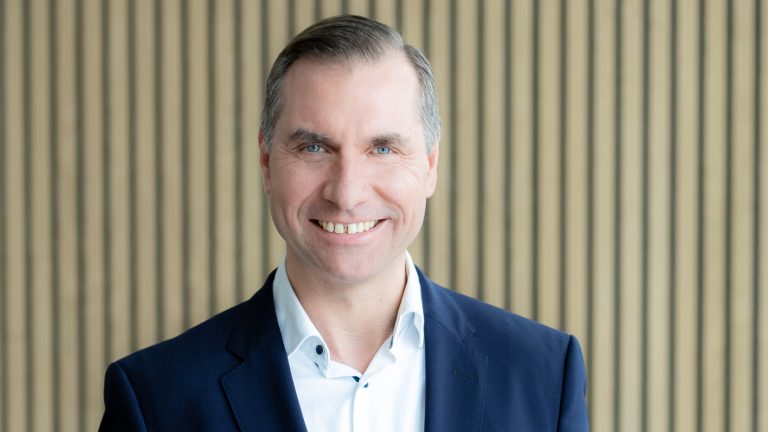
“Even though the investment market has been characterized by hesitant behavior and challenging sales processes since 2022, most sellers continue to act strategically and voluntarily – albeit often with clouded profit expectations,” says Konstantin Kortmann, CEO JLL Germany & Head of Capital Markets, summarizing the results of the analysis.
The motives for voluntary sales are diverse. The fulfilment of one’s own business plan, for example through the scheduled sale of a completed project development or the sale of a property at the end of the term of a closed-end fund, dominates as the main reason at 41 percent, followed by the adjustment of the investment strategy (30 percent) and individual opportunities (27 percent). The lifting of hidden reserves is the motivation for only two percent of sales. “Especially for corporates, however, this can be an important motivation to sell real estate that is necessary for operations or that is no longer necessary for operations,” explains Kortmann.
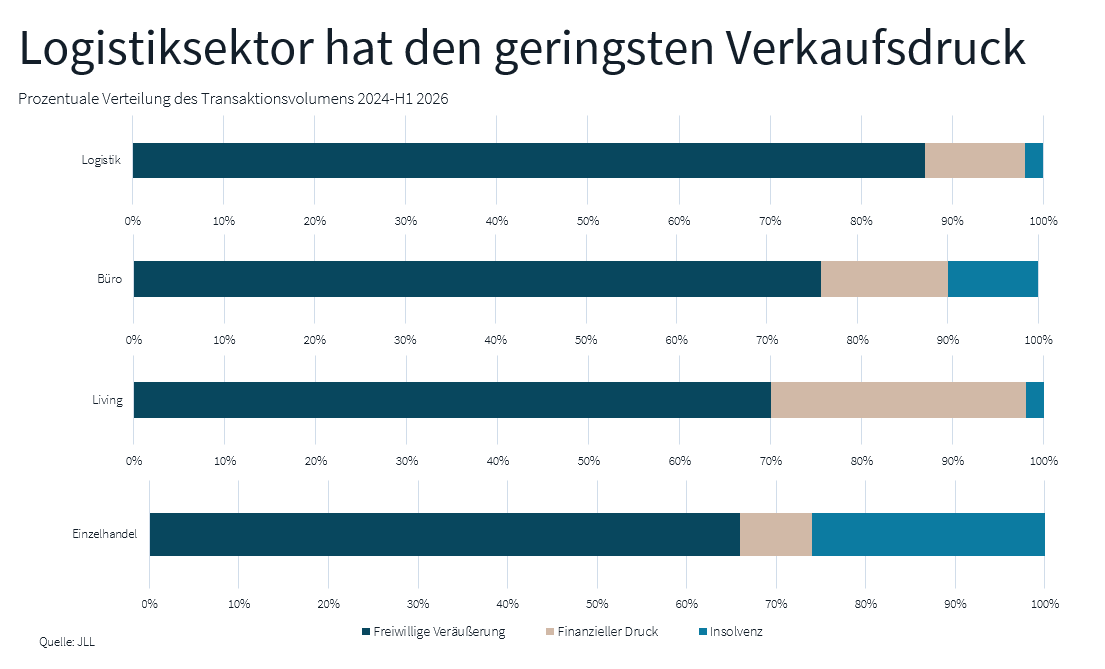
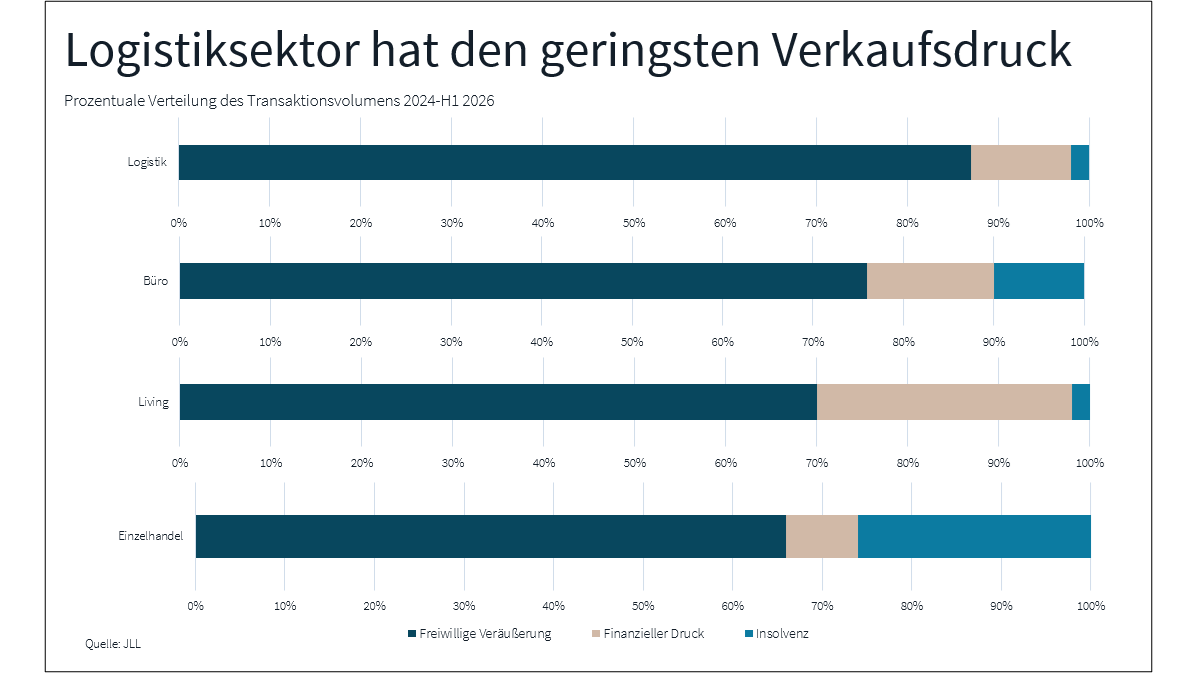
Differentiated by different asset classes, the logistics sector has the highest proportion of voluntary disposals at 87 percent. This is followed by the office segment with 76 percent, living with 70 percent and retail with 66 percent. At just under 30 percent, the Living segment had the highest share of sales due to financial pressure. As a result of the Signa bankruptcy, insolvency sales occurred most frequently in the retail sector (26 percent).
When looking at the seller groups, the proportion of sales that took place under financial pressure is strikingly high among open-ended real estate mutual funds. 93 percent of the sales volume was due to this circumstance. In contrast, among asset and fund managers, project developers, corporates and private investors, voluntary disposals dominated with over 80 percent each. “Since 2024, the inflow of funds from open-ended real estate funds has been negative, as a result of which the funds are forced to generate liquidity through real estate sales,” Kortmann classifies the situation. Further sell-offs are to be expected due to continued outflows.
Real estate sales are also accelerated by problems on the financing side, for example because debt capital was not available to the required extent in refinancing or costs have risen too much. Eleven percent of the registered sales volume in the period 2024 to the end of June 2026 was made against the backdrop of financial pressure from lenders. “Using the office market as an example, we calculated a refinancing gap for 2026 of around four billion euros. This is expected to close in the coming years and from 2028 onwards, sufficient debt capital should be available so that there should be no additional selling pressure from this side,” predicts Matthias Barthauer, Lead Director Research JLL Germany.
For 2026, he expects that there will be more forced sales in the further course of the year than in the first half of the year. “However, many of these transactions will take place within the framework of structured sales processes and not under time pressure.” For 2027, too, it is already foreseeable that there will be forced sales. “But under the assumption of a resumption of economic growth coupled with the positive effects of the investments from the Infrastructure Special Fund, not only should transaction activities on the investment market increase again, but also the proportion of forced sales should decline,” says Barthauer.