Perigus Energy Deutschland GmbH has successfully commissioned Germany’s first wildlife park PV system at the Weiherhof in Sötern (municipality of Nohfelden) in Saarland. The unique project combines the keeping of fallow deer with the generation of renewable energy and shows how agriculture and the energy transition can interact in a meaningful way.
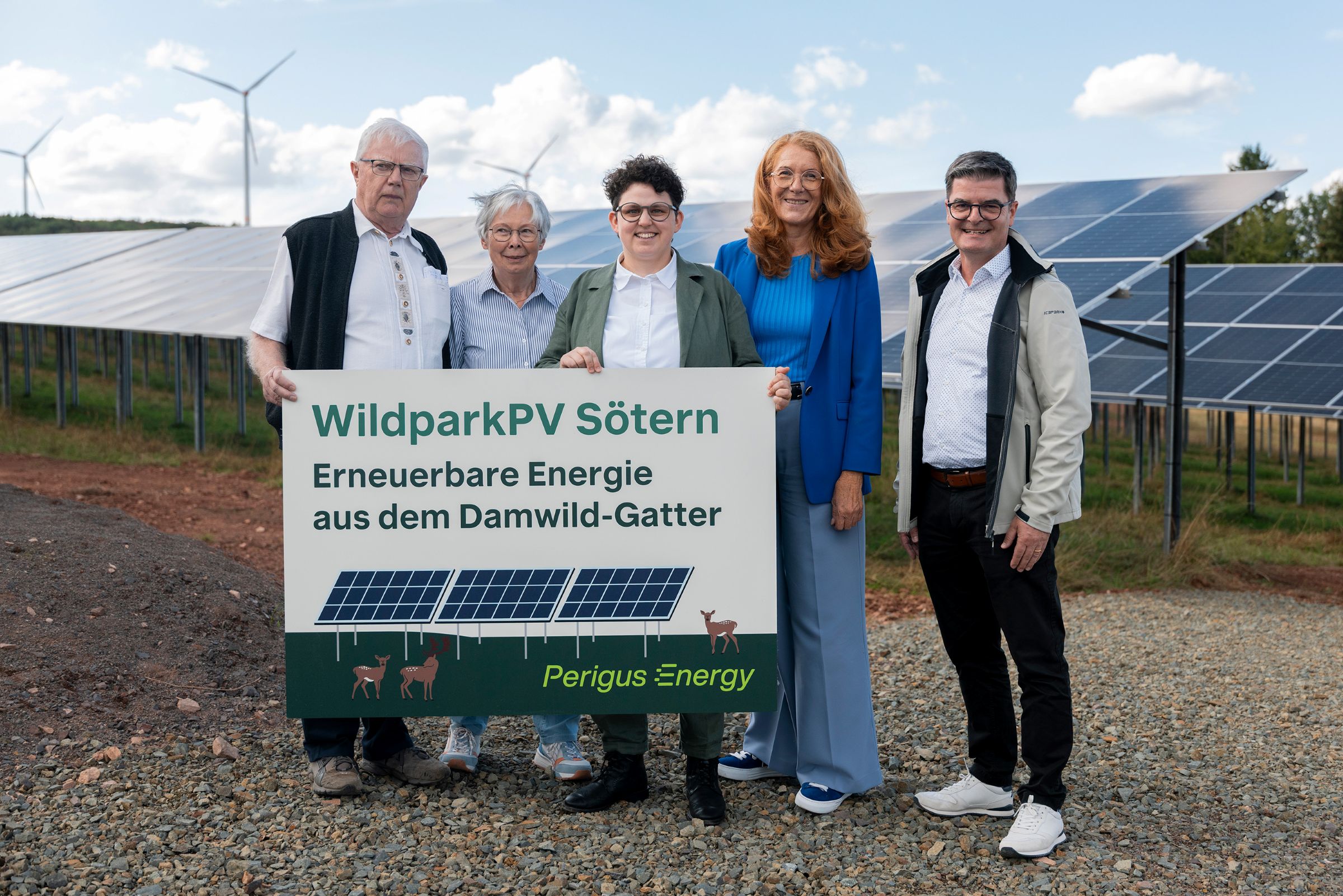
During the ceremonial inauguration on 1 September 2026, Petra Berg, Saarland’s Minister for the Environment, Climate, Mobility, Agriculture and Consumer Protection, also emphasised the special importance of the project: “The opening of the WildparkPV plant is a Saarland milestone for environmental and climate protection and the economy. The Welter family’s Weiherhof shows how well sustainable, modern and future-oriented agriculture can work.”
Perigus Energy has built the elevated solar plant on a 6.9-hectare section of the Weiherhof’s fallow deer gate and will operate it for the long term. It has a capacity of 8.3 megawatt peak (MWp) and is expected to generate around 9.5 million kilowatt hours of electricity annually. This will enable around 3,200 households to be supplied with renewable energy and the equivalent of around 5,530 tonnes of CO2 to be saved annually.
Focus on animal welfare and environmentally friendly implementation
During the planning and implementation of the WildparkPV system in Sötern, the focus was on the protection of the animals, careful handling of the area and safe construction. For the duration of the construction phase, which lasted around nine months, the fallow deer grazed on alternative fenced areas of the Weiherhof. At the same time, the interference with nature and the landscape was reduced to the necessary minimum and the facility was designed in such a way that fallow deer husbandry and renewable energy generation can be combined in the long term.
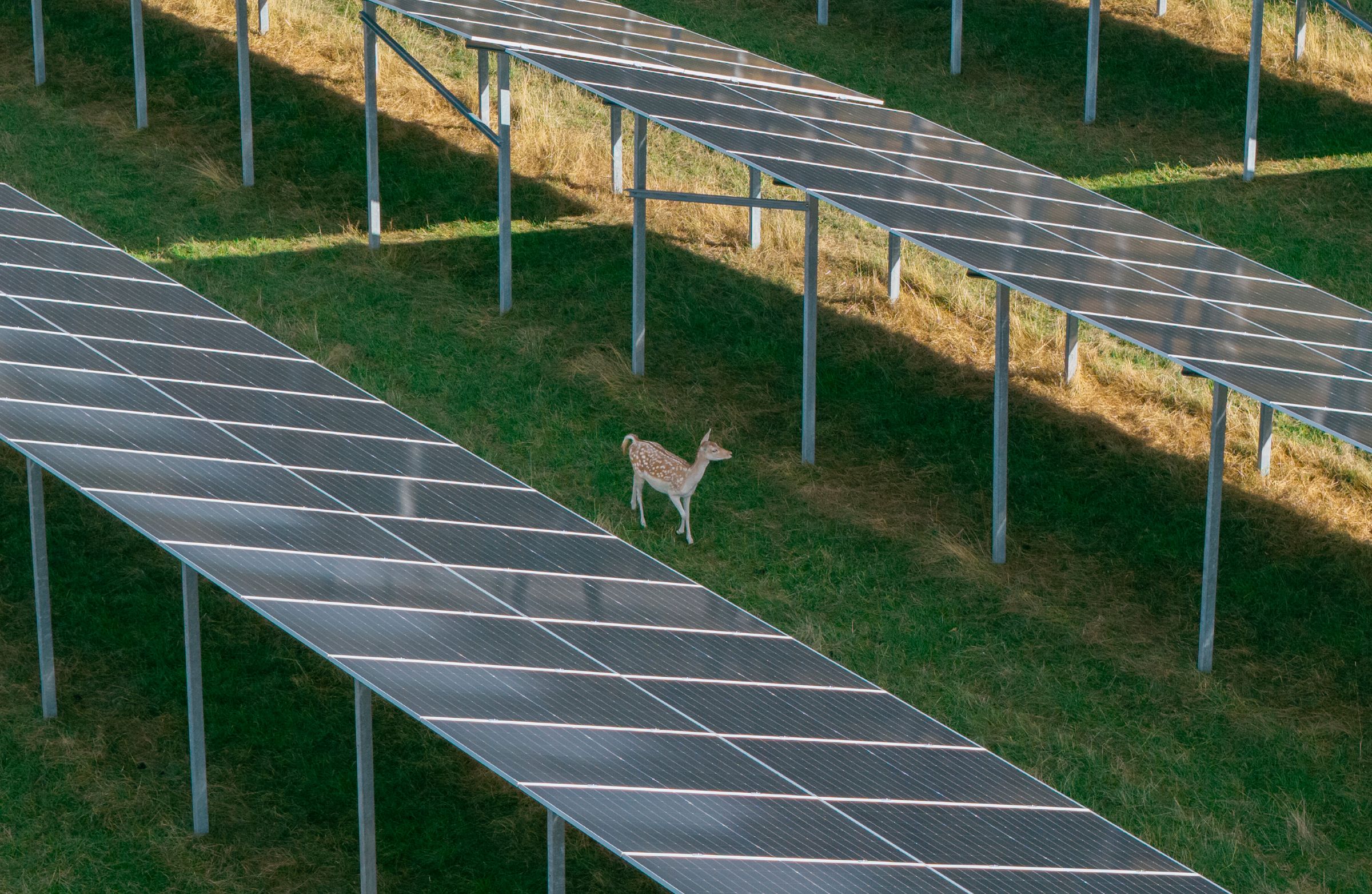
At the heart of the solar park are the solar modules, which are elevated in the sense of an Agri-PV concept. With a ground clearance of at least 1.60 meters to 1.80 meters, they offer sufficient space for the animals. At the same time, they provide shade and protection in heat, strong sunlight or adverse weather. The pastures below also benefit: Partial shading can stabilize yields in dry summer periods. In addition, a special wildlife fence and safety concepts for cable ducts and inverters tailored to animal husbandry are used.
First experiences: Fallow deer accept the areas well
Since the completion of the construction work at the end of July, the herd of around 150 animals has already been back on the areas of the WildparkPV system. Wolfgang Welter, owner and operator of the Weiherhof, says: “The first experiences have been extremely positive: the animals accept the redesigned areas well and naturally move under and between the rows of modules. We will continue to closely monitor the development and continuously observe and document the behaviour of the animals.”
The experience gained from ongoing operations should help to further develop the concept for further WildparkPV projects in Germany.
Annemarie Röbl, Head of Project Management and Authorized Signatory at Perigus Energy Germany, says: “From the very beginning, it was our focus to take into account the needs of the animals as well as the requirements for efficient and sustainable energy generation. We are pleased that the WildparkPV system has now been successfully connected to the grid on schedule, that the animals are already using the areas again and that the concept works in practice.”
Financial contribution for the local municipality of Nohfelden
The sustainable electricity generation of the WildparkPV plant in Sötern also benefits the local municipality of Nohfelden. Via the municipal bonus (§6 EEG), which is anchored in the Renewable Energy Sources Act, 0.2 cents per kilowatt hour fed into the grid flow into the municipality’s budget.
The Sötern wildlife park PV plant is thus an example of innovative approaches that combine agriculture and renewable energies in a meaningful way and at the same time create added value for the region.