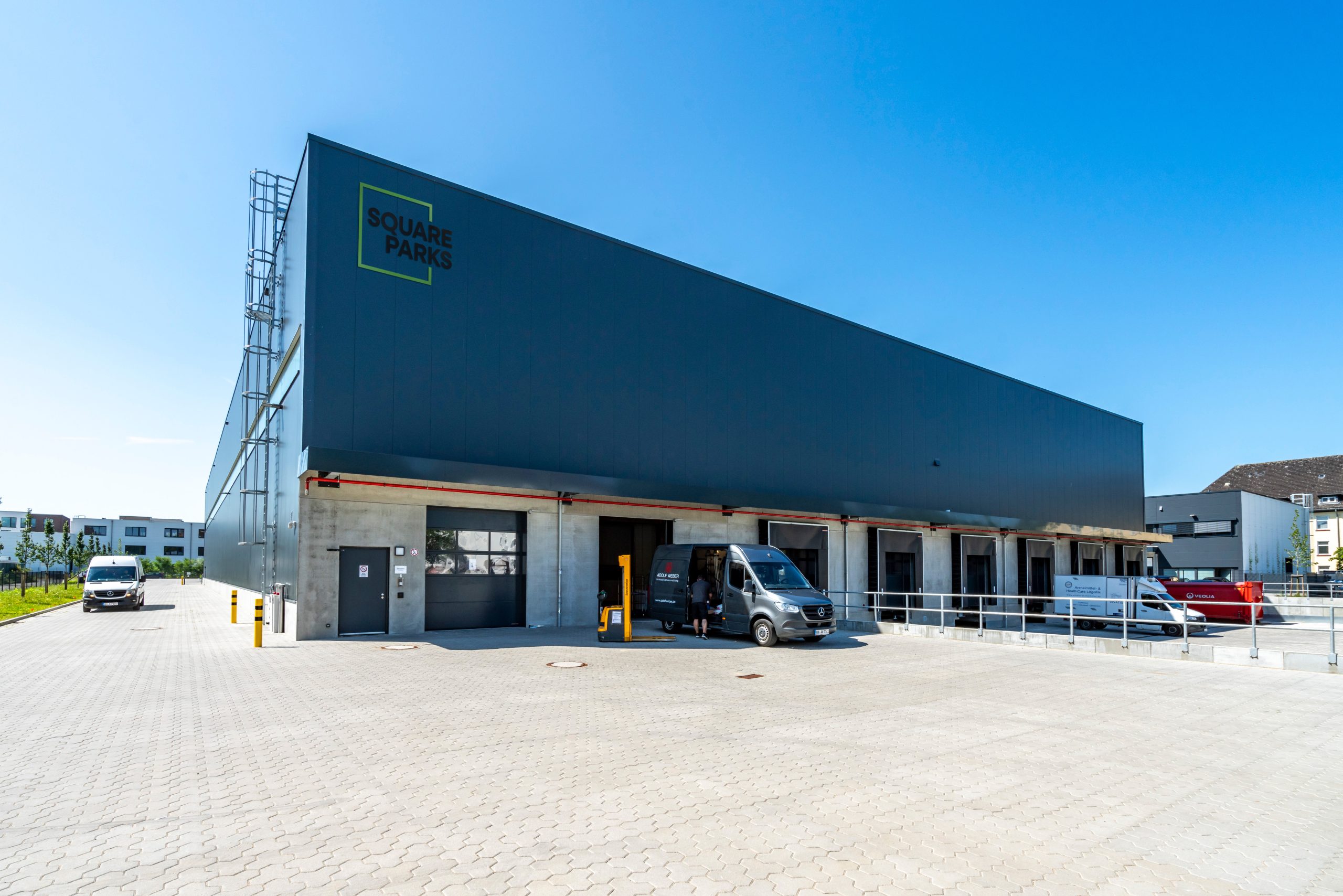
Despite the continuing challenging economic environment, commercial and craft parks are developing stably and are becoming increasingly important on the user, investment and financing side. The main drivers are the broad user structure, flexible space concepts, an urban location and a high level of third-party usability, as well as the increasing professionalisation of the segment.
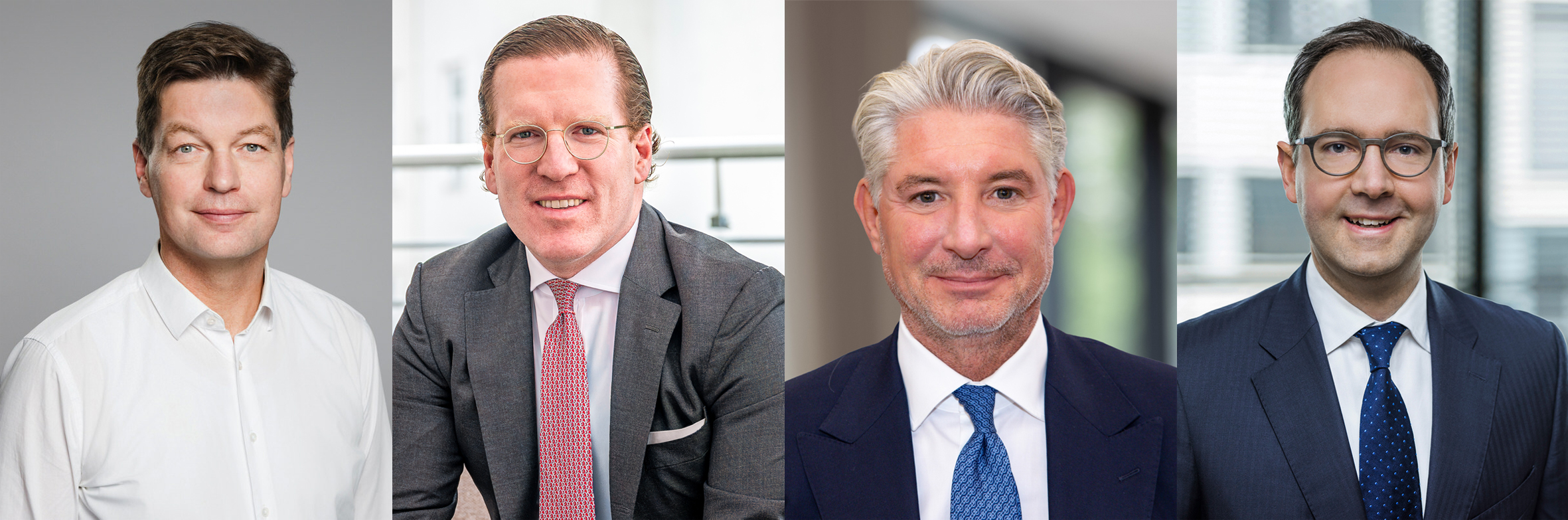
This was the conclusion reached by Sven Carstensen MRICS, Managing Director of bulwiengesa, Henning Nietz, Managing Director of SQUARE PARKS, Andreas Pfaff, Head of Domestic North/West at Berlin Hyp, and Niklas Räther, Executive Director and Head of Investment Germany at AEW Invest, in a webinar organised by RUECKERCONSULT entitled: “Resilient through diversity: Stable through the crisis with business parks and commercial parks”.
Business parks and commercial parks are increasingly establishing themselves as a new construction productSven Carstensen, Managing Director of bulwiengesa, says: “In the case of business parks and commercial parks, we traditionally come strongly from existing properties and from the subsequent use of former industrial sites. In the meantime, however, we are seeing that the segment is gradually establishing itself in new construction as well. At the same time, demand and tenant loyalty remain stable, while the supply of space is limited. Rents are therefore gradually continuing to rise.”
According to bulwiengesa, around 284,400 square metres of commercial park space were completed in the first half of 2026. Letting also remains stable: take-up in the first half of 2026 was around 325,800 square metres. For the year as a whole, bulwiengesa expects rising take-up with continued stable demand and successively rising rents.
Broad user structure supports resilienceHenning Nietz, Managing Director of SQUARE PARKS, says: “We do not see a single user cluster on which business parks are dependent. Our tenants come from the skilled trades and manufacturing industries as well as from e-commerce, last mile or technology-oriented sectors. It is precisely this diversity of industries that ensures that we have hardly any cluster risks at the property level and can better compensate for economic fluctuations.”
SQUARE PARKS is mainly developing hall units between around 400 and 1,500 square metres with additional office space. These can be used for production, storage or, in some cases, showroom uses. In addition to space flexibility, according to Nietz, high-quality construction, modern building technology and urban location are becoming increasingly important as an important criterion for accessibility for employees, customers and suppliers.
Investors rely on third-party usability and location quality
From the point of view of institutional investors, urban business parks complement classic logistics properties, especially where smaller and more flexible space sizes are required. Niklas Räther, Executive Director and Head of Investment Germany at AEW Invest, classified the segment as a diversification opportunity within the logistics market: “Business parks serve a space requirement that classic large-scale logistics properties cannot cover. For us, the segment is therefore a sensible diversification, especially in the size range of around 1,000 to 3,000 square meters per unit. The decisive factors are a high level of location discipline and a property that can be used flexibly and can be used as widely as possible by third parties.”
Financing: Professionalisation increases acceptanceThe segment has also further established itself on the financing side. Andreas Pfaff, Head of Domestic North/West at Berlin Hyp, says: “The asset class has steadily professionalised from a niche. It has been gradually growing in our portfolio since around 2015 and is now a relevant part of our loan portfolio. We see the segment very positively precisely because of its resilience and future viability.” According to Pfaff, a professional investor or developer with a strong credit rating, a reliable track record, professional asset management and convincing location and property qualities are crucial here. According to Pfaff, a property-specific and individual approach always applies to medium to long-term investment financing.
At the same time, the discussion made it clear that the higher management costs of business parks are part of the investment case. Multi-tenant and mixed-use structures require active control of letting, operation and tenant structure. “This is precisely why professional asset and property management is becoming increasingly important for investors and banks,” says Henning Nietz of SQUARE PARKS, which, as part of the ADOLF WEBER Group, can draw on many years of experience and existing structures in asset and property management.
Overall, the webinar showed that commercial and craft parks are evolving from a niche segment with a strong portfolio to an increasingly standardised and institutionally perceived investment product. Rising completion figures, stable take-up, a broad user base and growing acceptance among investors and banks speak for further professionalisation of the segment.