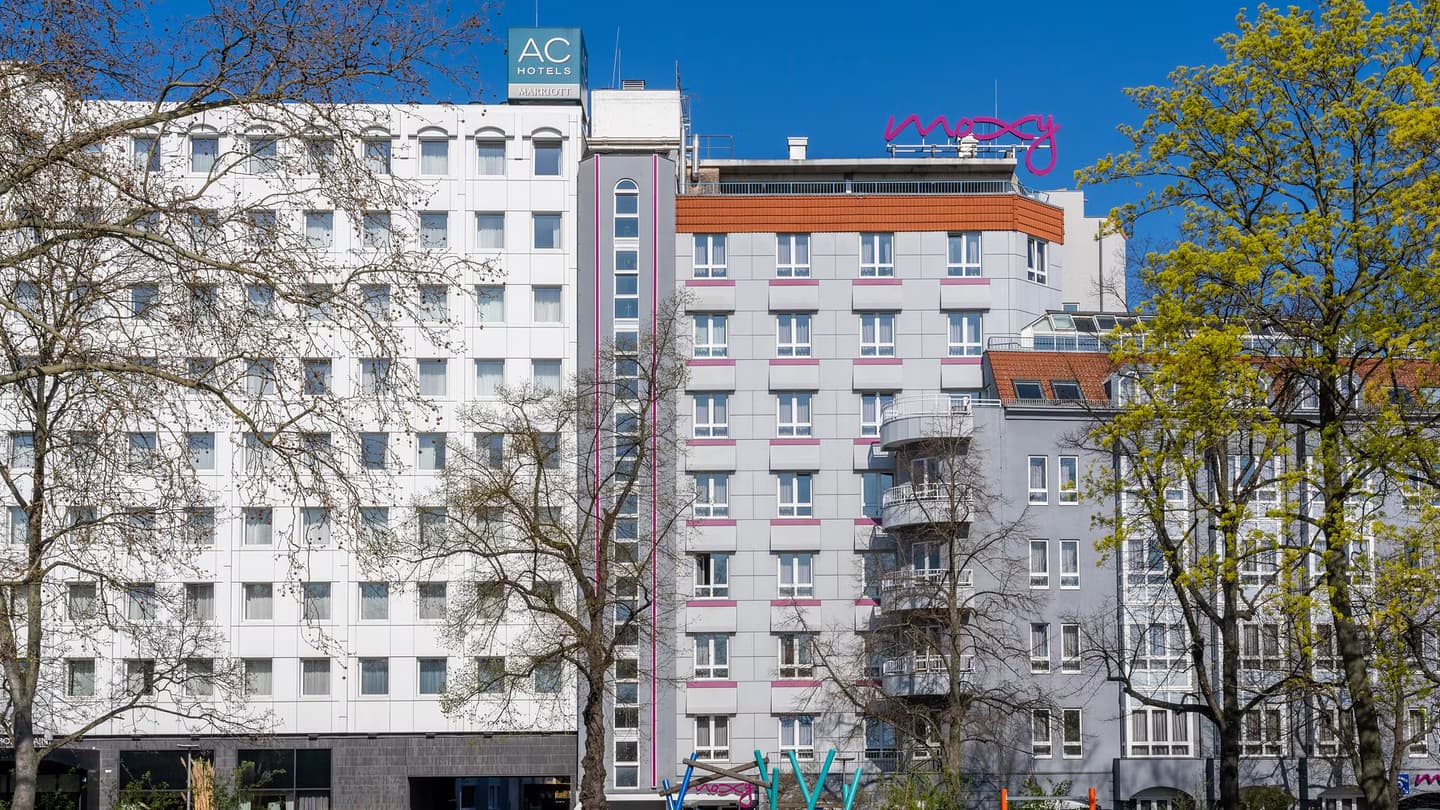
Vacant properties cannot always be brought back onto the market through rent reductions or more intensive marketing. Rather, new utilisation concepts are required that take into account both the requirements of the location and the structural and economic potential of a property. This is one of the key findings from a property industry symposium organised by CoreNet Global (CNG) Central Europe in collaboration with Fresenius University of Applied Sciences in Heidelberg. Under the theme ‘From Vacant to Vibrant’, students and property professionals discussed strategies for revitalising vacant buildings and the challenges involved in implementing them.
“Vacancies are often not the result of a lack of marketing efforts, but rather a reflection of a fundamental shift in demand. As the requirements of businesses, users and society change, we must also rethink property. Instead of simply looking for new tenants for existing spaces, we should be asking ourselves more closely what uses are actually needed at a particular location,” said Prof. Dr Thomas Glatte, Professor of Real Estate Economics at Fresenius University of Applied Sciences in Heidelberg and a member of the CNG Executive Board responsible for education and training. “For corporate real estate managers in particular, it is becoming increasingly important not only to view existing property portfolios from the perspective of costs and efficiency, but also to assess their long-term usability and potential for transformation.”
Vacancies cannot be resolved by price alone
In her keynote speech, Annik Englert, Managing Director of ReFacto GmbH – a company specialising in the revitalisation of vacant properties – explained why traditional marketing approaches often reach their limits when dealing with structural vacancy. Megatrends such as online retail, changing work environments, new mobility concepts and social change mean that properties lose their original function, even though the buildings remain usable.
Englert put forward five key arguments for discussion: The market alone cannot solve the problem of vacant properties. Actual demand cannot be deduced solely from statistics. A wait-and-see approach exacerbates the problems. The structural characteristics of a property set limits on any change of use. And finally, any new concept for the use of a property must be economically viable.
It is therefore crucial to first analyse demand at the relevant location and to involve potential users at an early stage. In addition to traditional market data, this requires, in particular, discussions with local stakeholders, property owners, local authorities and potential users.
10,000 square metres of office space is being transformed into an educational campus
Englert illustrated how such approaches might work in practice by citing several projects. For example, a concept for an educational campus was developed for an office property in the Ingolstadt area, covering around 10,000 square metres and originally occupied by a single tenant. Among other things, this concept provides for a business incubator, training rooms, a canteen and 45 flats for trainees.
Another example is a former restaurant in Bad Mergentheim, Baden-Württemberg, which had stood empty for more than ten years. By developing a new utilisation concept, it was possible to create a plan for a 24-bed hall of residence for apprentices. Funding of around one million euros helped to make the concept financially viable.
Former bank branches, therefore, offer potential for new uses. In Würzburg-Heidingsfeld, a combination of a municipal library and residential accommodation was developed for a property measuring around 800 square metres, which had previously stood empty for two years. A tenancy agreement was finalised within three months.
These examples illustrate that targeted repositioning not only opens up economic opportunities for owners, but can also create new opportunities for towns and local authorities.
Combining economic efficiency with social benefits
In the panel discussion that followed, Englert and Aljoscha Scholl, Managing Director of Scholl Real Estate Solutions GmbH, together with Glatte and Lucas Falter, a lecturer at Fresenius University of Applied Sciences and Managing Director of Falter Consulting, explored the opportunities and limitations of new usage concepts in greater depth.
Among other things, the discussion centred on the question of when traditional marketing is sufficient and when a fundamental repositioning is required. It became clear that successful changes of use require a close integration of market knowledge, structural feasibility and economic viability. Collaboration with local authorities and the involvement of public and charitable organisations can also play an important role in this regard.
“The transformation of the property portfolio is one of the key tasks facing our sector. This is not just about the technical and energy-efficiency upgrades of buildings, but also about their functional sustainability. Properties must continue to provide value to businesses and society even in ten or twenty years’ time,” said Glatte. “Through events such as this symposium, we at CoreNet Global aim to strengthen the exchange between academia, young professionals and experienced property professionals. After all, the challenges facing the property sector can only be resolved if we bring together different perspectives and learn from one another.”